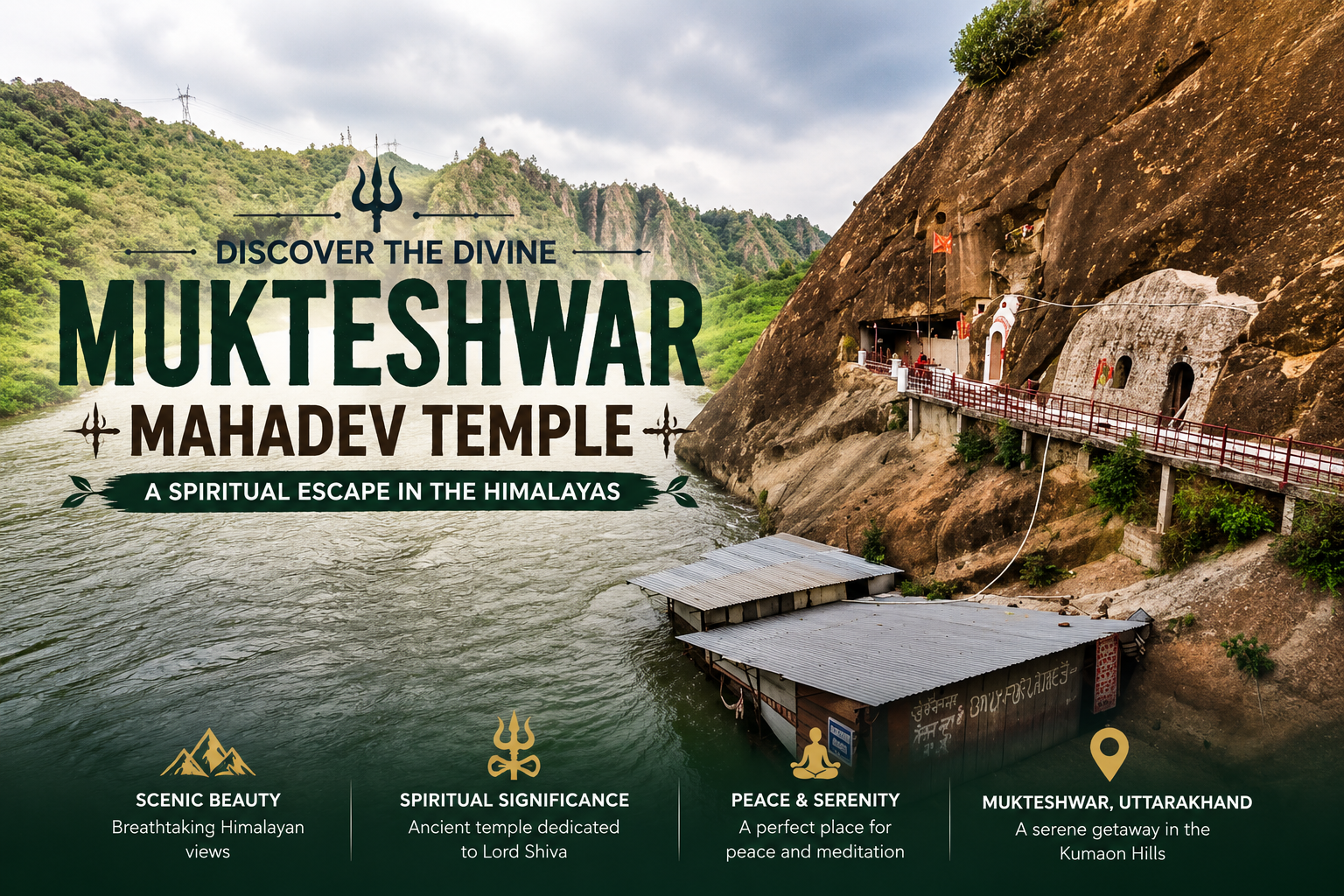
Mukteshwar Mahadev Temple sits quietly at the highest point of a small Kumaon hill town, its bells ringing out over pine forests and apple orchards on the winding road below. That is Mukteshwar. And this shrine has been pulling in pilgrims, trekkers, and curious travellers for centuries. Over the years, Mukteshwar tourism has grown because of its peaceful atmosphere, ancient temples and mesmerising Himalayan scenery.
Let’s know the Mukteshwar Mahadev Temple history, the timings, how to get there, and everything else you’ll actually need before you pack your bags.
About Mukteshwar Mahadev Temple
Mukteshwar Mahadev Temple sits in Mukteshwar town, Nainital district, Uttarakhand, dedicated to Lord Shiva. It’s not a grand, gold-plated structure. Honestly, it is quite modest; stone walls, a simple sanctum, nothing flashy. But that is kind of the point.
The name comes from two words. “Mukti,” meaning liberation, and “Ishwar,” meaning Lord. So Mukteshwar roughly translates to “the Lord who grants freedom.” People have been climbing this hill for generations hoping for exactly that – some relief, some peace, some sense of release.
What really draws travellers to Mukteshwar Mahadev Temple, is not just the shrine itself. Behind it stands Chauli Ki Jali, a striking natural rock formation that photographers and climbers can’t seem to stay away from. Add snow-capped peaks in the background, and you’ve got a spot that feels equal parts sacred and scenic.
History of Mukteshwar Mahadev Temple
Here’s where things get interesting. Most records suggest the present structure of Mukteshwar Mahadev Temple is around 350 years old, built in the traditional Kumaoni style using local mountain stone. Simple, sturdy, built to last through Himalayan winters.
But talk to locals, and the story goes back much further. Legend has it that the Pandavas passed through this very hill during their exile, sometime during the events of the Mahabharata. They’re said to have prayed to Shiva here before the war that would change everything for them. Whether or not you take the legend literally, it adds a certain weight to the place.
There’s also a story behind why Shiva is worshipped here as “Mukteshwar” specifically. As the tale goes, Shiva once defeated a demon on this hill — and instead of simply destroying him, granted him moksha, or liberation. That act of mercy is where the temple’s name comes from.
And then there’s Chauli Ki Jali, the rock cliff right beside Mukteshwar Mahadev Temple. Folklore says a wandering saint once struck the giant boulder to clear his path forward, leaving behind a natural hole in the rock. Even today, many believe walking through that gap with sincere prayer brings blessings – couples hoping for children are said to visit specifically for this.
Why Is Mukteshwar Mahadev Temple Famous?
A few things keep this temple on people’s travel lists year after year.
For one, there’s the spiritual pull. Between the Mahabharata connection and the story of Shiva’s mercy, this place carries real significance for Shaivites across India.
Then there’s the view. At roughly 2,312 metres above sea level, you get an almost uninterrupted look at Himalayan giants like Nanda Devi, Trishul, and Nanda Kot. On a clear morning, it’s genuinely hard to look away.
And finally, Chauli Ki Jali brings in a completely different crowd – rock climbers, rappellers, adventure junkies who might not even be here for Mukteshwar Mahadev Temple itself but end up visiting anyway.
Put all three together, and you get a small hill temple with a surprisingly big reputation.
Mukteshwar Mahadev Temple Timings
Before you plan your visit, it helps to know the Mukteshwar Mahadev Temple timings so you’re not standing outside a closed gate.
| Detail | Timing |
| Opening Time (Summer) | 6:00 AM |
| Closing Time (Summer) | 8:00 PM |
| Opening Time (Winter) | 7:00 AM |
| Closing Time (Winter) | 7:00 PM |
| Morning Aarti | Around 6:30 AM |
| Evening Aarti | Around 6:30 PM |
| Best Time of Day | Early morning or just before sunset |
The temple stays open daily, even on public holidays, so there’s no need to check for a “closed” day. That said, doors sometimes shut briefly in the afternoon for aarti or bhog. If you want an easy, uncrowded darshan, mornings or early evenings work best.
Where Is Mukteshwar Mahadev Temple Located?
Mukteshwar Mahadev Temple is located in Mukteshwar town, in the Nainital district of Uttarakhand, sitting at an altitude of roughly 2,312 metres. Mukteshwar temple height is one of the reasons the temple offers fresh Himalayan views.
The Mukteshwar temple distancefrom Nainital is around 50 kilometres and it takes around 2 hours to drive through the scenic mountain roads.
If you’re using Google Maps, search “Mukteshwar Temple” or “Chauli Ki Jali, Mukteshwar” – either should get you close. From the parking area, there’s a short uphill walk to reach the actual shrine, so wear something you can walk in comfortably.
How to Reach Mukteshwar Mahadev Temple
Getting here takes a bit of planning, but it’s far from difficult.
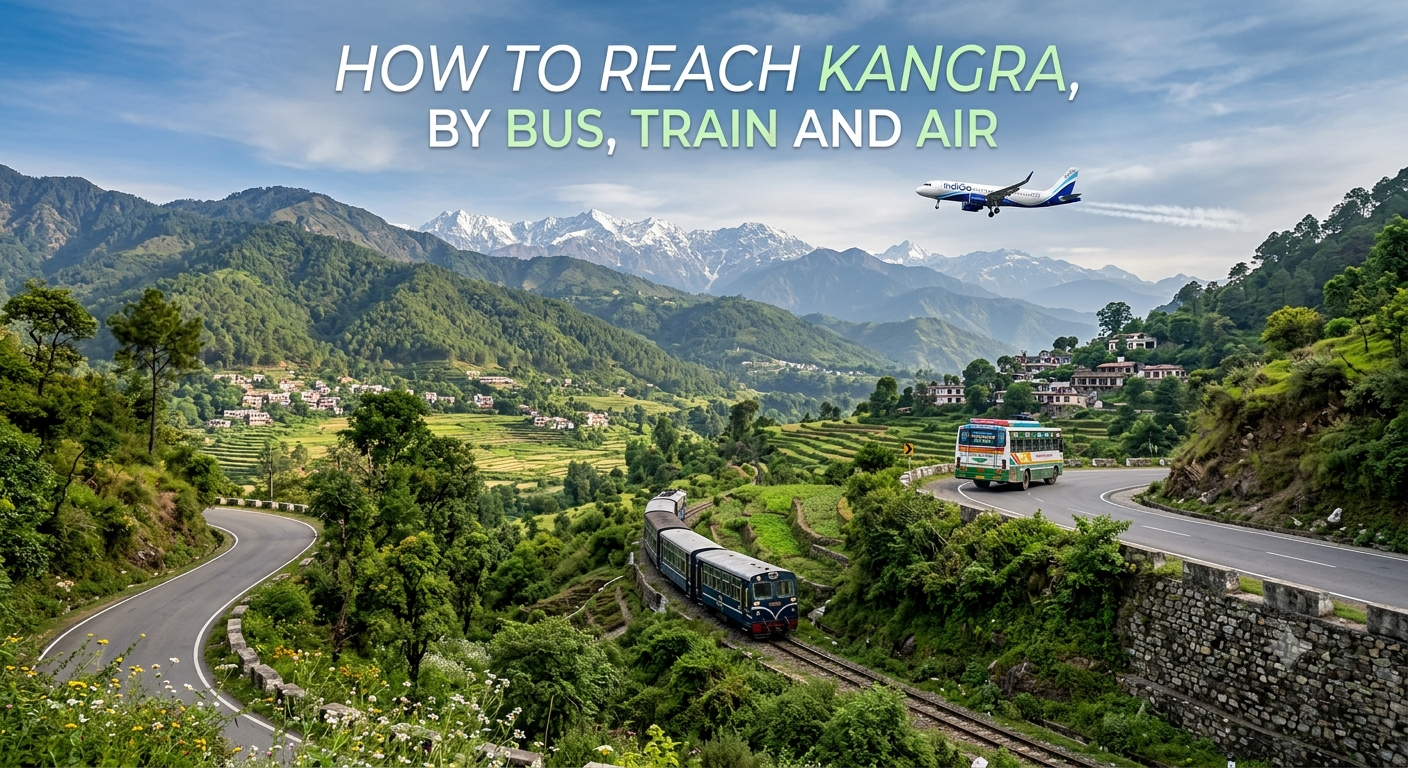
- By Air: Pantnagar Airport is the nearest one, about 90 to 98 kilometres away. From the airport, a taxi will get you to Mukteshwar Mahadev Temple in roughly three hours.
- By Train: Kathgodam Railway Station is your best bet, sitting around 64 to 70 kilometres away. It has good connectivity to Delhi, Lucknow, and a few other major cities. Shared taxis and local buses run from the station toward Mukteshwar fairly regularly.
- By Road:If you’re driving or taking a bus, Mukteshwar connects well from Nainital (around 50 km), Haldwani (around 62 km), and Delhi (roughly 340 to 350 km). The Delhi route takes about eight to nine hours, but honestly, the drive through pine forests and orchard-lined roads makes the time pass quicker than you’d expect.
Best Time to Visit Mukteshwar Mahadev Temple
- Summer (March to June) is when most people show up, and for good reason — clear skies, comfortable weather, and the best visibility for those Himalayan views.
- Monsoon (July to September) turns everything a deep, almost surreal green. Beautiful, yes, but the roads can get slippery, so drive carefully if you’re headed up during these months.
- Winter (December to February) brings snow, usually from late December through mid-February. It’s cold, no doubt about that, but there’s something magical about seeing the temple dusted in white.
- Festival season, especially Maha Shivratri, draws the biggest crowds. If you’d rather skip the rush, avoid that period. If you want the full devotional atmosphere, though, it’s worth experiencing at least once.
Read Also: Trekking Routes in Himachal Pradesh for Beginners
Things to See Near Mukteshwar Mahadev Temple
No trip is complete without exploring some of the best Mukteshwar sightseeing spots. The hill town has waterfalls, lakes, viewpoints and peaceful villages.
- Chauli Ki Jali is right behind the shrine and offers some of the best views in the area, plus rock climbing and rappelling for anyone feeling adventurous.
- Indian Veterinary Research Institute (IVRI) is a historic campus close by, worth a stop if you’re into science, old buildings, or the town’s British-era backstory.
- Bhalu Gaad Waterfall makes for a peaceful little detour through forest trails, ideal if you want a break from temple crowds.
- Ramgarh, a nearby hill town, is known for colonial-style cottages and quiet orchard lanes.
- Bhimtal, about 35 kilometres away, is a calm lakeside town — a nice stop if you’re heading back toward Nainital.
Travel Tips for Visitors
A few practical things before you head up to Mukteshwar Mahadev Temple:
- Footwear: The last stretch is uphill on stone paths, so skip the flip-flops.
- Photography: Fine in most outdoor areas, but it’s polite to ask before photographing rituals or priests.
- Mobile Network: Patchy near the cliff edge. Download offline maps before you leave cell coverage behind.
- Parking: Available at the base, with a short walk up from there.
- Food: A few small local eateries and tea stalls operate near the temple — nothing fancy, but enough to keep you going.
- Accommodation:Mukteshwar has everything from budget homestays to a handful of luxury resorts.
- Safety: Keep an eye on kids near Chauli Ki Jali. The drop is real.
- What to carry: A light jacket even in summer, a water bottle, and some cash — cards aren’t always accepted at the smaller local shops.
Essential Information at a Glance
| Category | Details |
| Location | Mukteshwar, Nainital District, Uttarakhand |
| Altitude | Approx. 2,312 metres |
| Timings | 6 AM–8 PM (summer), 7 AM–7 PM (winter) |
| Entry Fee | Free |
| Best Time to Visit | March to June, September to November |
| Nearest Railway Station | Kathgodam (approx. 64–70 km) |
| Nearest Airport | Pantnagar Airport (approx. 90–98 km) |
FAQs:
#Q1. Where is Mukteshwar Mahadev Temple located?
In Mukteshwar town, Nainital district, Uttarakhand, at around 2,312 metres above sea level.
#Q2. Why is Mukteshwar Mahadev Temple famous?
Mostly for its link to Lord Shiva and the Mahabharata, plus the Himalayan views and the nearby Chauli Ki Jali cliff.
#Q3. What is the history of the temple?
The current structure is roughly 350 years old, though local legend ties the site itself to the Pandavas during their exile.
#Q4. What are the Mukteshwar Mahadev Temple timings?
Generally 6 AM to 8 PM in summer, and 7 AM to 7 PM in winter, with aarti around 6:30 AM and 6:30 PM.
#Q5. How can visitors reach the temple?
By flying into Pantnagar, taking a train to Kathgodam, or driving directly from Nainital, Haldwani, or Delhi.
#Q6. What is the best time to visit Mukteshwar Temple?
March to June and September to November, when the weather is clearest and most comfortable.
#Q7. Is photography allowed at the temple?
Yes, in outdoor areas. Just ask before photographing rituals in progress.
#Q8. Are there accommodation facilities nearby?
Yes – homestays, budget hotels, and a few resorts, depending on what you’re looking for.
#Q9. Is there an entry fee for the temple?
No, it’s completely free to enter.
#Q10. Can Mukteshwar Temple be visited as a day trip from Nainital?
Yes, easily. It’s about 50 kilometres away, so a same-day visit works fine.
Conclusion
There’s nothing particularly grand about Mukteshwar Mahadev Temple, and that’s exactly why it stays with you. It’s a hilltop, a handful of ancient stories, and a view that makes you stop talking mid-sentence. Whether you’re there to pray, to hike, or just to get away from your phone for a few hours, this little Shiva shrine in the Kumaon hills has a way of giving you more than you expected. So, pack a warm layer, keep your camera charged, and go see for yourself why people keep coming back here