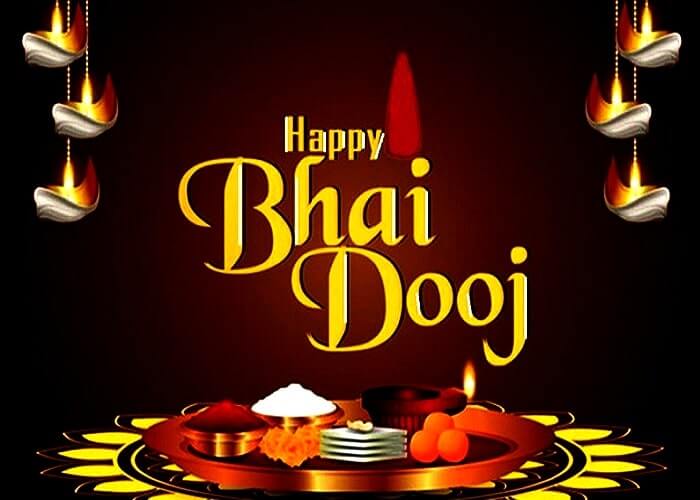
Bhai Dooj is the day celebrated every year two days after Diwali, on the second lunar day of the Shukla Paksha in the month of Kartika. According to Hindus, this day has great importance in society, as it is celebrated by brothers and sisters. The day is celebrated during the Diwali or Tihar festival and the Holi festival. The most famous day is celebrated on Diwali, and the least famous day is celebrated three days before Holi. This day is also celebrated by different names in different parts of India; in Bihar and its nearby parts, it is known as ‘Bhai Phonta’. It is also known as ‘Bhai Bej’ in other parts like Maharashtra, Gujarat, Goa, and Karnataka. But the most common name known to everyone is ‘Bhai Dooj ’.
What is Bhai Dooj?
Bhai Dooj is a Hindu festival celebrating the bond between brothers and sisters. The name “Bhai Dooj” has a simple meaning: “Bhai” refers to a brother, while “Dooj” denotes the second lunar day of the Hindu calendar. The central ceremony usually involves the sister applying tilak or tika to her brother’s forehead and performing an aarti. She offers prayers for his long life, health and well-being. The brother, in return, gives his sister a gift and an expression of affection.
The exact customs vary from one region of India to another, but the underlying theme remains the same: love, family, and the enduring relationships between siblings. However, the festival has a broader meaning as well. It provides an opportunity for families to reunite after the celebration of Diwali and spend some quality time with each other.
The Story behind Bhai Dooj
Bhai Dooj has several fascinating legends that explain the origin of the festival. Two of the most widely known are the stories of Yama and Yami and Lord Krishna and Subhadra.
The story of Yama and Yami
According to one popular legend, Yamraj, the Hindu deity, visited his sister. Yami welcomed her brother warmly and performed an aarti and applied a tilak to his forehead. She also prayed for his well-being. It is said that Yamraj was deeply touched by his sister’s affection. This legend gave rise to the belief that brothers who receive tika from their sisters on Bhai Dooj are blessed with protection and freedom from the fear of death.
The story of Krishna and Subhadra
Another popular tradition that connects this festival with Lord Krishna and Subhadra. According to legend, Lord Krishna encountered the demon Narakasura while visiting Subhadra’s house. In the fight, he annihilated the demon and proceeded on his way. When he reached Subhadra’s house, she did his aarti and put the tilak on his forehead for the victory. This tradition continues to this day, with sisters applying tilak to their brothers’ foreheads as a symbol of love and divine blessings.
How the ceremony was celebrated;
#1. The celebration of this day is quite similar to Raksha Bandhan, but the difference is that instead of tying Rakhi, they used to tie a religious thread (Moli). The motto behind both days is the same, which is to show respect for the sister’s love for his brother.
#2. Celebrations vary across India, with different regions following their own unique customs. As in Bihar and many eastern states, they followed their traditions. But the most common procedure done to celebrate the day is as follows:
#3. The first, thing is that the brothers visited their sister’s house and sisters warm welcomed him with tilak and tying of Moli on his wrist. After this, they put sweets in each other’s mouths, which means that their bond always stays as sweet as it was before. Then, after doing all the ceremonial procedures, they have to go for food.
#4. The mythology behind eating the food with the sister is that the one who eats food with his sister on this occasion is blessed with a long and fruitful life by Yamraj.
Extra Thoughts:
#1. It is believed that a sister’s love and blessings can bring happiness, prosperity, and good fortune into her brother’s life. The more the sister is happy, the more the brother does well in life.
#2. So, that’s why brothers give gifts to their sister to make her happy. After doing all the things they both have to go for pooja and pray that this beautiful bond remains as same as during the whole life.
#3. Sisters pray for brother’s wellness and prosperity, and brother prays that God provides all the things which his sister wants in his life. Brothers also promise to his sister that they will always help them even in any situation and also sister promises the same.
#4. For sisters who do not have brothers, the tradition may involve worshipping the moon, which holds a special place in Hindu culture and is affectionately known as ‘Chanda Mama’. This tradition beautifully reflects the emotional bond associated with Bhai Dooj. Brothers also have to do the same if they don’t have a sister.
Each year, brothers and sisters follow these cherished traditions to celebrate the festival of Bhai Dooj.
One more thing about tika is that tika is always made up of a mix of rice, turmeric, and kumkum. As part of the ritual, the tika is applied using the ring finger or thumb.
Food and sweets on Bhai Dooj
Food is an important part of family celebrations during Bhai Dooj. Celebrated soon after Diwali, Bhai Dooj brings an abundance of traditional sweets and festive dishes to homes. Common choices include: Laddo, Gulab Jamun, Kaju Katli, Halwa, Kheer, etc. Families also prepare regional dishes depending on their local tradition. The meal does not have to be elaborate; families can sit together and enjoy quality time together even with simple food.
Gifts that you can give to your sisters;
- Chocolates; as we all know that every sister likes chocolates, so chocolates are the best gift that you can give to them this year. This makes them happy, and this also moves your pocket to the lighter side.
- Clothes; You can also give clothes to your sisters. As every girl is very fond of clothes, you can go shopping on the evening of Bhai Dooj and buy some clothes for her of her choice. This makes her even happier than the gift of chocolates. If you are not able to go shopping then you can also give money, so that she can buy clothes of her choice any time.
- Cup with photo; you can also order a cup with the photo of your sister with you printed on it, as this is a very beautiful gift to show your love to sister.
- Other things that you can provide your sister, like brownies, a Mobile phone(as today’s phone is a necessary need for all to study and all other things), jewellery, and a lot more things that you can gift to your sister.
The Modern meaning of Bhai Dooj
Bhai doojj has naturally evolved with changing lifestyles. Families may live in different cities or even different countries, making it difficult to perform the ceremony together. Today, siblings often celebrate through video calls, online gifts, photographs and virtual family gatherings when they cannot meet in person. At the same time many families continue to follow traditional rituals at home.
How this day needs to be seen by each and everyone in today’s life;
Bhai Dooj is much more than the final celebration of Diwali. It is a festival that gives brothers and sisters an opportunity to celebrate their unique relationships and create memories together. From the traditional tika and aarti to sweets and family gatherings, every part of the celebration carries a message of affection and good wishes. Although customs vary across different parts of India, the central idea remains remarkably consistent: celebrating the bond between siblings.
FAQs
Q1. What is the main purpose of Bhai Dooj?
The festival celebrates the bond between brothers and sisters, where sisters put tilak on their brother’s head and ask for their well-being from god.
Q2. What is the story of Bhai Dooj?
The stories revolves around Yama and Yami, alongside with Krishna and Subhadra.
Q3. What is Bhai Dooj called in Maharashtra?
Maharashtra celebrates Bhai Dooj as Bhau Beej, also known as Bhav Bij.
Q4. What is Bhai Dooj called in West Bengal?
In West Bengal, Bhai Dooj is traditionally known as Bhai Phonta
Q5. Is Bhai Dooj the same as Raksha Bandhan?
No. Both festivals celebrate the sibling relationship, but they have different dates and rituals. Raksha Bandhan is celebrated by tying a Rakhi around a brother’s wrist, whereas Bhai Dooj is marked by sisters applying tilak to their brothers’ foreheads.