
Some places are remembered for their landscapes, while others leave a lasting impression through the stories they carry. Kangra, a valley well nestled in Himachal Pradesh, brings both together. Under the shadows of the Dhauladhar mountains, its temples preserve centuries of devotion, local legends, and architectural traditions.
From the sacred flames of the Jwala Devi to the intricately carved stone shrines of Masroor, every temple gives a different glimpse into the region’s spiritual and cultural heritage. Some draw visitors with their religious significance, while others invite closer looks at the history and craftsmanship that have endured for generations.
Whether you are planning a pilgrimage, exploring Himachal Pradesh’s heritage or simply curious about the Kangra’s lesser-known stories, these 10 temples offer a meaningful way to discover the district beyond its scenic beauty.
#1. Bajreshwari Devi Temple: A shrine that rose from the ruins
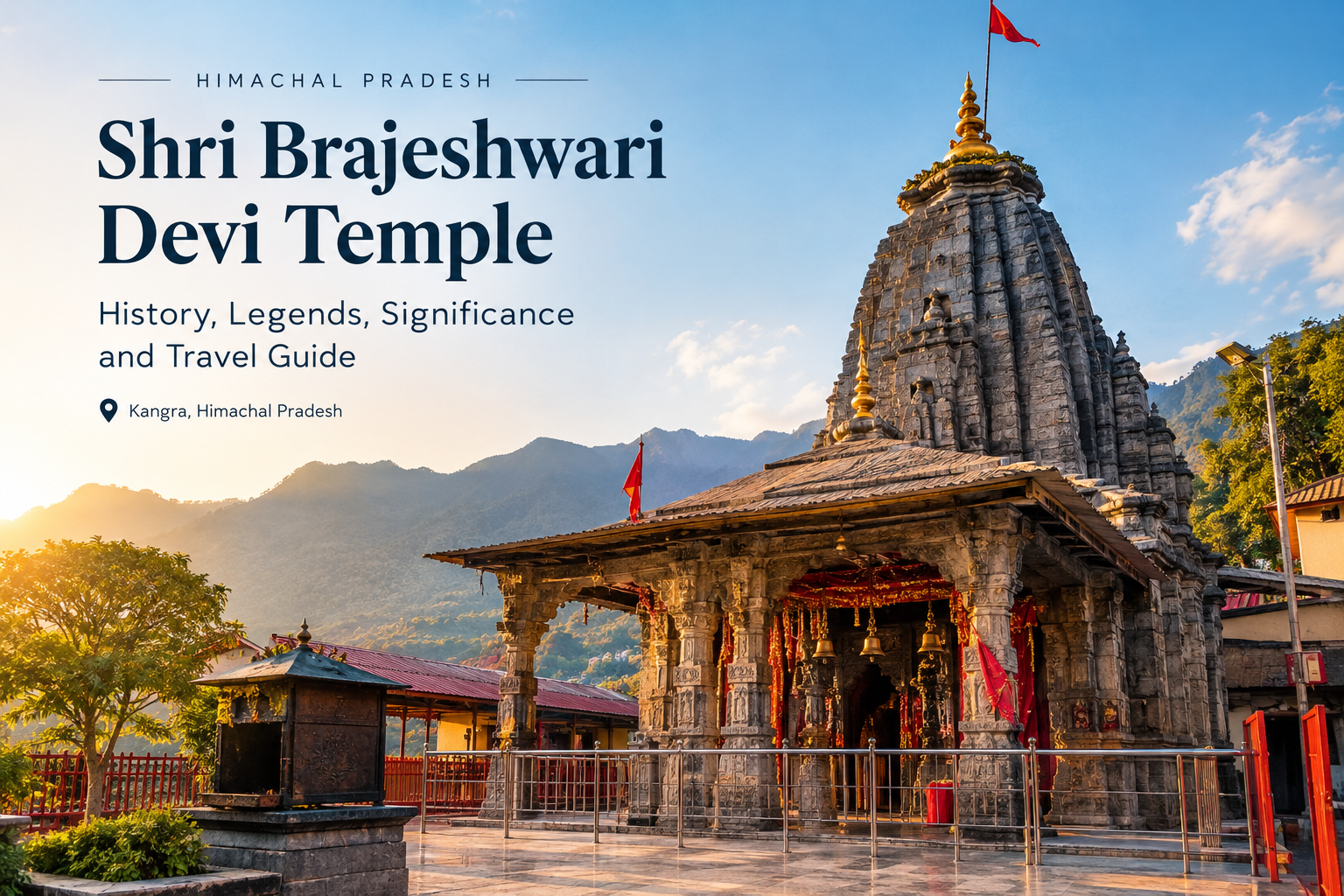
Bajreshwari Devi Temple is one of the district’s most important temples. It is dedicated to the Goddess Bajreshwari- a form of Durga and traditionally comes under the 51 Shakti Peethas of India.
According to Hinduism, the temple marks the spot where a part of Goddess Sati’s body is believed to have fallen here- her left breast, to be precise. The shrine has also been associated with the ancient settlement of Nagarkot, which was once an important centre of power.
But the temple’s history has not always been peaceful. It suffered repeated invasions and extensive damage during the devastating earthquake of 1905. Its history reflects the determination of local communities to preserve an important part of their religious heritage.
Location: Kangra town
Best time to visit: during Navratri for the festive atmosphere, or on regular days for a quieter visit.
#2. Jwalamukhi Temple: The shrine of the eternal flames.
Jwalamukhi Temple is one of the most distinctive religious sites in Kangra. Unlike temples where the main object of worship is the idol, this shrine is known for its natural flame emerging from the openings in the rock inside the sanctum. Devotees regard this flame as a manifestation of Goddess Jwala Ji.
The name Jwalamukhi is associated with the idea of a flame, which makes the temple’s form of worship particularly meaningful. The natural flame is the central feature of the shrine, and its presence has made the temple an important pilgrimage destination for generations.
The temple especially becomes lively during Navratri, when devotees arrive to offer prayers and participate in religious celebrations. The atmosphere during these periods reflects the strong connection between the local traditions and worship.
Location: Jwalamukhi town, Kangra district
Best time to visit: During Navratri, the shrine is decorated like a bride, and the atmosphere is really spiritual.
#3. Chamunda Devi Temple: Faith beside the Baner River
Under the shadow of Dhauladhar mountain, Chamunda Devi Temple combines religious importance with peaceful natural settings. The shrine stands near the Baner River and is dedicated to Goddess Chamunda, a powerful form of the Goddess Durga.
Local records tell the story of a king and a priest who sought permission to move the temple to a more accessible location. According to the belief, the goddess appeared in the dream of the priest and guided him with directions. The idol was eventually brought to the new shrine and installed for worship.
This story remains a part of the temple’s identity and reflects the importance of devotion and guidance. A visit here can be combined with a trip towards Palampur or Dharamshala, depending on your travel plans.
Location: Padar, Dharamshala
Best time to visit: Throughout the year, especially during Navratri
#4. Baijnath Temple: An architectural treasure dedicated to Lord Shiva
Baijnath Temple is a must-visit destination for anyone interested in the religious and architectural history of Himachal Pradesh. Dedicated to Lord Shiva in his Vaidyanath form, the temple is located in the town of Baijnath in the Kangra district.
The present stone temple was constructed in 1204 CE by the two merchants, Ahuka and Manyuka, at a site where an earlier Shiva shrine existed. Its age and architectural details make it particularly valuable for understanding the temple-building tradition of medieval North India.
The temple follows the Nagara style of architecture. Recognised by its rising tower, known as the Shikara. Baijnath is also associated with the devotion of Ravna to Lord Shiva. These stories add another layer of meaning to the temple.
Location: Baijnath, Kangra district
Best time to visit: During Maha Shivaratri for the celebration.
#5. Baglamukhi Temple: A centre of Shakti worship
This temple is dedicated to the Goddess Baglamukhi, one of the 10 Mahavidyas according to Hinduism. The goddess is associated with power, protection and the ability to overcome obstacles. One of the temple’s most recognisable features is its yellow colour scheme. It is believed that the colour is the Goddess’s favourite, so you will see many devotees offering many yellow-themed things in the temple.
The temple offers a different experience from the region’s ancient stone shrines. Its importance lies not only in its religious identity but also in the tradition and rituals that continue to bring people here.
Visitors should follow the temple’s guidelines for worship and offerings, especially during busy festival periods.
Location: Bankhandi, Kangra district
Best time to visit: Throughout the year, but check locally for the major religious events.
#6. Aadi Himani Chamunda Temple: A pilgrimage into the mountains
For those seeking a more demanding spiritual journey, Aadi Chamunda Temple offers an experience quite different from the easily accessible shrines of Kangra.
It is situated high in the Dhauladhar mountain range, this older shrine is reached by a trekking route from the Chamunda Devi area. Its elevated location and mountain surroundings make this journey an important part of the visit.
The shrine is dedicated to Goddess Chamunda and attracts devotees who undertake the journey as an act of faith. And unlike a short stop at a roadside temple, reaching Aadi Chamunda Devi temple requires preparations, physical effort, and attention to the weather.
Location: Chandra Bhan near Jia village.
Best time to visit: During favourable weather conditions for trekking.
#7. Kaleshwar Mahadev temple: A peaceful Shiva shrine.
Kaleshwar Mahadev temple is an important religious destination in the Kangra region, dedicated to Lord Shiva. The temple is traditionally associated with the worship of Lord Shiva and is recognised among the district’s religious and heritage sites. This temple offers a different atmosphere than any other large pilgrimage centre.
Shiva Temples often hold special significance during Maha Shivaratri, and Kaleshwar Mahadev Temple is a useful addition for travellers interested in exploring the wider network of shrines beyond the best-known destination.
Before planning a visit, confirm the temple’s exact location and local access arrangements, especially if you are travelling between different parts of Kangra district.
Location: Kaleshwar village, near Pragpur, Kangra district.
Best time to visit: Around Maha Shivaratri, the atmosphere is religious and filled with consciousness during that time.
#8. Bhagsunag Temple: An ancient shrine near the waterfall
A very interesting legend has been associated with this temple, according to the words: There was a king called Bhagsu. It is said that he had fought with the Nag devta and was eventually defeated. When he sought forgiveness, the site was considered blessed and named after the legend- Bhagsunag. The temple is the shadow of that legend.
It is dedicated to Lord Shiva and the serpent deity, Bhagsunag. The Bhagsunag temple and the waterfall are quite a popular tourist attraction in McLeod Ganj. Many people flock to this temple and take a dip in the kund ahead, believing that the cold spring water has healing properties.
And roughly a km away from the temple, there is a path that leads to “Bhagsunag Waterfall”. After the darshan in the temple, you can visit the waterfall since it’s the most famous attraction.
Location: Bhagsu village, near McLeod Ganj, Himachal Pradesh.
Best time to visit: all year round, but heavy monsoon trips should be avoided because of slippery trails and landslides.
#9. Kunal Pathri Temple: A quiet shrine amid tea gardens.
Revered in the 51 Shakti Peethas of India, this temple is dedicated to Goddess Sati. It is believed that her skull fell into this place. The goddess is known as Kapaleshwari, deriving the name from the Sanskrit word Kapal, which means Skull. There is a very interesting legend behind the temple, and it is connected with the stone that resides in it.
It is said that the stone never dries, and whenever it starts to dry, rain shortly follows it. It can be considered the local meteorological forecaster, since whenever the stone starts to dry off even a little, it rains just after that. The faith and belief of the people are so attached to this place that you cannot ignore the fascination of the temple.
Just like Jwala Devi, Kapaleshwari Devi also has no idol; she resides in the temple in the stone form. Connecting the temple to nature and the faith of people.
Location: Near Dharamshala, Kangra district
Best time to visit: During pleasant weather, when the walk through the surrounding area is enjoyable.
#10. Kathgarh Mahadev Temple: A Shivalinga that stands apart.
This temple is really interesting for the unusual form of its Shivalinga, which appears divided into two parts. The one part of Shivalinga is known to be as Goddess Parvati and another part as Lord Shiva himself.
According to local belief, the distance between the two parts changes with the movement of celestial bodies. This distinctive feature has made the temple a place of curiosity as well as devotion, attracting pilgrims who come to offer prayers and see the unusual sacred formation for themselves.
For travellers interested in discovering temples beyond the usual pilgrimage circuit, Kathgarh Mahadev is a worthwhile addition to the itinerary.
Location: Kathgarh, Indora tehsil, Kangra district.
Best time to visit: During Shivaratri when three days fair is organised in the temple. Although you can visit any time of the year.
Conclusion
Kangra offers more than just scenic beauty and cultural heritage. And if you are bored with just one or two places to visit in the town, here is the list of religious heritage Kangra has accumulated. From the legend since ancient times or the stories from generation to generation, these temples have connected faith and believes of people.
If you are exploring Kangra, consider adding a few of these temples to your itinerary. They offer a meaningful way to discover the district’s cultural heritage alongside its mountains, villages, and historic landmarks.
FAQs:
Q1: Which is the most famous temple in Kangra?
Bajreshwari Devi Temple is one of Kangra’s best-known pilgrimage sites. Jwalamukhi Temple and Chamunda Devi Temple are also prominent temples.
Q2: Which temples are known for their history?
Baijnath and Masroor Rock-cut Temple are notable for their historical and architectural significance.
Q3: Are there temples in Kangra surrounded by natural scenery?
Yes. Chamunda Devi Temple is situated near the Baner River with views of the Dhauladhar mountains. Kunal Pathri is surrounded by greenery and tea gardens, while Bhagsunag Temple is near the well-known Bhagsu Waterfall.
Q4: Can I visit several temples in Kangra in one day?
It depends on how you have planned your routes and trip. However, the district is spread out, and it will be difficult for you to visit every temple at once.
Q5. What is the best time to visit the temples in Kangra?
Spring and Autumn are generally pleasant for sightseeing, although the weather varies across the district.