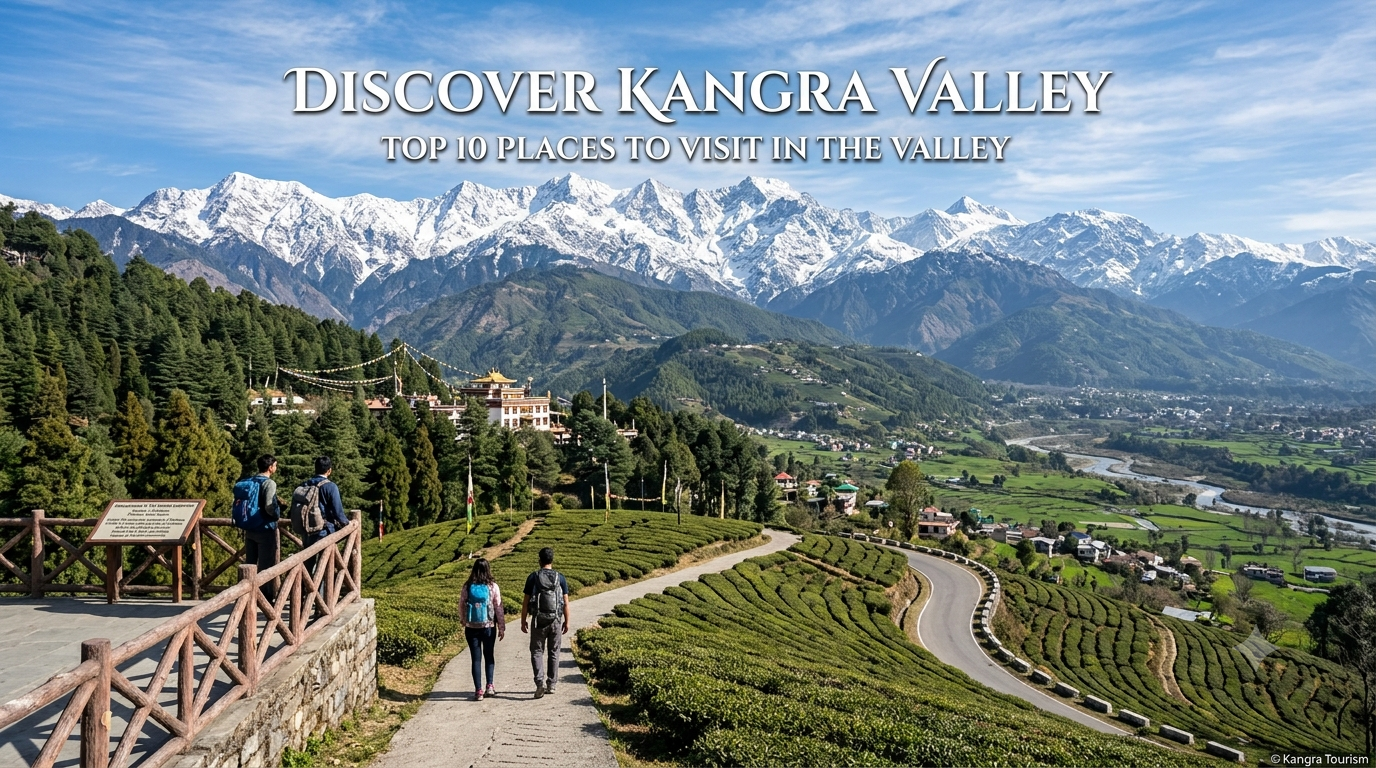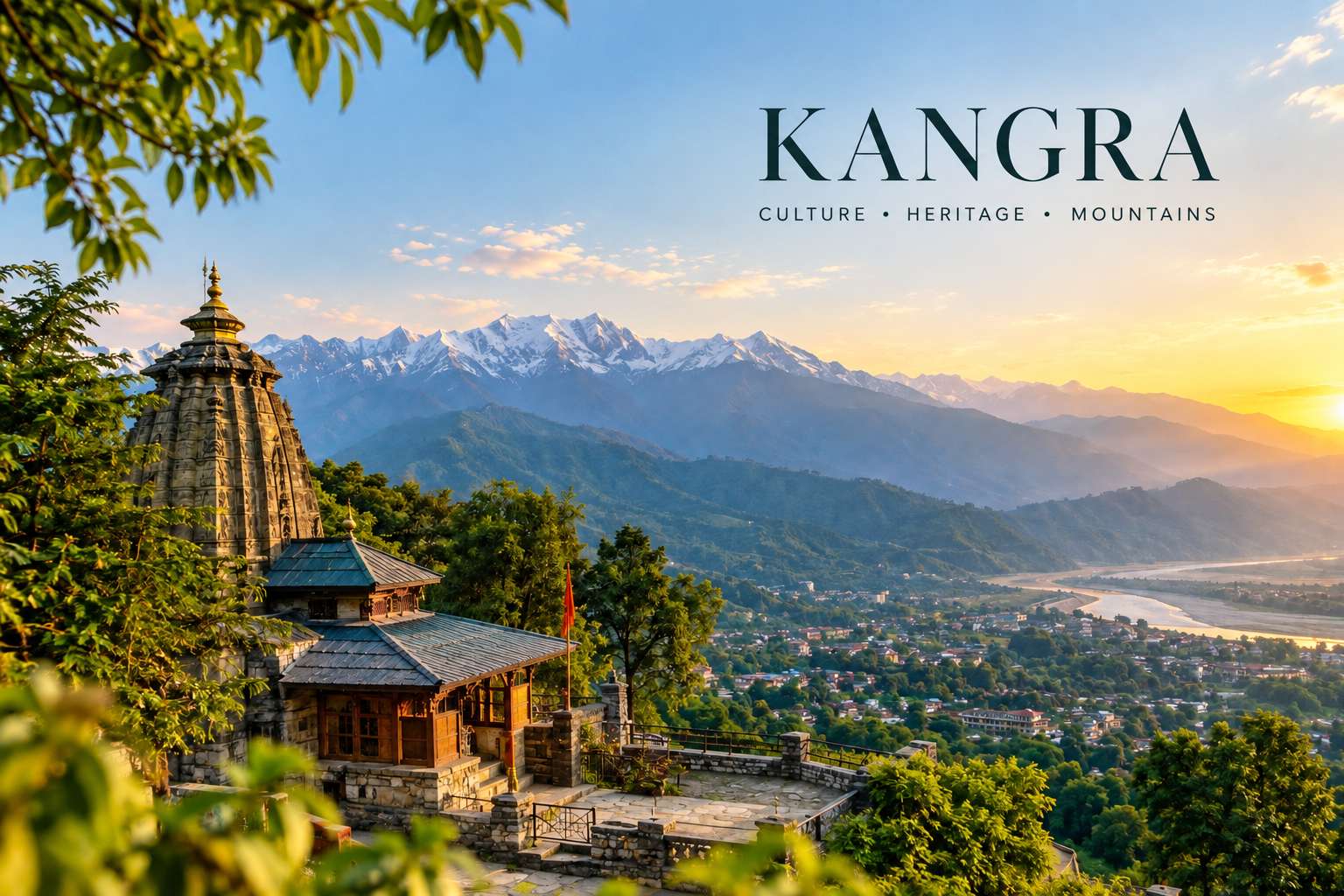
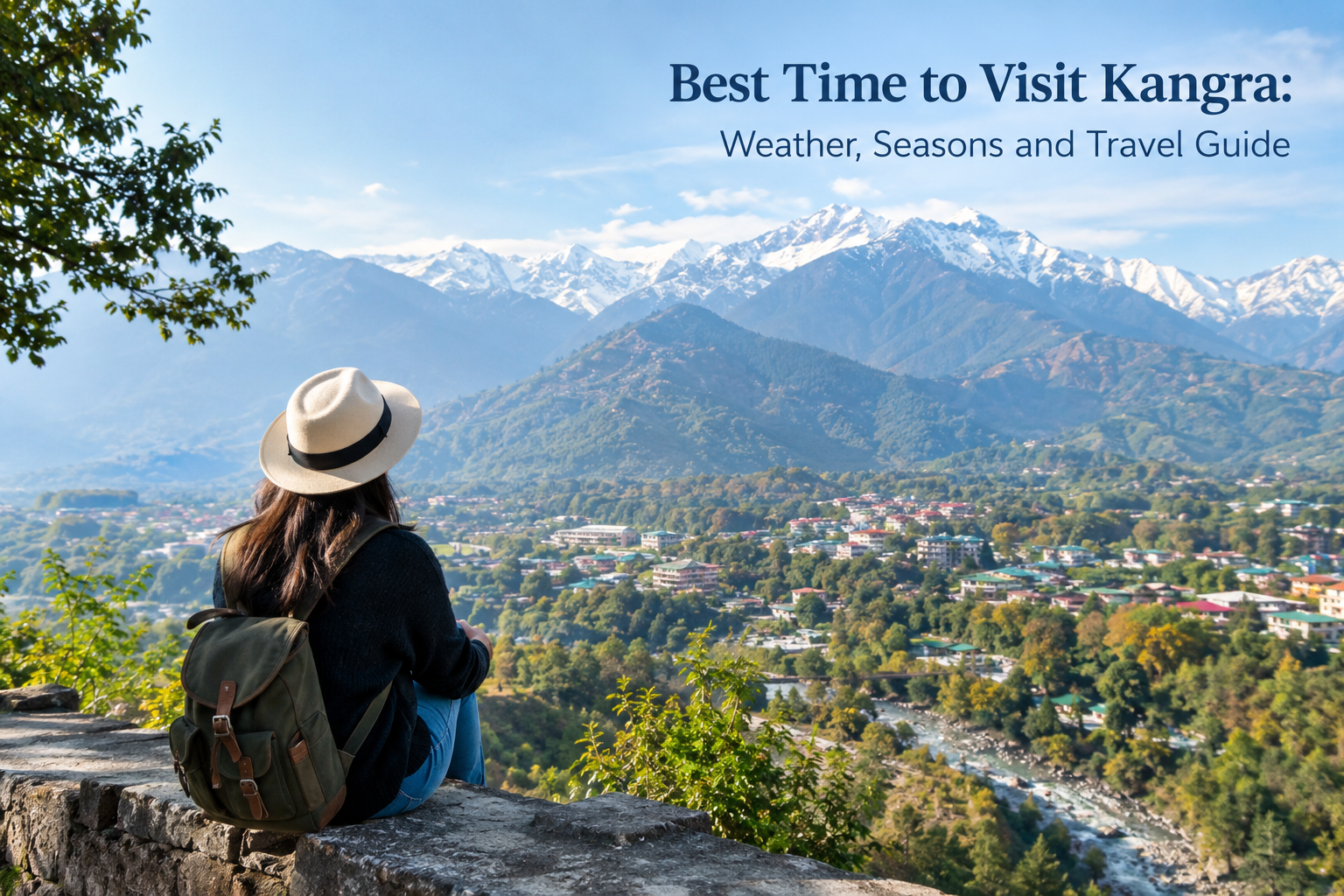
Kangra, the most beautiful valley of Himachal Pradesh, surrounded by the crown of hills- Dhauladhar. It is considered the most scenic location in the state. This district hosts what not? From ancient temples to historical sites. The view of Dhauladhar mountains from a tea garden or local fields is just to die for.
The region looks different in every season, so it depends on the visitor for which season they are planning their trip for. The best time to visit Kangra depends on what kind of experience you want. Although milder days like March- May, and September-November, is considered to be good. Neither the harsh winters will bother you nor the spiking summers. Just perfect weather to visit this heaven on earth place with your family or loved ones.
However, the ideal month depends on what kind of experience you are looking for. If you want to have a comfortable sightseeing, you may prefer autumn or spring, while a traveller who enjoys cooler weather might consider winter for the trip.
Where is Kangra?
Kangra is the most populated district of Himachal Pradesh, situated in the western part of the state. The region lies beneath the Dhauladhar mountain range and is surrounded by mixture of hills, forests, agricultural land and small settlements.
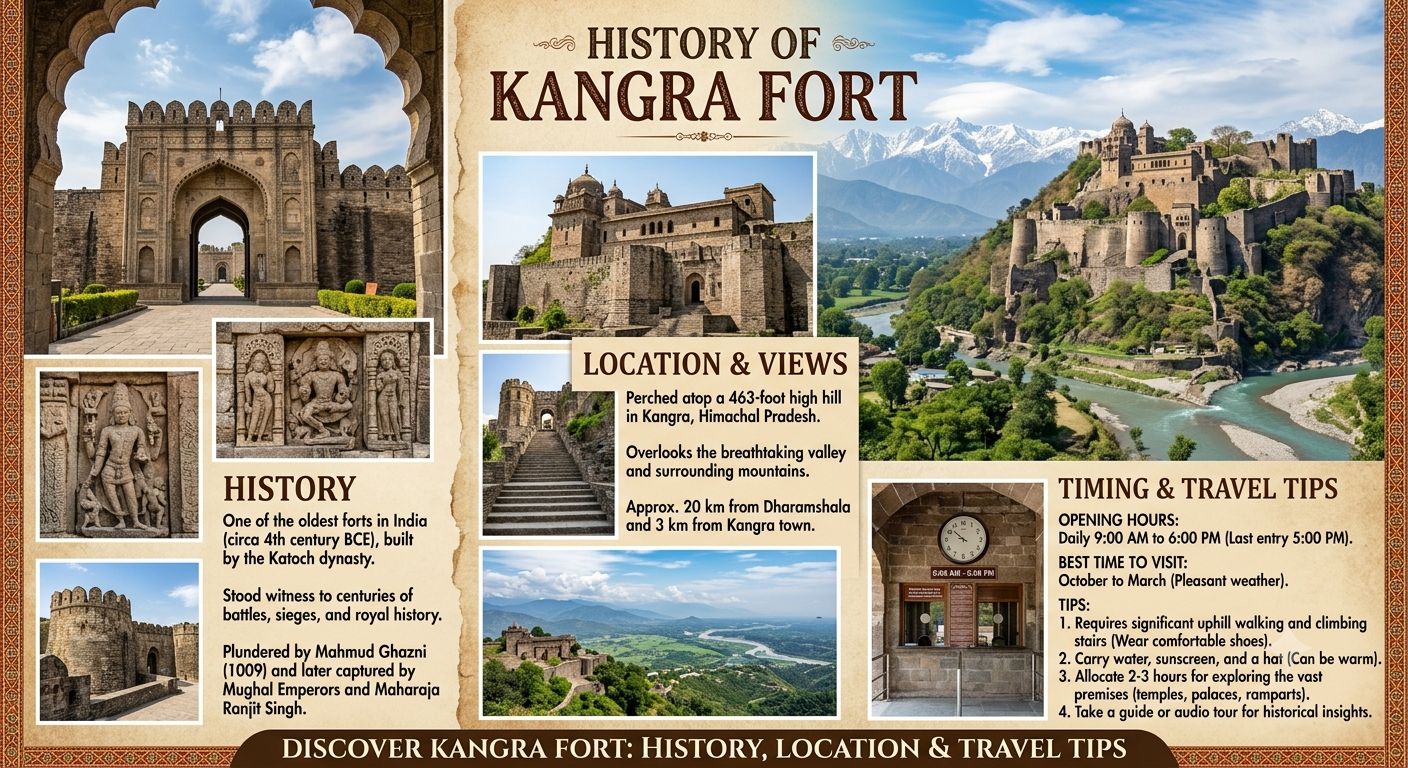
Kangra town is historically famous for Kangra fort, and Brajeshwari Devi temple. The Kangra district however holds larger area and cover popular hill stations like Dharamshala, Palampur, Baijnath, Pragpur and Masroor etc.
This is important while planning a trip. You could be going to Dharamshala that is in Kangra district, or Kangra town itself. In this article we will talk about Kangra town, and the best time to visit this hills escape.
Best time to visit Kangra
Your best time will be depended on the experience you want. For many travellers, September to November is one of the most comfortable periods to explore Kangra. Many travellers who come to hills to escape plain’s heat, April to June will be the best, as the mornings and evenings are cooler than the days.
Monsoons are considered to be risky to travel in hills as there is risk if landslide and flash flooding the rivers. July is particularly known to be the heaviest monsoon month, so try to avoid the timing for your health safety. August will be pleasant, but again the risk of health still looms. It is recommended to skip heavy monsoon time and plan your trip in pleasant months.
Autumn is thoroughly enjoyable if you want to explore places such as:
- Kangra fort
- Brajeshwari Devi Temple
- Dharamshala
- Palampur
- Masroor rock cut temple
- Jwalamukhi
- Pragpur
September to November- The fall season
Since these months of year considered to be the best to visit Kangra, there are multiple reasons to why we should visit this town during Autumn
- Pleasant sightseeing conditions
- Generally clearer mountain views
- Green landscape after the monsoon
- Good condition for photography
- Comfortable for visiting forts and temples
- Suitable for exploring nearby towns.
If your main reason for this trip is sightseeing and exploring Kangra’s history, this is very practical season.
December to February- Winter in Kangra
Winter gives Kangra an entirely different character. If your trip is for snow sightseeing, that you might to travel in the uphills of Kangra, since lower Kangra doesn’t experience too much of snowfall. The weather will be quite chilly, since Dhauladhar experience fresh snowfall almost every day during winter. And because of the town’s proximity to the mountain range, the winters are quite cold in this town.
Mornings are draped with heavy fog, and people sits outside with bonfire to warm themselves. The temperature could go up to 5 degree C to 10 degree C, although the temperatures can vary considerably depending on altitude and location.
January, that is the coldest month for the town, experience temperature as low as 2.9-degree C. But you will still find many visitors in this town because of Christmas and New year. Because Dharamshala and Kangra are quite close to each other, many tourists shift their attention to this town when the hotels are packed in the adjacent towns.
Winter is a good choice if you enjoy:
- Cold mornings
- Scenic mountains covered in snow
- Quite mornings
- Hotels draped in lights and decorations for winter festivals like Diwali, Christmas and New year.
- A cup of coffee or tea while talking a walk in fog covered parks.
- Exploring the historical places without summer heat.
March to May- Spring and early Summer
When the heat started increasing in the plains of Northern India, a hill escape is just perfect for your trip. Spring is considered to be the most pleasant time since the heavy winters are gone by. From March onwards the temperature starts to rise and the landscape becomes green overall. This time is best for people who wants to see valley blooming in fresh flowers and serene weather.
Mornings and evenings are particularly cooler than days. The surrounding countryside is especially attractive during this period, and the Dhauladhar provides a dramatic backdrop. Kangra’s lower areas can become warm during summer, while the hill tows remain comparatively cooler.
You can enjoy your trip in summer, because:
- No heavy cold mornings for you to travel comfortably
- Valley blooming in wildflowers and fruit orchards.
- Pleasant weather for a walk
- Summer activities in the hotels and resorts
June to September- Monsoon season
This season is considered to be the most complicated season for travelling in Kangra. Although the rain beings the lushiest valley with fields becoming greener and forest looking fresh, it is still advisable to stay away from risky roads and rivers.
Monsoon season brings with itself the season of photography too. Those who enjoy green landscapes, misty mountains and peaceful bird chirping while talking a walk, rainy season is your season. But heavy rainfall can also make travel less predictable.
While the monsoon can be beautiful, it is not always the easiest time for a sightseeing trip. With the risk of flash floodings in the river, where the administration often warns tourist to stay away from rivers and water reservoirs. The roads could be slippery and there is a risk of brake failing while driving, so you don’t want to speed on the roads and blind curves.
Things to keep in mind while travelling during monsoon:
- Keep your travel schedule flexible
- Carry a raincoat or umbrella
- Check road conditions before travelling to distant areas.
- Allow extra travel time.
- Avoid standing close to rivers or streams during heavy rain
- Keep important belongings protected from water
Travel tips for visiting Kangra
- Don’t rush your itinerary- Kangra isn’t a destination to be explored in one day. Although the places are closer, the mountain roads can make the journey slower. So keep your safety in mind and extend your trip if you have to.
- Start sightseeing early- morning is often a comfortable time for visiting forts and temples, especially during warmer seasons.
- Check weather before travelling- rains can make your journey slow and risky, so it is advisable to always check the weather before starting your trip.
- Carry some cash- in the time of digital payments, it is still recommended to carry some cash with you. It will come handy while travelling to village or small rural areas.
- Wear comfortable footwear- a trip to Kangra involves considerably more walking than many first-time visitors expect. So, wear some good grip, comfortable shoes so your feet don’t get tired early.
- Respect religious spaces- many attractions in Kangra are active temples rather than tourist monument. Follow the local rules and ask before taking photographs where necessary.
- Be careful around rivers- do not get too close to fast-flowing rivers or streams, especially during or after heavy rainfall
Conclusion
The beauty of Kangra is that it doesn’t limit the traveller to one type of tourism only. You can get the knowledge of history from forts like- Kangra fort, or Masroor Rock Cut Temple. Then the pilgrims can visit one of the region’s famous temples like Brajeshwari Devi temple or Chamuda Devi temple. The town is considered to the most beautiful valley of Himachal. So, for nature enthusiast, they can explore the valley while having a view of majestic mountain range ahead.
Instead of treating it simply as a stop between Dharamshala and another destination, it is worth giving valley enough time to appreciate the history, temples, landscapes and local culture.
FAQs
Q1. What is the best time to visit Kangra?
September to May are considered the best time to visit Kangra. Because of the pleasant weather and comfortable sightseeing.
Q2. What is the weather in Kangra throughout the year?
The average temperature in summers are generally up to 25-25-degree C, in monsoon it is 18-28-degree and 5-10-degree C during winters.
Q3. Does it snow in Kangra?
Snowfall is limited to the upper hills of Kangra, while the plain valley gets foggy days and extremely chilly conditions.
Q4. Is Kangra worth visiting in winter?
Yes, winter can be a pleasant time to explore Kangra, particularly if you enjoy cooler weather and sightseeing.
Q5. Is Kangra good for a short weekend trip?
Yes, of course, it is. If your trip destination is only one place, or if your can cover two places in one day, the trip can be worthwhile. Since every place of Kangra is unique and you won’t feel the déjà vu.