In the shadows of the mighty Himalayas rest a historical fort that has witnessed years of invasions, ruling and weathering. Kangra fort, or Nagarkot fort. This fort has been ruled by Katoch dynasty for years. Its wealth has been a major attraction force for many invaders and interest for many rulers. Not only that, it’s resilience can be seen by devastating earthquake and plundering. The history is so rich here, that one day cannot cover everything.
Kangra Fort is one of the most important historical landmarks in Himachal Pradesh. Located near Kangra town, the fort stands on a rocky hill overlooking the surrounding valley and the rivers below. Its strategic location, historic gateways, temple remains and long association with the Katoch dynasty make it an interesting destination for history enthusiasts and travellers.
Also known as Nagarkot Fort, it witnessed several invasions and changes of control over the centuries. The devastating earthquake of April 4, 1905, caused extensive damage to the structure, but visitors can still explore its surviving walls, gateways and historical remains.
Whether you are interested in the history of the Katoch rulers or planning a sightseeing trip from Dharamshala, this guide covers the fort’s history, architecture, visitor information and travel tips.
Where Is Kangra Fort Located?
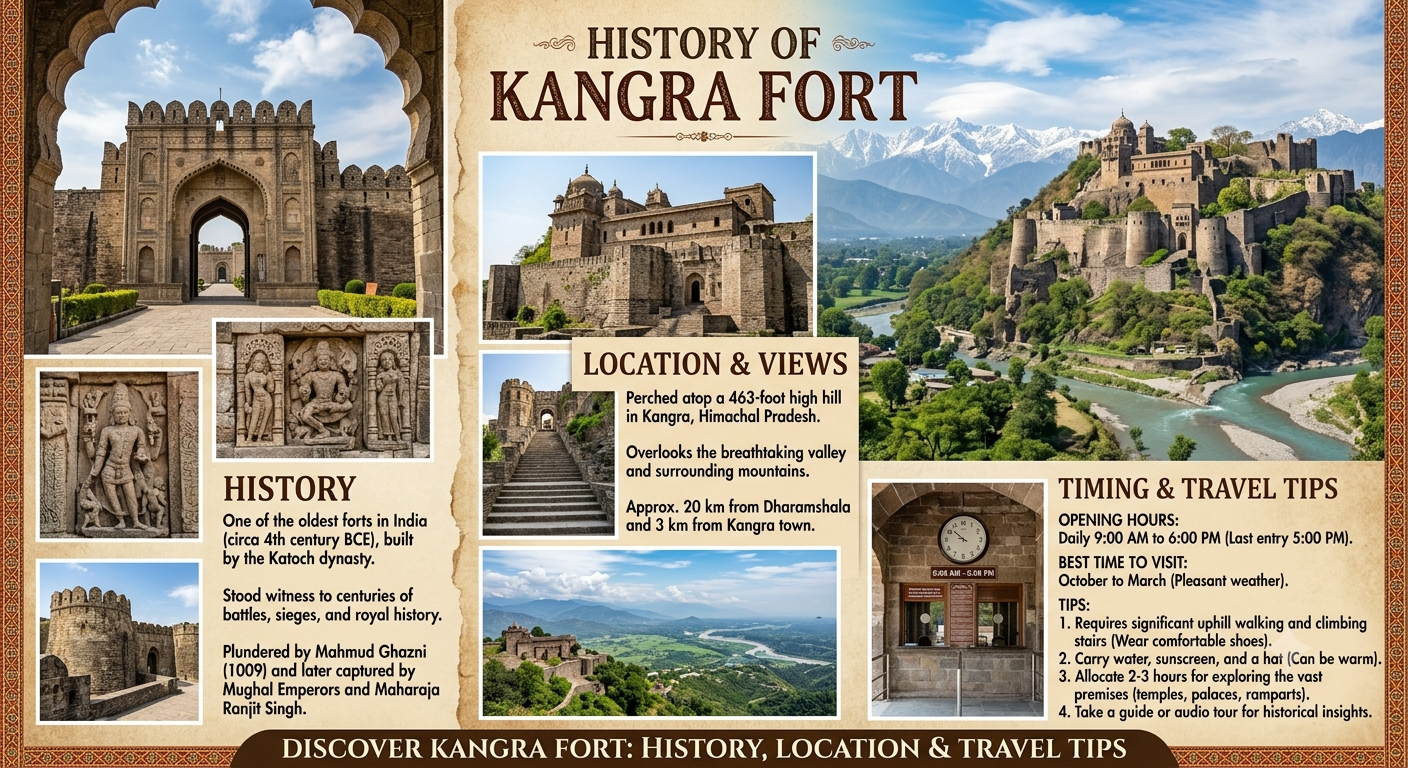
Kangra Fort is situated near Kangra town in Himachal Pradesh, India. It occupies an elevated rocky site overlooking the Kangra Valley, near the confluence of the Banganga and Manjhi rivers.
The fort is approximately 3 km from Kangra town and around 20 km from Dharamshala by road. Actual travel time depends on traffic and road conditions.
Its elevated position offered a natural defensive advantage and provided views of the surrounding valley. The location also helps explain why the fort remained strategically important to successive rulers.
History of Kangra Fort
The history of Kangra Fort is closely associated with the Katoch dynasty, one of the region’s historic ruling families. The wider area is traditionally linked with the ancient Trigarta kingdom, which is mentioned in the Mahabharata.
The fort is also known by the name Nagarkot in historical accounts. Over the centuries, its strategic position and the wealth associated with the region attracted the attention of different rulers and invading forces.
Mahmud of Ghazni’s Invasion in 1009
One of the best-known events in the history of Kangra Fort is the invasion by Mahmud of Ghazni in 1009 CE.
Historical accounts describe how Mahmud captured the fort and plundered wealth associated with the Nagarkot shrine. The event brought Kangra’s wealth and strategic importance to wider attention.
The region continued to experience political changes and military campaigns in the centuries that followed.
The Mughal Period
Kangra Fort became an important objective for the Mughal Empire because of its strategic location and regional influence.
Akbar made efforts to bring the Kangra region under Mughal authority. However, the fort resisted an important Mughal siege in 1615. During the reign of Akbar’s successor, Jahangir, Mughal forces eventually captured the fort in 1619–1620.
It remained under Mughal administration for more than a century. The Mughal period added another chapter to the fort’s long history of changing political control.
Raja Sansar Chand and the Return of Katoch Rule
As Mughal power weakened in northern India, local rulers began seeking greater control over their former territories.
Raja Sansar Chand II of the Katoch dynasty eventually recovered Kangra Fort in the late eighteenth century. His rule is remembered as an important period in the history of the Kangra region.
Sansar Chand was also a patron of art and culture. Kangra became particularly associated with the development and patronage of the famous Kangra School of miniature painting during this period.
The Sikh Period and Maharaja Ranjit Singh
During the early nineteenth century, the growing influence of the Gurkha forces created pressure on the hill states. Raja Sansar Chand sought assistance from Maharaja Ranjit Singh of the Sikh Empire.
Following the campaign against the Gurkhas in 1809, Kangra Fort came under the control of Maharaja Ranjit Singh. This marked the end of independent Katoch control over the fort.
British Rule
After the First Anglo-Sikh War of 1845–1846, the British took control of the region. Kangra Fort subsequently became part of the British-controlled territory.
The British maintained a military presence at the fort until the devastating earthquake of 1905 caused extensive structural damage.
The 1905 Kangra Earthquake
On April 4, 1905, a major earthquake struck the Kangra region. It caused widespread destruction across the area and severely damaged Kangra Fort.
Several structures and sections of the fort were left in ruins. The earthquake changed the appearance of the historic complex, and much of what visitors see today consists of surviving remains.
Historical photographs and museum displays help visitors understand how the fort looked before the earthquake. These records also provide a glimpse into the scale of the damage.
The earthquake remains one of the most significant events in the modern history of Kangra Fort.
Architecture and Main Attractions Inside Kangra Fort
Although much of the original structure was damaged, Kangra Fort still offers visitors an opportunity to explore its historic layout and surviving architectural features.
Historic Gateways
The approach to the fort passes through a series of gateways. Some are associated with different rulers and periods of its history.
These gateways were part of the fort’s defensive design and helped control access to the complex.
Temples Inside the Fort
The fort complex contains the remains of historic temples, including the Ambika Devi Temple, Shitlamata Temple and Lakshmi Narayan Temple.
These structures reflect the religious and cultural significance of the site. Visitors should respect the religious spaces and follow any instructions displayed within the complex.
Sheesh Mahal and Watchtower
The fort complex also includes the area associated with Sheesh Mahal and a polygonal watchtower. These features add to the architectural interest of the site and offer views of the surrounding landscape.
Kangra Fort Museum
The museum near the entrance displays historical material connected with the fort and the region. Visitors may find old photographs, sculptures, carvings and other artefacts that help explain the site’s history.
Museum access and display arrangements may change, so check current visitor information when you arrive.
Kangra Fort Timings and Entry Fee
Kangra Fort is a protected historical monument, and visitors should check the current opening arrangements before planning their trip.
Published visitor information lists opening hours around 9 AM to 6 PM, but timings may change due to local arrangements, maintenance or other reasons.
The entry fee should also be confirmed at the ticket counter or through the relevant official visitor information. Avoid relying on outdated prices published on third-party websites.
Before visiting, confirm:
- Current opening and closing hours.
- Applicable entry charges.
- Museum access and any separate charges.
- Photography rules.
- Any temporary restrictions or closures.
Arriving earlier in the day gives you more time to explore the complex without rushing.
How Much Time Is Needed to Explore Kangra Fort?
Allow approximately 1.5 to 2 hours for a relaxed visit, depending on your interest in the historical remains, museum and views.
The fort has uneven surfaces, steps and walking sections. Visitors who want to explore the site in detail may need additional time.
If you are visiting with children or elderly family members, plan a comfortable pace and take breaks when necessary.
Best Time to Visit Kangra Fort
March to May and September to November are generally comfortable periods for visiting Kangra Fort.
Spring and Summer: March to June
The earlier part of summer can be suitable for exploring the fort. As temperatures rise, it is better to arrive in the morning and avoid spending too much time in exposed areas during the warmer afternoon hours.
Monsoon: July to September
Rain can make stone paths and steps slippery. Heavy rainfall may also affect road conditions. Check the local weather forecast before travelling and avoid visiting during unsafe conditions.
Autumn: October to November
Autumn can offer comfortable sightseeing conditions and pleasant views of the surrounding valley. It is a good period for combining the fort with other nearby attractions.
Winter: December to February
Winter visits are possible, but mornings and evenings can be cold. Carry warm clothing and check weather conditions before travelling.
How to Reach Kangra Fort
Kangra Fort is accessible by road and can be included in a trip to Kangra town or Dharamshala.
By Road
The fort is connected to nearby towns through local roads. Visitors can travel by private vehicle, taxi or available public transport and then follow local directions to the entrance.
Approximate distances include:
- Kangra town: 3 km
- Dharamshala: 20 km
- Gaggal Airport: approximately 14 km
Distances and journey times can vary depending on the route and starting point.
By Air
Gaggal Airport, also known as Kangra Airport, is a nearby airport serving the region. From the airport, visitors can arrange a taxi or other local transport to reach the fort.
Flight schedules and availability may change, so check current services before booking your journey.
By Train
The Kangra Valley Railway has stations serving the region, including Kangra. Visitors can also travel through the broad-gauge rail network to Pathankot and continue by road.
Check current train schedules and onward transport arrangements before travelling.
Places to Visit Near Kangra Fort
You can combine your visit to Kangra Fort with other attractions in and around the region.
1. Brajeshwari Devi Temple
Located in Kangra town, Brajeshwari Devi Temple is an important religious destination. Devotees visit throughout the year, and the temple is particularly busy during major festivals.
2. Masroor Rock Cut Temples
The Masroor Rock Cut Temples are known for their remarkable stone architecture. The complex consists of rock-cut shrines and is an important heritage attraction in the Kangra region.
3. Dharamshala
Dharamshala is a popular hill destination known for its mountain scenery, monasteries and Tibetan cultural heritage. It can be included in a wider itinerary around Kangra.
4. Palampur
Palampur is known for its tea gardens, green surroundings and views of the Dhauladhar range. It is a good option for travellers who want to explore more of Kangra district.
Check travel distances and road conditions before combining multiple attractions in one day.
Travel Tips for Visitors
- Wear comfortable shoes: The fort has uneven surfaces and steps, so footwear with a good grip is recommended.
- Carry drinking water: Exploring the complex involves walking, particularly on warmer days.
- Visit early: Morning visits can be more comfortable for sightseeing.
- Carry sun protection: A cap, sunglasses and sunscreen can be useful in exposed areas.
- Check current timings: Confirm opening hours and entry arrangements before travelling.
- Stay on designated paths: Avoid climbing walls, touching fragile structures or entering restricted areas.
- Respect the heritage site: Do not litter, carve names or damage historic structures.
- Check weather conditions: Rain can make stone surfaces slippery.
- Plan nearby attractions: Combine the fort with nearby temples or other historical places if you have enough time.
Conclusion
Kangra Fort is an important part of Himachal Pradesh’s historical and cultural heritage. Its association with the Katoch dynasty, centuries of changing political control and the earthquake of 1905 make it a fascinating place to explore.
Although much of the original structure was damaged, the surviving gateways, temple remains, walls and museum displays offer visitors a glimpse into the region’s past.
If you are travelling to Kangra or Dharamshala, consider adding the fort to your itinerary. Check current visitor information, wear comfortable shoes and allow enough time to explore this historic landmark.
FAQs.
Q1. Where is Kangra fort located?
Kangra fort is located near Kangra town in Himachal Pradesh, India. It stands on elevated hill and surrounded by Manji and Banganga river.
Q2. Who built Kangra fort?
Kangra fort was built by Katoch dynasty, who has long roots connected with the ruling of Kangra.
Q3. What was Kangra fort originally called?
The fort was known as Nagarkot fort. The wider area is associated with the Trigarta kingdom.
Q4. When did Mahmud of Ghazni invaded Kangra fort?
It happened in 1009CE. He captured the fort and plundered the wealth of Nagarkot fort.
Q5. Who was Raja Sansar Chand?
He is a celebrated king of the Katoch dynasty who recovered the fort in late 18th century and was a patron of art and culture.
Q6. Is Kangra fort still standing today?
Yes. Although much of its parts were destroyed in 1905 earthquake, visitors can still see the remains of the fort.
Q7. What can visitors see inside the Kangra fort?
Visitors can see surviving gateways, temples, stone carvings, sculptures and other archeological remains.
Q8. How far is Kangra fort from Dharamshala?
Kangra fort is located at 20 km from Dharamshala.
Q9. What is the best time to visit Kangra fort?
March-May and September-November is generally considered good time to visit Kangra Fort.