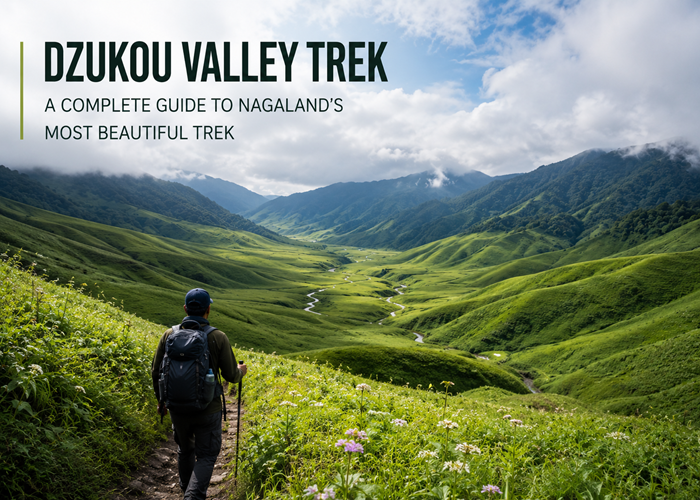
The Dzukou Valley Trek is one of the most rewarding treks in Northeast India, and once you stand at the rim looking down at those rolling green meadows, you understand why. Tucked away on the border of Nagaland and Manipur, this trail has quietly become a favourite for anyone chasing quiet hills instead of crowded hill stations.
People fall for the Dzukou Valley Trek because it feels untouched. There’s no cable car, no roadside dhaba chain, just a long walk-through bamboo forests that opens into a valley carpeted with wildflowers. Here in this guide, you will find everything that you need to know before visiting Dzukou Valley.
Why Visit Dzukou Valley Trek?
Dzukou Valley trek gives you something rare: a landscape that looks almost artificial in how neat it is, yet it’s entirely natural. Trekkers often call it the Valley of Flowers of the Northeast, and during the blooming months, that name makes complete sense.
Beyond the scenery, the trek suits a wide range of travellers. Solo backpackers love the solitude, couples enjoy the camping nights under clear skies, and college groups treat it as a rite of passage after finishing their exams.
Dzukou Valley- Flora and Fauna
Dzukou valley is more than just a scenic trekking destination; it is a biodiversity rich ecosystem located along the Nagaland-Manipur border. Its rolling grassland, bamboo covered sloped, seasonal flowers and surrounding forest provide habitat for variety of plants and animal species. A floristic study recorded 335 plant species belonging to 223 genera and 114 families in Dzukou valley and its surrounding hills.
Native Plants-
The vegetation of Dzukou valley includes Dwarf Bamboo, Rhododendrons, and a variety of temperate and sub-alpine plants. The surrounding hills also contain broadleaf forest. The valley’s bamboo-covered slopes give it much of its characteristic green appearance, while its diverse plant life supports insects, birds and other wildlife.
Seasonal flowers-
One of the biggest attraction in Dzukou’s valley is its spectacular display of seasonal wildflower. During the flowering month, the valley is decorated in dots of flowers all over, giving it’s “Valley of flower” character. The flowers look like colorful stars spread over the green meadow of the valley, making it worth the trek. Species recorded in the area included Rhododendrons, Euphorbia, Aconitum, Ranunculus, and Potentilla along with celebrated Dzukou Lily.
Birds and wildlife-
Alongside with the beautiful flora of the Dzukou valley, the surrounding forest provide the natural habitat for the birds and mammals. One of the notable birds is the- Blyth Tragopan – Nagaland’s state bird, recorded in Dzukou’ valley and the nearby Japfu area.
The wider Dzukou-Japfu landscape has also recorded wildlife such as Clouded Leopard, Leopard, Serow, barking deer, Wild Boar, Stump tailed Macque and Hoolock Gibbon. However, the detailed survey of the vallye’s fauna remain limited, so these species will be found in the larger area of the valley, instead of clustered in only Dzukou valley.
Dzukou’s Lily- The valley’s special flower
The Dzukou Lily is one the most distinctive natural treasure found in Dzukou valley. Along with seasonal wildflowers, Dzukou Lily holds the heart of the valley. Dzukou lily is a rare flower that grown in the Dzukou valley and attracts many tourists just to witness it bloom.
The Dzukou lily is famous for its rarity and its association with the high-altitude meadows of Dzukou. During the flowering season, the colorful blooms add to the valley’s already striking landscape of rolling green hills, grasses and streams.
The Lily is primarily associated with the summer flowering season when Dzukou valley gets covered in seasonal blooming flowers. The exact flowering period can vary, depending on weather, local conditions so you should check current situation before planning a flower-focused trek.
The flower has become almost a natural symbol of Dzukou because of its close relationship with the valley’s unique high-altitude ecosystem. Its presence contributes to the valley’s reputation as a floral destination, while its rarity makes encountering it part of the appeal for nature lovers and trekkers.
In 2026, Nagaland’s Department of Information and Public Relations also referred to the Dzukou Lily as a symbol of the valley’s unique ecological wealth.
Where is Dzukou Valley Located?
Dzukou Valley is situated right on the state border between Nagaland and Manipur, behind Japfu Peak Nagaland second-highest mountain. The valley floor is at roughly 2,450 meters. This keeps the air cool even in summer.
Here’s how the connectivity works out:
- State: Nagaland (bordering Manipur)
- Nearest city: Kohima, the state capital
- Nearest airport: Dimapur Airport, about 74 km from Kohima, with flights from Kolkata, Guwahati, and Delhi
- Nearest railway station: Dimapur Railway Station, connected to Guwahati and Kolkata
- Road connectivity: Shared taxis and private cabs run regularly from Dimapur to Kohima, taking around 3 hours
From Dimapur, most travellers head straight to Kohima, rest for a night, and then move on to the trailhead village the next morning.
Dzukou Valley Trek Distance and Route
The Dzukou Valley trek distance depends entirely on which route you pick, since there are two main entry points.
Viswema route: Viswema village is roughly 20 to 25 km from Kohima by road. From the last motorable point, the actual trek covers close to 8 km one way, with a steep initial climb followed by a longer, gentler plateau walk. Round trip works out to about 16 km.
Zakhama route: Zakhama (also spelt Jakhama) is closer to Kohima, around 14 to 16 km away. The trekking portion here is shorter in distance but noticeably steeper, with a 5 to 6 km climb that gains height fast.
Total elevation gain from either trailhead to the valley floor is around 900 metres. Most trekkers finish the ascent in 3 to 6 hours depending on fitness and the route chosen, and both paths eventually meet at the same rest hut inside the valley.
A smart trick many seasoned trekkers use: climb up via Viswema for the easier gradient, then descend through Zakhama for a faster exit. That way you experience both routes in one trip.
Dzukou Valley Trek Difficulty Level
How difficult is Dzukou Valley Trek in real? Well it can be considered moderate, with a genuinely tough opening stretch.
- Beginners: Can absolutely do it, provided they pace themselves during the first hour of climbing.
- Fitness level: Basic cardio fitness helps a lot. You don’t need mountaineering experience.
- Terrain: Stone steps and root-covered trails give way to bamboo thickets, then a flatter plateau near the valley.
- Steep sections: The climb from either trailhead includes inclines of 30 to 60 degrees for roughly the first one to two hours.
- Weather impact: Rain turns the trail slippery and adds leeches during monsoon months, so grip matters more than speed.
Once you are past that initial grind, the walk through the valley itself is easy and almost flat.
Dzukou Valley Trek Best Time to Visit
Picking the right season shapes your entire experience, so the Dzukou Valley trek best time really depends on what you want to see.
The Dzukou lily, found nowhere else in the world, blooms from late May through June, with the wider flowering season stretching into September. Winter brings frost, clear skies, and a completely different, starker beauty.
| Season | Temperature | Landscape | Pros | Cons | Best For |
| Spring (Mar–May) | 12–22°C | Fresh greenery, early blooms | Pleasant weather, fewer crowds | Occasional showers | First-time trekkers |
| Summer/Monsoon (Jun–Aug) | 15–25°C | Lilies in full bloom | Peak flower season, waterfalls active | Heavy rain, leeches, slippery trail | Flower photographers |
| Autumn (Sep–Oct) | 10–20°C | Valley turning golden-green | Clearer skies, fewer leeches | Trail can still be muddy | Balanced experience |
| Winter (Nov–Feb) | -2 to 15°C | Dry, frost-covered grass | Crisp views, quiet trails | Very cold nights, dry landscape | Solitude seekers |
A lot of travellers combine a December visit with the Hornbill Festival in Kohima, but keep in mind the valley itself looks dry and dull that month compared to the monsoon bloom.
2026 update: the trail was temporarily closed after a wildfire damaged parts of the route in January 2026. It reopened on 19 February 2026 once local authorities confirmed the path was safe, and the Southern Angami Youth Organisation has since reinforced trekking guidelines that came into effect from October 2025. It’s worth checking current trail status before you travel.
Dzukou Valley Trek Package Options
If planning feels overwhelming, you can get a Dzukou Valley trek package to handle things like permits and guides and transport for you.
- Budget packages usually include transport from Dimapur. You will get a guide to show you the way, a place to sleep like a camp or dorm, and food when you are on the trek. This is an option for people who are travelling alone or students who do not want to spend a lot of money.
- Group tours run on fixed departure dates and are ideal if you’re travelling alone but want company. Costs get split across the group, which brings per-head pricing down.
- Private tours give you flexibility on dates and pace, useful for families or couples who don’t want to trek on someone else’s schedule.
Most packages include things like permits and guide fees and the gear you need to camp. They do not include things like money for yourself or a permit to fly a drone or getting to Dimapur. People who are doing this for the time and families usually do better with a guided tour but people who have trekked before and have been, to Northeast India can do it by themselves.
Dzukou Valley Trek Cost Breakdown
Here is an estimate of how much a Dzukou Valley trek costs for a standard 2-day 1-night trip:
| Expense | Estimated Cost (per person) |
| Transport (Dimapur–Kohima–trailhead) | ₹800 – ₹2,000 |
| Accommodation in Kohima | ₹800 – ₹2,000/night |
| Valley dormitory or camping | ₹150 – ₹800/night |
| Food during trek | ₹500 – ₹1,000 |
| Guide fee | ₹800 – ₹1,200/day |
| Entry/permit fees | ₹100 – ₹500 |
| Guided package (all-inclusive) | ₹6,000 – ₹12,000 |
An overnight trip typically lands between ₹3,500 and ₹7,500 per person, while a fully guided package runs higher but removes most of the planning stress. Day-trip budgets, without an overnight stay, can be as low as ₹2,000 to ₹4,000.
Sample 2-Day Trek Itinerary
#Day 1: Travel from Kohima to Viswema or Zakhama early morning, begin the trek by 7 AM, reach the valley rim by late morning, descend to the rest hut, and spend the evening exploring the valley floor before camping overnight.
#Day 2: Wake up for sunrise over the ridgeline, walk further into the valley if time allows, then begin the descent back to the trailhead and drive back to Kohima by evening.
Travellers with an extra day often extend this into a 3-day plan, spending a full day exploring deeper sections of the valley before heading back.
Accommodation and Camping
Inside the valley, don’t expect hotel-style comfort. The main options are a trekkers’ hut with dormitory-style wooden platforms, a couple of basic private rooms that fill up fast, and open camping if you’re carrying your own tent.
Camping in Dzukou Valley under a clear sky is genuinely one of the highlights of the trek. Booking works on a first-come basis, so reaching the hut early in the afternoon improves your chances of a private room. Carry a sleeping bag liner if hygiene is a concern, since shared blankets get reused often.
Read Also: Nubra Valley Ladakh: Complete Travel Guide, Location, Attractions & Best Time to Visit
Packing Checklist
- Sturdy trekking shoes with good grip
- Warm jacket, even in summer
- Raincoat or poncho
- Torch or headlamp
- Power bank
- Reusable water bottle
- Personal medicines
- Energy snacks and dry food
- Extra warm layers for the night
- Identity proof and ILP copy
Travel Tips:
Mobile network coverage is patchy once you leave Kohima, with only occasional Airtel or BSNL signal near the valley rim. Carry enough cash, since ATMs disappear once you’re past Kohima town.
Weather changes quickly here. So bring raincoats or other outfits to protect yourself from rain
Nagaland is a dry state, which means you won’t find commercial alcohol for sale. Traditional rice beer is a big part of local culture and you can easily find it.
Also, while visiting be respectful towards the local customs.
For example: Try to be quiet, near villages and always ask permission before taking pictures of locals.
Also, make sure to take your trash with you. Don’t pick flowers, and stay on marked paths to help protect the delicate ecosystem.
Read Also: Dayara Bugyal Trek Distance, Route, Best Time, Cost & Complete Travel Guide
Things to Know Before the Trek
An Inner Line Permit is mandatory for Indian travellers from outside Nagaland, and it’s best applied for online in advance through the official Nagaland government portal. Foreign nationals need a Protected Area Permit, arranged with more lead time.
Register your name at the trailhead checkpoint before starting, since this log helps with search and rescue if needed. Food options inside the valley are minimal, so carrying your own meals is the safer bet.
FAQs.
#Q1. What is Dzukou Valley Trek?
It’s a moderate-difficulty trek in Nagaland leading to a high-altitude valley known for its wildflowers, grassy meadows, and cool climate, situated near the Nagaland-Manipur border behind Japfu Peak.
#Q2. How long is the Dzukou Valley trek distance?
Depending on the route, the one-way trek covers 5 to 8 km, with a round trip totalling roughly 16 to 20 km including both routes and the valley walk.
#Q3. How much does the Dzukou Valley trek cost?
A DIY overnight trip usually costs ₹3,500 to ₹7,500 per person, while guided packages range from ₹6,000 to ₹12,000 depending on inclusions and group size.
#Q4. Is the Dzukou Valley trek difficult for beginners?
It’s manageable for beginners with reasonable fitness. The first hour of steep climbing is the toughest part; the rest of the trail is far gentler.
#Q5. Is camping allowed in Dzukou Valley?
Yes, camping is permitted in designated areas near the trekkers’ hut, and it’s one of the best parts of the experience, especially on clear nights.
#Q6. Which is the best time for the Dzukou Valley trek?
June to September offers the famous lily blooms, while November to February suits travellers who prefer dry trails and quiet solitude over flowers.
#Q7. Is this trek suitable for families?
Yes, though children above 15 are generally recommended, and a guide helps families manage pacing and safety more comfortably.
#Q8. Do I need a permit for Dzukou Valley?
Yes, Indian travellers from outside Nagaland need an Inner Line Permit, and foreign nationals need a Protected Area Permit arranged in advance.
#Q9. Is there mobile network in Dzukou Valley?
Coverage is very limited and unreliable once past Kohima, so inform someone of your plans before starting the trek.
#Q10.What food is available during the trek?
Options inside the valley are basic, often limited to instant noodles and tea at the rest hut, so carrying your own snacks and meals is recommended.
Conclusion:
The Dzukou Valley Trek rewards patience more than raw fitness. The climb tests you early, but the valley gives back every bit of that effort the moment it opens up in front of you. Plan around the season that matches what you want to see, sort your permits early, and travel with respect for a landscape that has stayed this beautiful only because so few people have damaged it. Pack light, start early, and let the valley do the rest.