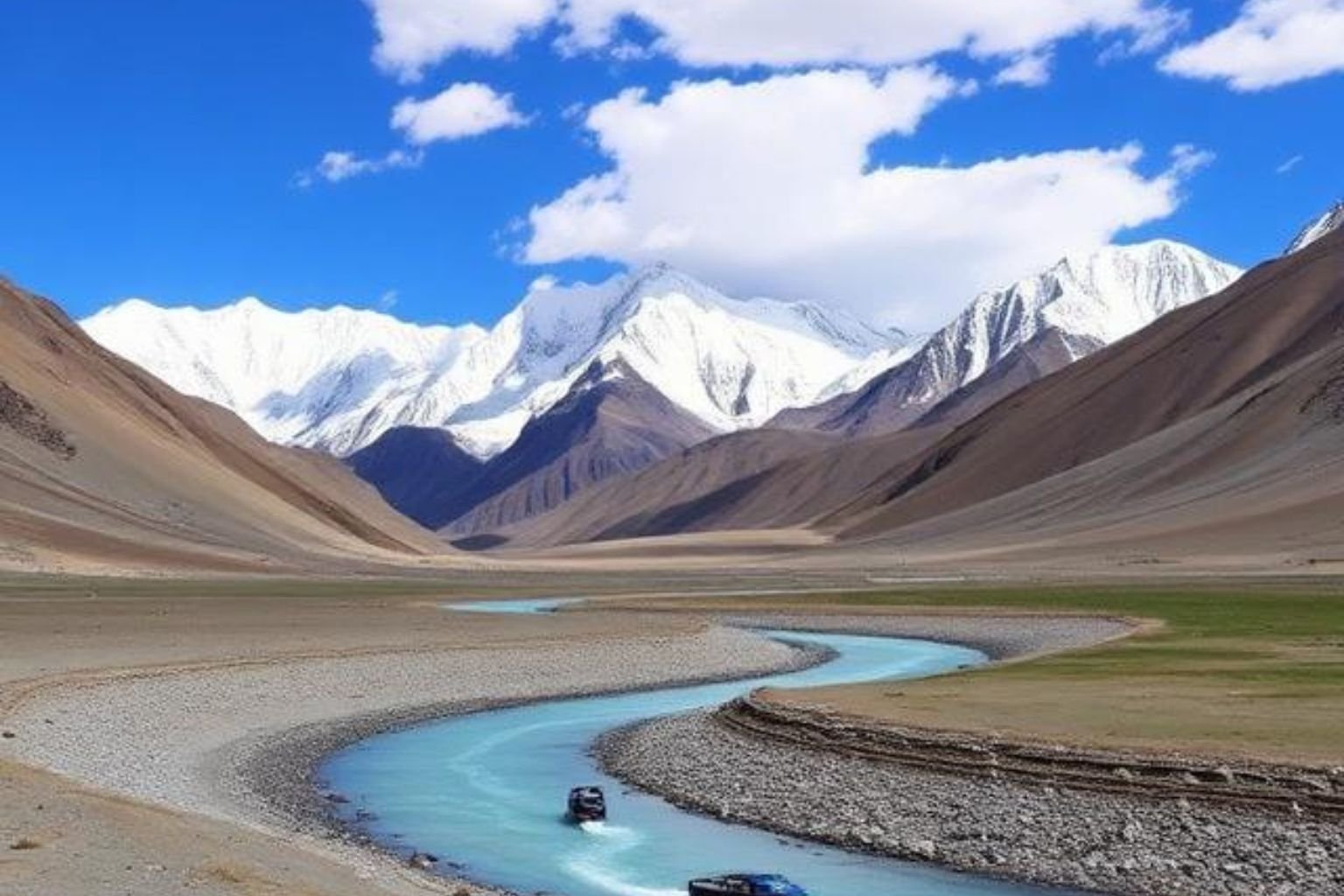
Nubra Valley Ladakh is one of the most rewarding side trips you can add to a Himalayan itinerary. Nubra Valley Ladakh sits north of Leh, past one of the highest motorable passes in the world, and it feels like a different planet compared to the cold desert around it.
This Nubra Valley travel guide covers location, permits, weather, top attractions, and a practical itinerary. You will also find budget estimates, safety tips, and answers to the questions travelers ask most often before booking a Ladakh road trip.
Where is Nubra Valley Ladakh?
Nubra Valley Ladakh lies in the northernmost part of the Ladakh Union Territory, close to the Karakoram Range. The valley sits along the ancient Silk Route, which once connected Central Asia to the Indian subcontinent through this corridor. Nubra Ladakh was historically called Ldumra, meaning “valley of flowers,” a name that still suits its green patches of barley fields and apricot orchards.
The Nubra valleylocation is formed where the Shyok River meets the Nubra River, also called the Siachen River. This confluence creates a wide, fertile valley that separates the Ladakh mountain range from the Karakoram range. Diskit serves as the administrative headquarters of the region, and it lies roughly 120 to 130 kilometers from Leh by road. Sumur, Hunder, Panamik, and Turtuk are the other major settlements spread across this tri-armed valley.
Nubra Leh trips typically begin at Leh town, since this is the base for permits, fuel, and transport. Because the valley borders sensitive frontier zones, it is officially treated as part of Ladakh rather than Nubra valley Kashmir, though older maps sometimes group the wider Ladakh region under the former state of Jammu and Kashmir.
History of Nubra Valley
Nubra Ladakh once served as a key trade junction on the caravan routes linking Leh, Yarkand, and Central Asia. Traders and their pack animals rested in this valley before pushing north over the Karakoram Pass. Turtuk village, on the western edge of Nubra, was part of Baltistan until the 1971 India-Pakistan war, which explains its distinct Balti culture, language, and cuisine. This layered history gives the valley a cultural depth that few other Ladakh destinations can match.
Why Visit Nubra Valley?
Nubravalley combines desert, river, and mountain scenery in a single stretch of road. You get sand dunes framed by snow peaks, double-humped Bactrian camels descended from Silk Route caravans, centuries-old monasteries, and Hot Water Spring, all within a single valley. Because Nubra sits at a lower altitude than Leh, it also offers a gentler pace after days spent adjusting to thin mountain air.
Best Time to Visit Nubra Valley Ladakh
The best time to visit Nubra Valley Ladakh is between May and September, when Khardung La stays open and daytime temperatures range between 15 and 30 degrees Celsius. June to August brings the busiest tourist season and the greenest landscapes. Winter travel, from November to March, is only for experienced travellers, since temperatures fall well below freezing and heavy snowfall can shut the pass for days. Always confirm current road status before planning a winter trip.
| Season | Months | Conditions |
| Peak Season | June – September | Warm days, clear roads, busiest tourist season |
| Moderate Travel Season | April- May, October | Pleasant weather, fewer crowds, occasional snowfall |
| Winter | November – March | Freezing temperatures, frequent road closures |
How to Reach Nubra Valley
#1. Road Route: The classic route from Leh to Nubra Valley climbs over Khardung La, one of the highest motorable passes in the world at an elevation of roughly 5,359 meters (17,582 feet). From the pass, the road descends through Khardung village and Khalsar before splitting toward Diskit and Hunder on one side, and Sumur and Panamik on the other.
#2. Distance: Leh to Nubra Valley distance runs approximately 120 to 160 kilometers, depending on your final destination within the valley. Diskit sits around 120 kilometers from Leh, while Turtuk adds another 80 to 90 kilometers beyond Diskit.
#3. Travel Time: The drive from Leh typically takes 5 to 6 hours, factoring in permit checks, photo stops, and rest breaks at Khardung La. Avoid lingering too long at the pass itself, since the thin air at that altitude can trigger breathlessness.
Transport Options
- Private taxi: The most comfortable option, bookable from Leh’s taxi stand.
- Shared taxi: A budget-friendly choice for solo travellers heading to Diskit or Hunder.
- Self-drive bike or car: Popular among road trip lovers, though it demands mountain driving experience.
- Local bus: Runs on alternate days between Leh and Diskit, ideal for backpackers on a tight budget.
Inner Line Permit
Every traveller needs approval to enter Nubra Valley, since it lies close to international borders. Indian citizens no longer apply for a traditional Nubra Valley permit; instead, they pay the Ladakh Environment and Development Fee online through the official LAHDC Leh portal, print the receipt, and carry it at checkpoints such as South Pullu and North Pullu. Foreign nationals still require a Protected Area Permit, arranged through a registered travel agent in Leh, since solo foreign applications are not accepted for restricted zones.
As the permit rules and fees change periodically, check the latest requirements on the official LAHDC portal before you travel.
Top Attractions in Nubra Valley
- Diskit Monastery: Diskit Monastery is the oldest and largest gompa in the valley, overlooking Diskit village from a hilltop. A 32-meter Maitreya Buddha statue stands near the monastery, visible from across the valley floor.
- Hunder Sand Dunes: The Hunder Sand Dunes stretch for several kilometers between Hunder and Diskit, creating a genuine desert landscape framed by snow-capped mountains.
- Bactrian Camel Ride: A Bactrian Camel Ride across the Hunder dunes lets you sit atop a double-humped camel, a breed once used along the old Silk Route caravans.
- Turtuk Village: Turtuk Village, opened to tourists only in 2010, offers apricot orchards, Balti culture, and homestays close to the Line of Control.
- Panamik Hot Springs: Panamik Hot Springs are natural sulfur springs believed to ease joint and skin ailments, located near the northern end of the valley.
- Sumur Village: Sumur Village is a quieter alternative to Hunder, home to the Samstanling Monastery and wide, green fields.
- Yarab Tso: Yarab Tso is a small, sacred lake near Panamik, known for its still, mirror-like water framed by barren hills.
- Shyok River: The Shyok River carves through the valley and joins the Nubra River, forming the wide floodplain that defines the region’s geography.
- Khardung La Pass: Khardung La Pass is the gateway to Nubra from Leh, offering sweeping views of both valleys from one of the highest motorable roads on earth.
Things to Do in Nubra Valley Ladakh
- Ride a Bactrian camel across the Hunder dunes
- Photograph sunrise at Diskit Monastery
- Soak in the Panamik hot springs
- Walk through apricot orchards in Turtuk
- Camp beside the Shyok River
- Visit Samstanling Monastery in Sumur
- Stargaze away from city light pollution
Weather Throughout the Year
Nubra Valley weather stays milder than Leh because of its lower elevation. Summers bring daytime temperatures between 15 and 30 degrees Celsius, while winters drop to minus 15 degrees Celsius or lower. Rainfall is minimal year-round, since the valley lies in a high-altitude cold desert.
Nubra Valley Itinerary
#Day 1: Drive from Leh over Khardung La to Diskit. Visit Diskit Monastery and settle into a Hunder camp by evening.
#Day 2: Ride Bactrian camels at Hunder sand dunes in the morning. Drive to Sumur and Panamik, visiting Samstanling Monastery and the hot springs.
#Day 3 (optional): Continue to Turtuk for an overnight homestay before returning to Leh.
A 2-day Nubra Valley itinerary covers the essentials, while a 3-day plan allows a relaxed visit to Turtuk without rushing.
Nubra Valley Ladakh Travel Tips
- Spend one full day in Leh first. Let your body adjust before crossing Khardung La.
- Carry enough cash with you. ATMs in Nubra are limited. They are often unreliable too.
- Keep printed copies of your permit. Digital versions often don’t work. Remote check posts may not accept them.
- Pack layered clothing, since temperatures swing sharply between day and night.
- Fill your fuel tank in Leh, since petrol pumps inside the valley are scarce.
Nubra Valley Ladakh Accommodation
Most hotels and camps sit in Hunder and Diskit. Hunder has tented camps near the dunes. Many camps here also sit close to the river. Most rooms come with attached bathrooms. Diskit has simpler guesthouses. These sit closer to the monastery. Turtuk offers homestays instead of hotels. These stays feel more personal. You get to see real Balti village life. Travelers who add a third day usually stay here.
Nubra Valley Ladakh Local Food
Thukpa and momos are easy to find here. Butter tea is a local favorite too. Diskit and Hunder also serve simple North Indian food. Turtuk homestays cook Balti dishes. These often use local apricots. Apples and walnuts show up in many meals too.
Budget Estimate
A 2-day, 1-night trip from Leh is affordable. This includes shared taxi, camp stay, and meals. Expect to pay between 3,500 and 6,000 rupees per person. Private taxis cost more. Luxury camps push the price up further. Backpackers can spend less. Shared transport and homestays help cut costs.
Nubra Valley LadakhTourism Tips
- Skip single-use plastic. Waste management is poor in remote villages.
- Follow photography rules at monasteries. Dress modestly at religious sites.
- Choose local homestays and guesthouses. Avoid large outside operators.
- Camp only in designated areas. This protects fragile desert plants.
Conclusion:
Nubra Valley Ladakh rewards the effort it takes to reach it. The drive over Khardung La, the contrast of sand dunes against snow peaks, and the quiet culture of villages like Turtuk make this one of the most memorable stops on any Ladakh tourism circuit. Plan around the May to September window, sort your permit in advance, and give yourself at least two full days to enjoy Nubra Ladakh without rushing.
FAQs.
#Q1. Where is Nubra Valley located?
Nubra Valley is located in the northernmost part of Ladakh.Nubra Valley sits in the northernmost part of Ladakh. It is about 120 to 160 kilometers from Leh. You reach it by crossing Khardung La. The valley forms where the Shyok and Nubra rivers meet. This point also separates the Ladakh and Karakoram ranges.
#Q2. How many days are enough for Nubra Valley?
Two days and one night are usually good to visit the sightseeing here. This includes Diskit Monastery and Hunder sand dunes. Add a third day for Turtuk village. It lies further west. It deserves a slow, unhurried visit.
#Q3. Is Nubra Valley worth visiting?
Yes, it is one of the best places to visit in Ladakh. You get sand dunes, Bactrian camels, and old monasteries. The river valleys add to the view. This mix of scenery is rare in the region.
#Q4. Do I need a permit for Nubra Valley?
Yes, a permit or fee receipt is required. Indian travellers pay the Ladakh Environment and Development Fee online. Foreign nationals need a Protected Area Permit. A registered Leh agent can arrange this for you.
#Q5. Can I stay overnight in Nubra Valley?
Yes, overnight stays are common here. Most travellers recommend it too. Hunder and Diskit have hotels and guesthouses. Tented camps are also an option. Turtuk offers homestays for a local feel.
#Q6. Is Nubra Valley safe for travelers?
Nubra Valley is generally safe for tourists. Follow permit rules and altitude precautions. Road conditions can change fast. Weather shifts quickly too. Check local updates before you travel. This matters most outside peak season.
#Q7. Can I visit Nubra Valley in winter?
You can visit during winter but it would be challenging. Temperatures fall well below freezing. Khardung La may close after heavy snow. Only experienced travelers should try this. Proper gear is a must.
#Q8. How far is Leh from Nubra Valley?
Leh to Nubra Valley is about 120 kilometers to Diskit. It goes up to 160 kilometers if you continue to Turtuk. The drive takes 5 to 6 hours. This includes permit checks. It also includes a stop at Khardung La.
#Q9. What is the best time to visit Nubra Valley?
The best time to visit is May to September. Roads stay open in these months. Daytime temperatures feel comfortable too. This makes sightseeing and camel rides easy.
#10. Is Khardung La the only route to Nubra Valley?
Khardung La is the main route from Leh. Most travelers use this road. Other routes exist too. But they involve longer detours. These detours pass through other high passes.