Introduction to Mount Japfu Peak Trek
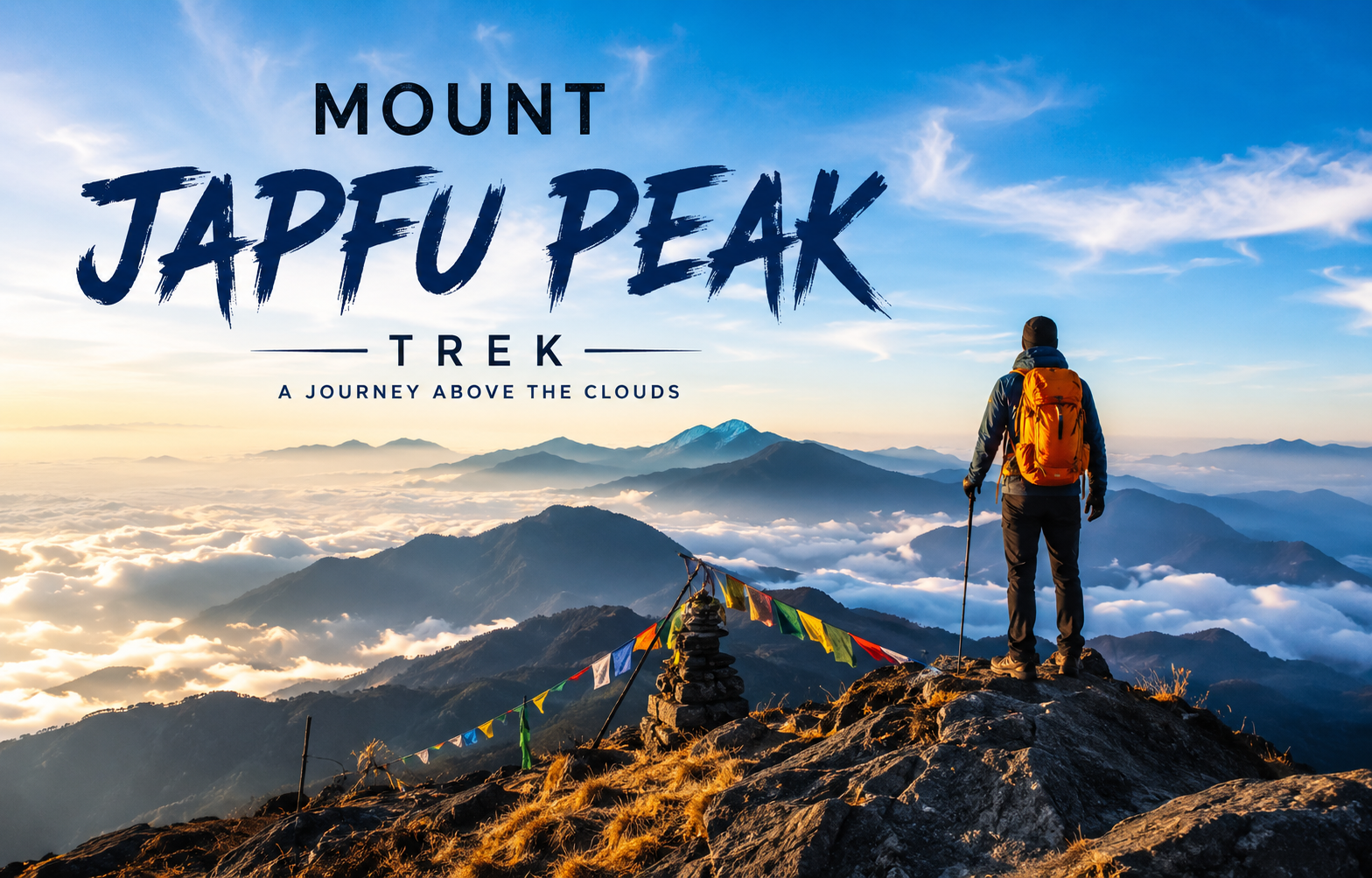
The Mount Japfu Peak Trek is one of the most exciting treks in Nagaland. Although it is not Nagaland’s highest peak, many trekkers remember it for its constantly changing scenery rather than its altitude.
The Mount Japfu Peak Trek starts with simple potato farms. Soon, the trail enters a dense rhododendron forest that feels cool and quiet. Then, trekkers pass by a tall bamboo area, and then finally the trees end, and a wide view of Nagaland opens up from the top.
Planning your trek in advance can save you from unexpected weather, navigation problems, and unnecessary delays. Here in this blog, we have covered everything in detail.
Where is Mount Japfu Peak Located?
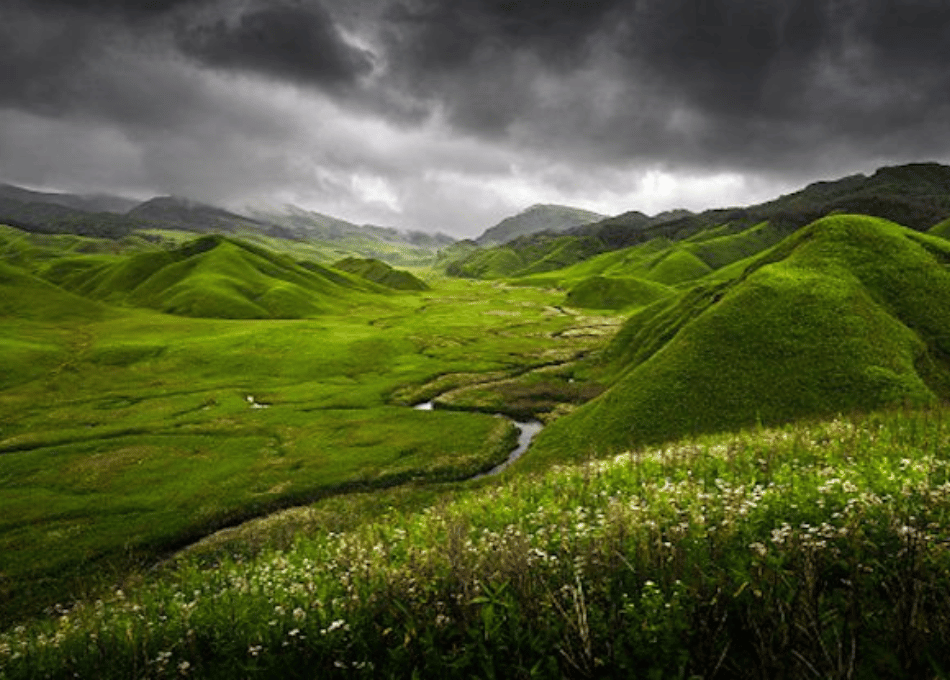
Mount Japfu Peak is in the Kohima district of Nagaland, around 15 kilometers south of Kohima. It is part of the Barail Range, and from here, you can also see the famous Dzukou Valley.
Most trekkers start their journey from Kigwema village, the main base point for the trek. Since Japfu and Dzukou Valley are located close together, Many travellers include both destinations in the same trip.
Mount Japfu Peak Trek Highlights
- Enjoy panoramic views from the twin summits. On clear days, you can even see parts of Arunachal Pradesh and Assam.
- Trek through a dense Bamboo forest. The narrow trails can confuse even experienced trekkers.
- See the world’s tallest rhododendron tree here. It holds a Guinness World Record and it is one of the biggest attractions of Mount japfu Trek.
- Dzukou Valley is quite close. So, you can visit both places on one trip.
- Discover diverse wildlife, colorful orchids, and the rare Blyth’s tragopan, Nagaland’s state bird.
Quick Facts About Mount Japfu Peak Trek
| Detail | Information |
| Elevation | 3,048 metres (10,000 feet) |
| Trek Distance | Approximately 8 to 9 km round trip |
| Trek Duration | 1 day (6 to 7 hours), or 2 to 3 days with camping |
| Difficulty | Moderate to difficult |
| Best Season | October to April |
| Base Village | Kigwema |
| State | Nagaland |
| Camping | Available near the forest rest camp |
| Highest Point | Japfu Peak summit, 3,048 metres |
Mount Japfu Peak Trek Distance
The Mount Japfu Peak Trek covers around 8 to 9 kilometres in total, including the return journey. From the trailhead above Kigwema, the climb to the summit is approximately 4 to 4.5 kilometres.
The distance may seem manageable, but the steep ascent is the real challenge. You are gaining over 1,200 metres in elevation in a short stretch, so the climb feels far tougher than the kilometres alone suggest.
Mount Japfu Peak Trek Route
The Mount Japfu Trek route begins near Kigwema village. A short drive past potato fields takes you to the trailhead. Here the path goes through farmland and into a forest of oak and rhododendron trees.
Soon, you reach a dense bamboo forest, one of the most distinctive parts of the trek.After the bamboo, the ground turns rockier, with a few short scrambles. In the final 150 metres, the trees disappear completely, leading straight to the twin summits.
Mount Japfu Peak Trek Difficulty Level
This is a moderate to difficult trek, and beginners should not take it lightly. The path has steep sections and rocky patches, and demands proper fitness. Weather can also make it harder.
Fitness level: Regular walking practice is advised.
Beginners: Suitable for beginners with reasonable fitness, although hiring a local guide is strongly advised.
Experienced trekkers: A satisfying day hike with genuine variety.
Terrain: Farmland, forest, bamboo thicket, and exposed rock.
Weather: Mist, sudden rain, and wind can appear with little warning.
Best Time to Visit Mount Japfu Peak
October to April is generally the best time to visit Mount Japfu Peak, when skies stay clear and the trail is safer underfoot. Here is how weather conditions shift through the year.
| Weather at Mount Japfu Peak Throughout the Year | |||
| Season | Months | Temperature | Trekking Suitability |
| Winter | Dec – Feb | 2°C to 15°C, occasional snow | Good, clear skies |
| Spring | Mar – Apr | 8°C to 20°C | Excellent, rhododendron bloom |
| Summer | May – Jun | 14°C to 24°C, hazy | Fair |
| Monsoon | Jul – Sep | 16°C to 24°C, heavy rain | Poor, avoid trekking |
| Autumn | Oct – Nov | 6°C to 20°C | Excellent, clearest skies |
Mount Japfu Peak Trek Itinerary
Option 1: 2-Day Itinerary
-
-
- Day 1: Arrive in Kohima. Travel to Kigwema by evening. Then rest at a homestay.
- Day 2: Start 5 am. Reach the summit by late morning. Return by afternoon.
-
Option 2: 3-Day Itinerary
-
-
- Day 1: Arrive in Kohima. Travel to Kigwema by evening.
- Day 2: Begin trekking by 7 am. Camp overnight near the rest camp.
- Day 3:Climb to the peak for sunrise. Descend and return to Kohima.
-
How to Reach Mount Japfu Peak Trek Base Camp
#By Air: Dimapur is your nearest airport, with flights connecting to Kolkata, Delhi, and Guwahati. From there, it’s about two hours by road to Kohima, then another 30 to 40 minutes to Kigwema village, where the trek begins.
#By Train: Dimapur is also Nagaland’s main railway station. Trains run in from Guwahati, Kolkata, and New Delhi, though journeys from Delhi and Kolkata can take a full day or more, so plan accordingly.
#By Road: Kohima connects to Dimapur via a well-maintained highway, roughly two hours by taxi.
Mount Japfu Peak Trek Cost
Budgeting for this trek isn’t complicated, but costs do shift with the season and how many people you are travelling with. Here’s a rough breakdown to help you plan.
Getting from Dimapur to Kigwema by taxi will set you back INR 1,500 to 3,000. A local guide costs INR 1,500 to 2,500 a day, and honestly, it is worth every rupee on those confusing bamboo stretches. Homestays run INR 800 to 1,500 a night, meals included.
If you are camping, expect to pay INR 500 to 1,000 per person for gear rental. Food on the trail usually costs INR 300 to 600 a day. You will also need an Inner Line Permit, which is cheap – under INR 100.
Carry Some extra cash. Card payments are rare once you are past Kohima.
Entry Fees & Permit Requirements
Anyone travelling to Nagaland from outside the state needs an Inner Line Permit, or ILP. This applies to both Indian citizens and foreign visitors.
Indian citizens can apply online through the Nagaland government website, or collect it from Nagaland House offices in Kolkata, Guwahati, or Delhi. Foreign travellers need a Protected Area Permit, usually arranged through a registered tour operator.
Accommodation and Camping Options
Kigwema village has become a popular base, with homestays such as Dawn Homestay and Greenwood Villa. Kohima town has more hotels for extra comfort. If you choose the 3-day itinerary, you can camp near the forest rest camp, though facilities there are basic, so carry your own tent, sleeping bag, and mat.
Flora and Fauna Along the Trek
Rhododendron trees cover much of the trail, and this mountain even holds the record for the tallest rhododendron tree in the world. You will also see oak trees, wild orchids, and ferns, along with the Blyth’s tragopan, Nagaland’s state bird. Clouded leopards, hoolock gibbons, and black bears live here too, though sightings are rare.
The Famous Dzukou Valley and Mount Japfu Connection
Dzukou Valley is just behind Japfu Peak, roughly 600 metres lower, separated by a single ridge. Many trekkers climb Japfu Peak first, then walk down to Dzukou Valley to camp among its meadows, making this one of North East India’s most popular trekking routes.
Things to Carry for the Mount Japfu Peak Trek
-
-
- Sturdy trekking shoes with good ankle support.
- Warm, layered clothing, no matter the season.
- Rain protection, such as a poncho.
- At least two litres of water, since water sources are limited on the trail.
- Trekking poles for the steeper sections.
- A basic first-aid kit, a torch, and a power bank.
- A sleeping bag and tent, if you plan to camp overnight.
- Packed snacks, since there are no shops beyond Kigwema.
-
Essential Trekking Tips:
Start your trek early, since mist usually rolls in by early afternoon. Hire a local guide, since the trail is not always clearly marked, and carry more water than you think you need, since there is no reliable source along the climb.
Photography Spots on the Trek:
The open farmland near the trailhead looks beautiful in the early morning, especially with mist over the potato fields. The bamboo maze also makes striking, unusual photographs. Near the summit, about 150 metres below the top, the trees end and open views begin, making it the best spot for panoramic shots.
Nearby Places to Visit
#1. Dzukou Valley:
Dzukou Valley is often called the Valley of Flowers of the North East. It bursts into colour every spring. Many trekkers add it to their Japfu Peak Trek itinerary.
#2. Kohima:
Kohima is the capital of Nagaland. It mixes colonial history with local culture. The Kohima War Cemetery honors soldiers from the Second World War. Local markets here sell traditional Naga crafts.
#3. Kisama Heritage Village:
This village hosts the famous Hornbill Festival each year. Visitors can see traditional huts and learn about Naga tribal customs. Local food stalls are also part of the experience.
#4. Khonoma Village:
Khonoma is known as India’s first green village. It shows how the Angami tribe practices sustainable farming. Terraced fields and community forest conservation make this village worth a visit.
Safety Tips for Trekkers
Weather safety matters most, since conditions can change quickly near the summit. If visibility drops suddenly or lightning appears, turn back at once. Walk at a steady pace, drink water often, and always ask permission before photographing villagers. Save emergency numbers before you start, since mobile signal often disappears along the trail.
Why You Should Do the Mount Japfu Peak Trek
Few treks in India offer this much variety in a single day. You walk through farmland, forest, bamboo, and finally bare rock beneath open sky. The Mount Japfu Peak Trek keeps surprising you at every turn. Since it lies close to Dzukou Valley and Kohima, it fits easily into any trip across North East India.
FQs
#Q1. What is the height of Mount Japfu Peak?
Mount Japfu Peak stands at 3,048 metres, or about 10,000 feet, above sea level. Most sources call it Nagaland’s second-highest peak, after Mount Saramati, though some newer surveys have questioned this ranking.
#Q2. How difficult is the Mount Japfu Peak Trek?
The trek is moderate to difficult. It has steep sections and some light scrambling near the summit. Fitness and a steady pace matter more than climbing skill, since ropes are rarely needed.
#Q3. What is the trekking distance?
The full round trip covers about 8 to 9 km from the trailhead near Kigwema. The climb of over 1,200 metres makes it feel harder than the distance alone suggests.
#Q4. Do I need a permit for the trek?
Yes. Travellers from outside Nagaland need an Inner Line Permit. Indian citizens can apply online or through Nagaland House offices. Foreign nationals need a Protected Area Permit, arranged in advance.
#Q5. Can beginners do the Mount Japfu Peak Trek?
Yes, beginners can complete this trek with a local guide and reasonable fitness. The rocky final stretch can feel tough for first-timers, so it helps to move slowly and steadily.
#Q6. What is the best time to visit Mount Japfu Peak?
October to April is the best time, with clear skies and safer conditions. April brings blooming rhododendrons, while winter can bring snow.
#Q7. How many days are required for the trek?
Most trekkers finish the climb in a single day, taking around 6 to 7 hours in total. A 2 to 3 day plan suits those who want to camp overnight or combine the trip with Dzukou Valley.
#Q8. Is camping allowed on Mount Japfu Peak?
Yes, camping is allowed near the forest rest camp below the summit. Facilities are basic, so trekkers must bring their own tent, sleeping bag, and food.
#Q9. What should I pack for the trek?
You will need sturdy shoes, warm layered clothing, rain protection, at least two liters of water, and a basic first-aid kit. If camping overnight, also bring a tent and sleeping bag.
#Q10. Is a guide necessary for the trek?
Although hiring a guide is not compulsory, it is highly recommended for first-time trekkers. Some sections of the trail, especially the dense bamboo forest, can be difficult to navigate. A local guide not only helps you find the correct route but also shares valuable insights into the region’s culture, wildlife, and trekking history, making the experience safer and more rewarding.