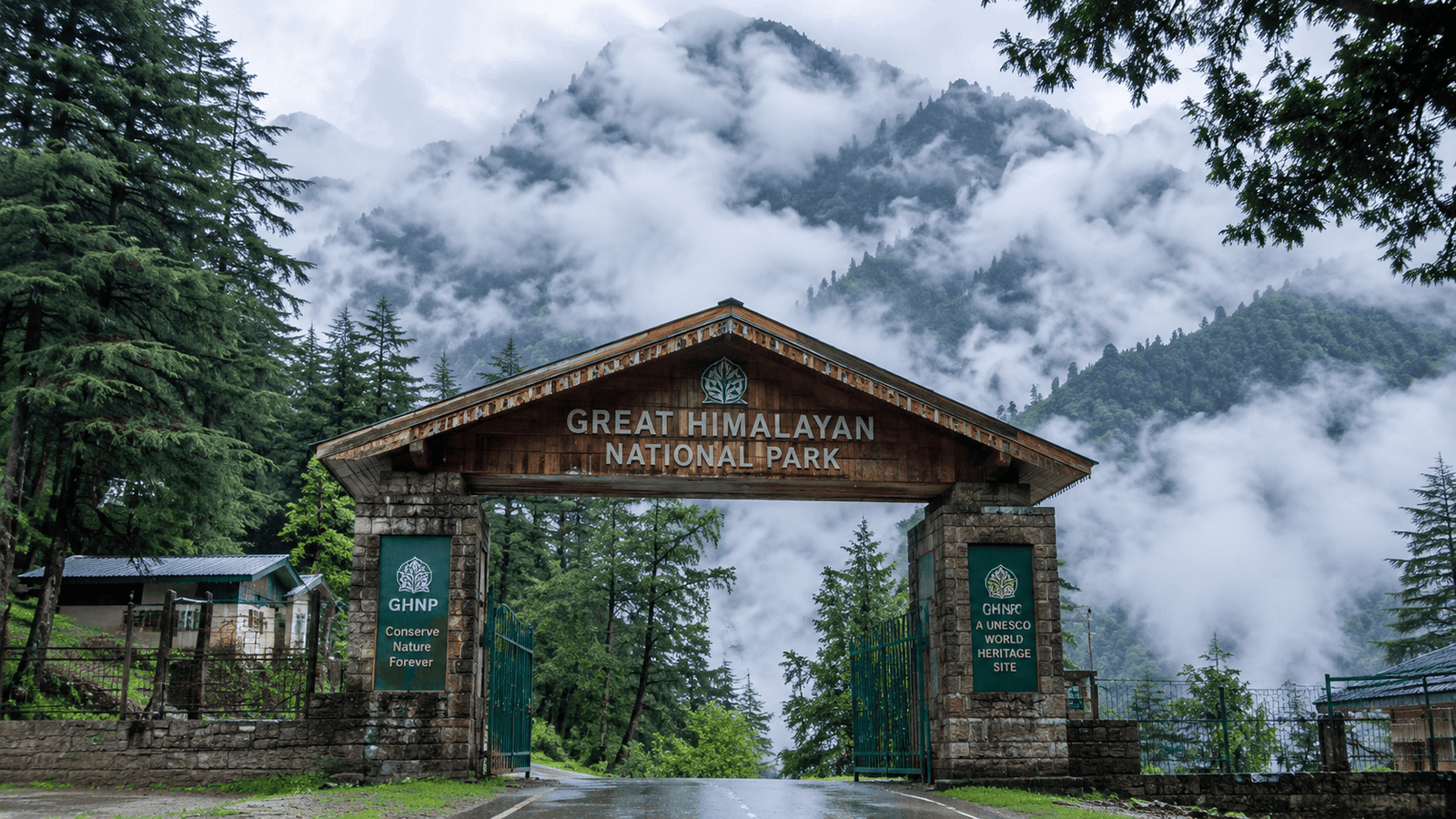
Great Himalayan National Park- one of the most remarkable parks in Himachal Pradesh. The park isn’t just to roam around and spend the day here; it shows the natural and wildlife habitat of the state in a way where it won’t disturb the flora and fauna of the region. It is located in Kullu district and is one of the most remarkable landscapes of Himachal Pradesh.
Much of its beauty lies beyond the roads; this park won’t give you one place to sit and take a short walk around. The experience is walking through changing landscapes and discovering the rich wildlife that inhabits this part of the Western Himalayas.
It has been recognized at UNESCO World Heritage Site in 2014 and it acts as an important conservation area. The park has been home to many rare Himalayan birds and animals, and the interesting fact is that Himachal’s state bird, the Western Tragopan, also resides here.
Where is Great Himalayan National Park located?
Located in the Kullu district of Himachal Pradesh, it lies in the western Himalayas. Great Himalayan National Park is home to rare Himalayan wildlife and plant species. It covers a large mountain landscape shaped by the Tirthan, Sainj, Jiwa Nal, and Parvati river system. The park has different access points rather than having just one central gate, so if you think it’s just a place to sit down and eat, you are wrong.
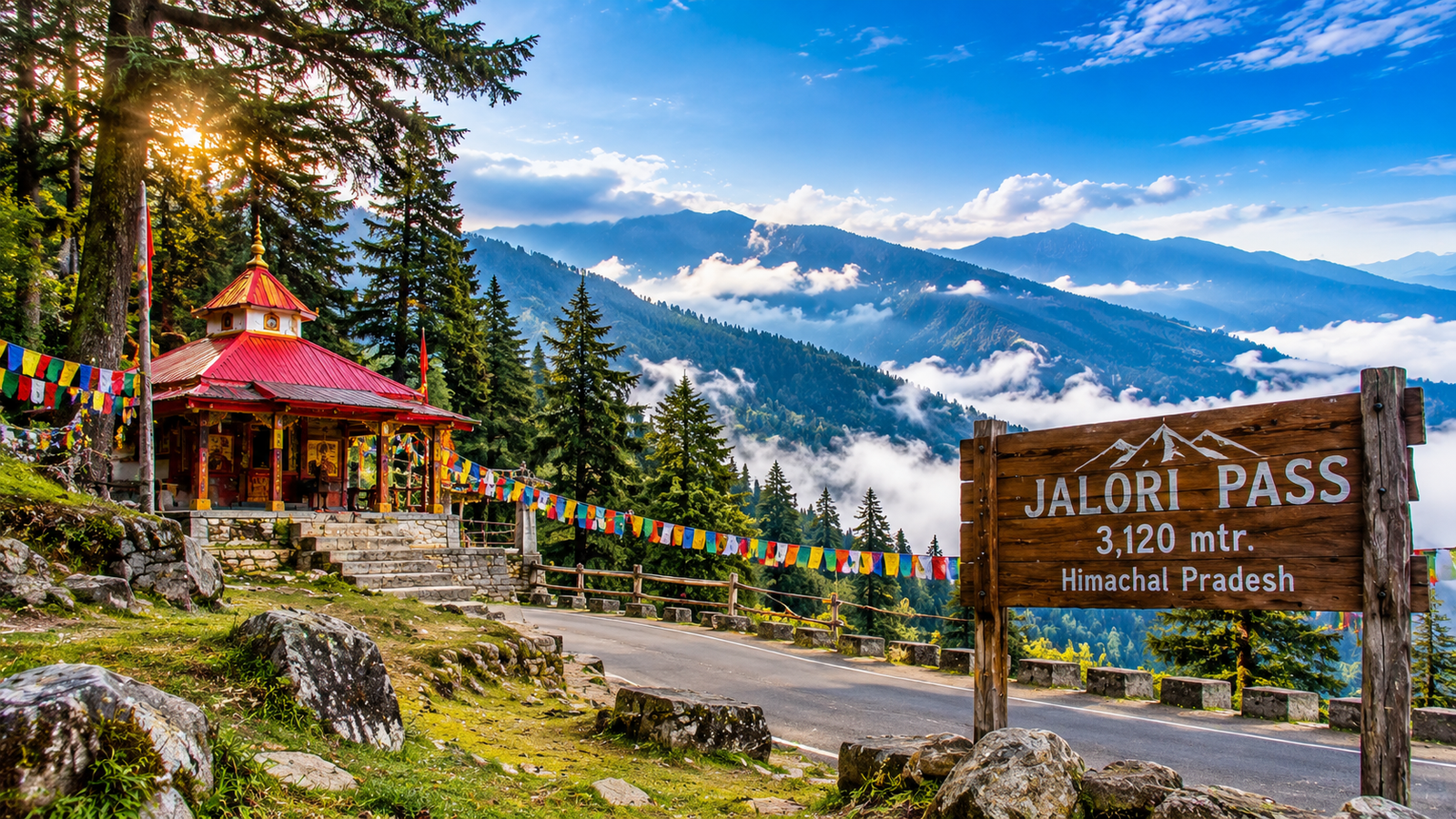
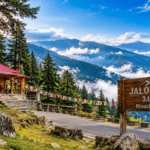
It is to be kept in mind that the villages and settlements around the park are not tourist places, and some private properties might not be disclosed to the public. Tirthan Valley, which hosts Jalori Pass, can be the highlight of the park, but the surrounding mountains shouldn’t be underestimated either.
Where should you start from?
The basic confusion between many visitors and trekkers is where you should start from. This should be a concern before you book your accommodation and decide which part you want to explore first. Travelling between different valleys can take time, and GHNP isn’t just one destination to come and stop at.
So, the following bases can help you decide from where you can start from and check the accommodation.
Tirthan Valley and Gushaini:
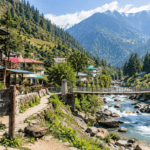
Tirthan Valley, because of its proximity to the GHNP, could work as a convenient stop for many visitors. From Gushaini, you can start your trek to the Tirthan side of the park; the village is surrounded by forested hills and lies close to the Tirthan River.
Gushaini also hosts many accommodations and homestays for a comfortable stay while you are there. If you choose this base, you can explore Gushaini, Tirthan and the GHNP all in one itinerary. A pro tip here would be to choose accommodation near Tirthan so it can be easy for you to start your trip early if you want to explore all three places without rushing.
Sainj Valley and Shangarh:
If I have to give a brief introduction about Shangarh, it would be a village known for its green meadow and deodar forest landscape. If you are interested in exploring the Sainj side of the region, Shangarh would be a portable option for you to stay. The village offers you a quite mountain side rather than a rushing tourist spots.
Neuli is another access point for this side of the park. However, it is recommended to understand that reaching Shangarh doesn’t mean you have reached the GHNP, but rather a point from which you can access the park. This side of the park gives you peace of mind, and it is good for those travellers who have already gone to Tirthan and now want to explore the Sainj region.
How to reach Great Himalayan National Park
The journey to this park is an experience in its own way. It gives us a glimpse of Himachal’s natural landscape without disturbing any element there.
By Road:
The surrounding area of GHNP is well connected by road. It depends on where your base and accommodation are, because Gushaini, Tirthan and Banjar will give you better access than Shangarh and Shoja. If you are travelling from Delhi and Chandigarh, taking a bus towards Aut would be advisable.
By Air:
Bhuntar Airport is the nearest airport to the region. Check the flight availability before you start your trip. From the airport, the journey continues from the road ahead; you can hire a taxi or take a bus to reach Banjar first. And from Banjar, you can decide which base you gonna stop at and start your trekking.
By Train:
The region doesn’t have any railway nearby, so if you are travelling by train, you have to stop at Chandigarh and then continue your journey on the road from there. If you are travelling by narrow-gauge train, Joginder Nagar could be your option. From there, you continue on the road.
Permits, entry fee and Park rules:
While planning your trip, these three things shouldn’t skip your mind. These are not something that could be left until the last minute. Entry into the park’s core zone requires permission from the park’s authority. Now the question is: where do you get these permits? There is a head office at Shamshi, and range offices at Shairopa in Tirthan Valley and Ropa in Sainj Valley as permit points.
It is advised that tourists get their route approved at these offices before you set out on your trip. Few things here are important to remember:
- You need to confirm the current entry and camera fee directly at the park’s office, so you won’t have any difficulty while you are all set for trekking.
- If you are a multi-day trekker, you must engage certified guides as required by the park’s rules.
- Some points might be restricted to enter, so first check with the authorities and permits instead of disturbing the flora and fauna there.
- If the area is restricted, it might have some reasons, so don’t enter those zones without exclusive permits and disturb the wildlife there.
- For longer treks, ask about camping arrangements, food availability and emergency support before booking.
Best time to visit Great Himalayan National Park
April to June: a certified time of the year to have a pleasant time around the park and valley. As the surroundings become greener, it becomes a suitable time for village walks and trekking. And because higher elevations can still be colder, it is advisable to carry some light warm clothing with you.
July to August: Monsoon, where mountains become misty and visibility is covered from clouds. It is one of the most beautiful times to spend in the mountains. But it is also a period where caution should be considered, because heavy rain can make the forest trails slippery, affect road conditions and damage bridges.
September to November: The time when heavy rain subsides, leaving behind greenery so beautiful that your camera roll would be filled with photoshoots of the mountains. Since the rain can drop the temperature in the mountains, you could feel chills while being there.
December to March: The time of snow and heavy winter can restrict the trek to higher elevations and cut off connectivity to regional places. Although you can still visit the surrounding villages, it doesn’t mean trekking will be available during heavy snow or after that.
What should you pack for the trip?
The trekking here is not at some expedition level; the difficulty is moderate and requires reasonable health and fitness. And if you are entering the park for the trek rather than simply enjoying the day there, some things need to be kept in mind while packing:
- Comfortable walking shoes are a must. You won’t want a twisted ankle in your sneakers or sandals.
- Even during summer, carry a light jacket with you since the evening could be chilly at the higher elevation.
- A raincoat because why not? The weather changes dramatically in the mountains; one time it will be sunny and the other time thunderstorms.
- Water bottles that are reusable are a must, and few snacks to eat. Just keep in mind not to litter around.
- Carry cash with you always, since digital payment might not be available at every stop. And if somehow the internet is disrupted, you shouldn’t see an emergency over money.
- Power bank and a torch. You won’t find charging point at the trek and the lights around.
Places to visit near Great Himalayan National Park
If you have one or two extra days to spare in your vacation, you can explore the surrounding destinations around the park. Here are some destinations you could consider adding to your itinerary:
- Jalori Pass
- Jibhi
- Chehni Kothi
- Tirthan Valley
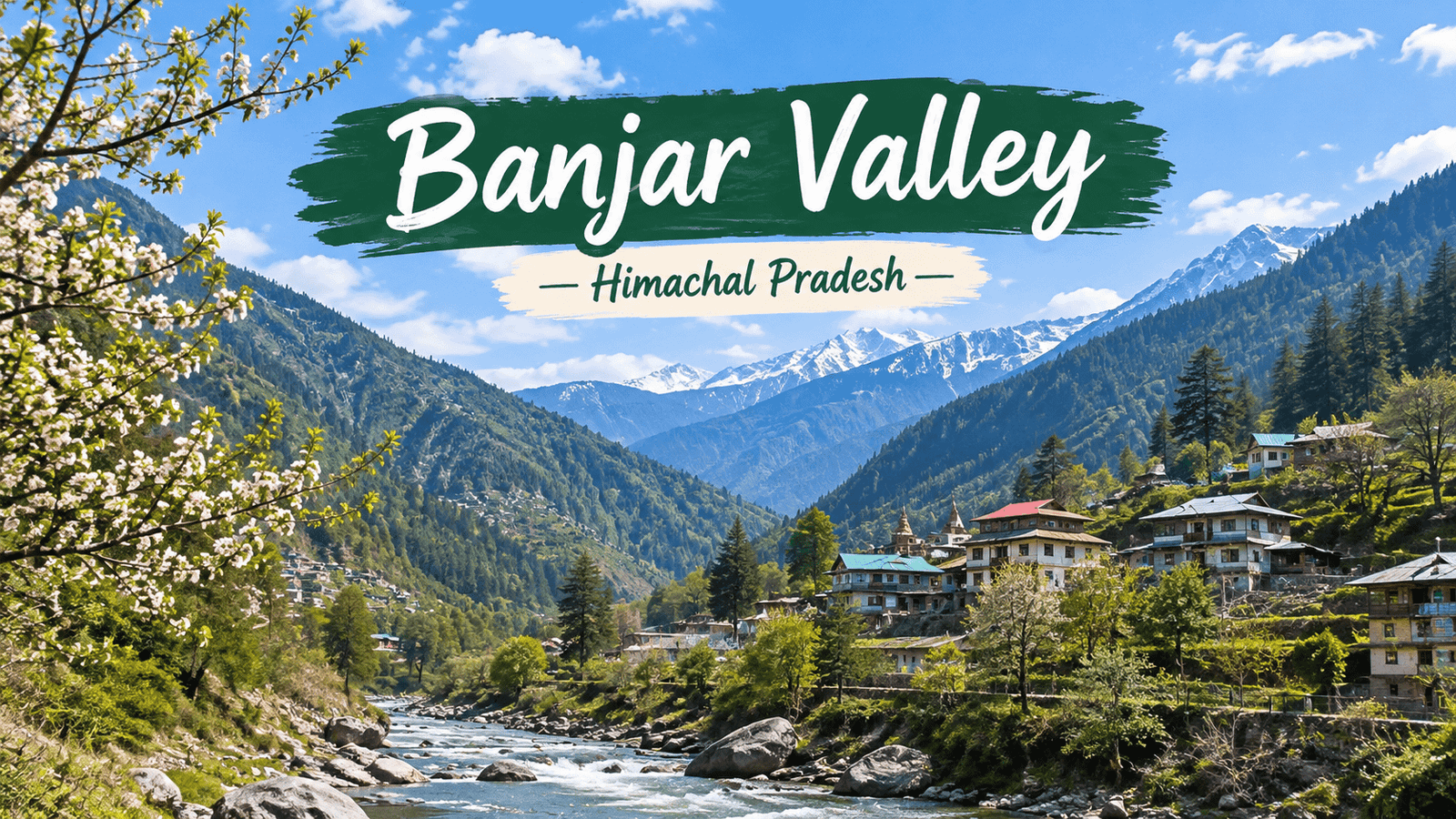
- Banjar Valley
- Shoja
Things to know before you leave
- You shouldn’t depend too much on public transport; they could be infrequent. It is recommended to plan your return journey before heading out.
- There are many local shops that won’t accept digital payment, and sometimes the internet can be disrupted, so carry some cash with you always.
- As it was discussed earlier that internet connectivity can sometimes bother people, and especially when you are trekking. So, download your map beforehand so you won’t get lost during your hike.
- Mountain weather can change during the day, so plan your trek early in the morning; this will also give you extra time to spare at your trekking site.
- If you are travelling during the heavy monsoon period and snowfall, check the road conditions first to see if it is not blocked by landslides and heavy snow.
- Respect the local people and ask first before photographing people and private property.
- Avoid leaving trash behind. The mountain looks beautiful as green only, and plastic waste ruins the aesthetics of the place.
Conclusion:
A trip to Great Himalayan National Park is an experience in itself. Unlike any other park in the region and state, this doesn’t offer you leisure walking and a picnic seat, but trekking through forested trails to see the conserved flora and fauna of Himachal. It depends on you how many days you want to spend in such a beautiful place.
It is not necessary to visit every part of the park in just one visit; keep your pace slow and reasonable. If you try to check many points, you might not be able to feel the serenity of the place in your rush. Pick a route that suits your time and fitness, and make the necessary arrangements according to it.
FAQs:
Q1. How many days are enough to visit Great Himalayan National Park?
It depends on how many checkpoints you want to cover in your itinerary. 3-5 days are often enough for a comfortable visit if you want to explore only one side of the park. If you intend to go deeper, you obviously would want more days to adjust your trek.
Q2. Can I visit Great Himalayan National Park without trekking?
Yes, you can. Instead of trekking, you can explore the surrounding area and just remain in the lower elevation of the park. You don’t necessarily need to trek; trekking is just one of the activities the park offers.
Q3. Which is the best place to stay for visiting GHNP?
Gushaini is the most convenient base for exploring the Tirthan side of the park. Meanwhile, Shangarh is a suitable option for travellers interested in Sainj Valley. Although Banjar is also a good option.
Q4. Is Great Himalayan National Park suitable for beginners?
The shorter walks around the villages are beginner-friendly; however, the multi-day trek is considered to be a little difficult. So, you should consider trekking only if you are physically fit and can walk for a long time on a steep path.
Q5. Can I spot a snow leopard in GHNP?
The snow leopard is one of the wildlife species that inhabits the GHNP, but sightings could be extremely rare. If your main purpose is to see a snow leopard, you might need many days and a lot of patience. Your trip shouldn’t be planned only around snow leopards.