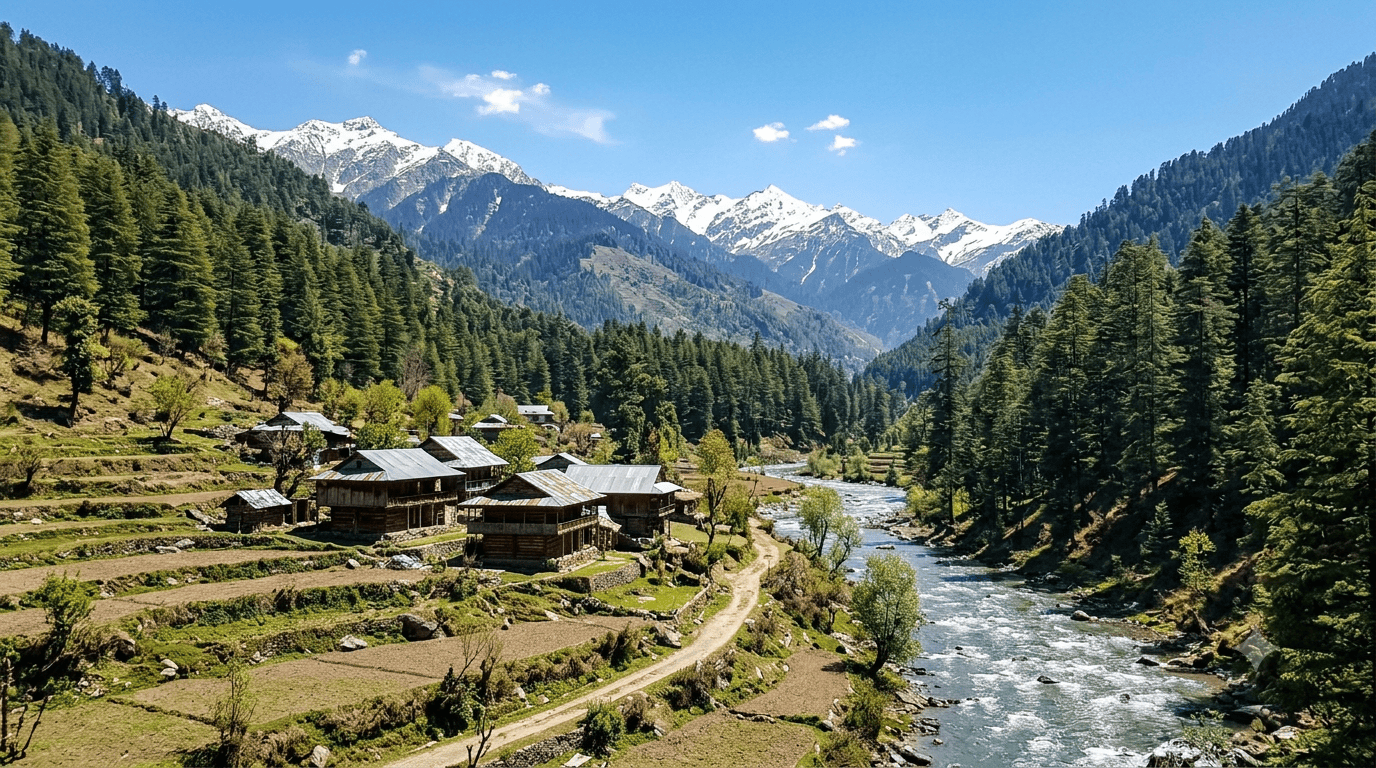
Have you ever wondered what else Mandi has in store? Well, I have visited Mandi a lot of times, but this time I thought, why not visit other places in Mandi? Then Barot Valley came to mind. You know what is fascinating about this place? Barot Valley doesn’t offer you a typical tourist vibe; it’s more like a place to spend a day in peace.
It is a small mountain settlement known for the Uhl River, trout fishing, and simple peace that will make you fall in love with this place. I had always wanted to visit the place before, and this time it was a success. The time I spent there was really mesmerising, and I still couldn’t get it out of my mind. So, let’s get started to learn more about Barot Valley.
Barot Valley, Mandi:
It all started with a thought: Shall I visit Barot this vacation? And trust me when I say this, I did not regret even a single second. Its journey is just as wonderful as the destination, where you won’t dare close your eyes even for a moment. Here, time seems to stand still between the people and nature.
The destination is closely connected with the history of the Shanan Hydroelectric project, which brought Barot into prominence during the early 20th century. And this is what you will find at Barot’s main attraction. What fascinates me is that you don’t need a scheduled sightseeing plan to visit the valley. You can simply sit down by the river, or explore the villages during the day.
I already know that Barot Valley is known for its peaceful surrounding and life along the Uhl River. But our dear visitors who come from different states and regions, you should know this. Barot Valley isn’t your typical tourist destination. Here, time feels slowed, children giggling while playing, ladies talking while walking on the streets.
Why is Barot Valley famous?
One thing I understood while visiting Barot is that it is not famous for its shopping spree, nightlife or large commercial attractions. It is destination meant to explore on slower pace instead of rushing. I know many people enjoy their vacations doing adventurous things, but some of our vacations need peace and time alone with nature.
I have experienced the Barot Valley, and now it’s your turn; let me tell you what Barot is really famous for and what makes it unique.
1. Uhl River:
Originating from the Thamsar glacier of the Dhauladhar range, it is one of the most recognisable features of the place. This is the first place I visited when I reached Barot, and I won’t lie; this is something beyond beautiful. The water is cold here, which makes it perfect for trout fish to thrive here. However, the current of the river is strong and should be avoided during heavy rainfall.
2. Trout fishing:
Since I have told you about the trout population in the Uhl River, how can I not include trout fishing in the cluster of what makes Barot Valley famous? Although trout fishing is famous in the area, you simply cannot find a spot and start fishing; you need proper licensing for this. The fishing is properly regulated here, so don’t try to break the rules. There are also seasonal restrictions; from 1 November to the last week of February, the fishing window is closed until further notice.
3. Shanan Hydroelectric project:
You know the Shanan Hydroelectric project is an important part of Barot’s history. I got to know that this was constructed during British period, and still continues to be the important feature of the valley. Here you will get to know about the contribution of early hydroelectric development in Himachal Pradesh. And of course, how can we forget about the scenic location it provides? If you are going to visit Barot Valley, visiting this project is a must.
4. Forest and mountain landscape:
If you are a nature enthusiast and love to birdwatch, then visit Barot once; you will not be disappointed. If you are not visiting Himachal for nature and mountains, then what are you doing? Barot has a famous Nargu Wildlife Sanctuary waiting just for you to explore and get mesmerised by. But wildlife sightings are never guaranteed, so you should enjoy the landscape without disturbing the surroundings.
Best time to visit Barot Valley
Now this is something even I contemplated while packing my bags: am I going at the best time so I can see the most beautiful side of Barot? And believe me, it depends on the kind of experience you want to have there. Whether you want to see lush green mountains or a pristine white blanket of snow.
Summer
For those who actively avoid heavy winter and chills, this is a pleasant time to visit Barot with your family, friends and on your own. Where temperatures rise in the plains, the chill remains on the hill. You can expect pleasant daytime temperatures and cool evenings; on top of that, the singing of birds will make you forget your previous, present and next life altogether.
Monsoon
Lush green scenery with mist-covered mountains is something you can only feel and can’t touch. Rainfall brings a lot of trouble with it too, landslide, flash floods, zero visibility with risk of accident. And a whole lot of experience, where the forest becomes denser, and clouds give the illusion of soft cotton candy covering the peaks.
Autumn:
If you are someone who likes chill but not heavy winter clothes, then autumn is the right time to visit Barot. Once the monsoon starts to withdraw, the weather generally becomes more stable, and the surrounding landscapes offer clear mountain views. This is a good time if you want to visit the valley with no rush and at a reasonable pace.
Winter:
Oh, the beauty winter holds over the valley is spectacular; the ground and peaks are covered in a thick layer of snow. When I visited Barot, it was the time of snow, and while leaving the fresh spell of snow fell and I almost wanted to stay one more day there. Although the valley is not always covered in snow, it depends on the weather conditions more than the elevation. Sometimes the winters can go without snow too, so always check the weather before you plan your trip.
How to reach Barot Valley?
People living in Himachal Pradesh may get to the valley relatively easily compared to people visiting from different states. Although I must point out that Barot is accessible by road from several towns in Himachal Pradesh.
The main road connection is through Ghatasani, which lies on the Mandi–Pathankot highway. And trust me, this is the most comfortable way you can reach the valley, given that road conditions are good.
The common road route is: Delhi – Panipat – Ambala – Chandigarh – Kiratpur Sahib – Bilaspur – Mandi – Ghatasani – Jhatingri – Tikkan – Barot.
From Chandigarh to Barot Valley:
This could be a good option since Chandigarh is comparatively closer to Himachal Pradesh and the travel from here is a lot easier. Here, you can travel by taking a bus or private taxi to reach the valley. If you are travelling by public transport, confirm the connection from Mandi or Ghatasani before starting your journey. Do not assume that a bus will be available immediately after reaching the highway.
From Mandi to Barot Valley:
Reaching Barot from Mandi is even easier; this could be your starting point. From Mandi, you can follow the Mandi-Pathankot Road to Joginder Nagar and at Ghatasani take the road towards Barot via Jhatingri and Tikkan. The mountain section is narrow in places, so it is advisable to drive carefully and avoid unnecessary overtaking.
From Joginder Nagar to Barot valley:
This is the route I would recommend honestly, since Joginder Nagar is one of the most convenient nearby towns from which to reach Barot. You can reach Joginder Nagar by train that connects the town with Pathankot. From Joginder Nagar, you can continue towards Barot by road through the local mountain road network.
Best places to visit in and around Barot valley:
If you think Barot is a place where you need to travel long distances every day to find something interesting, then you are wrong. Many of its attractions are connected with the river, the surrounding villages and the forest landscape. I can tell you a few of the many places you can visit in Barot and enjoy your weekend.
- Uhl River
- Shanan Hydroelectric project reservoir.
- Barot Trout fish farm.
- Nargu wildlife sanctuary.
- Luhardi village.
- Rajgundha village.
Depending on the time and weather, you can visit the places of your choice; they are all unique and provide a unique experience to everyone who visits Barot. You won’t just get beautiful mountain scenery but also a glimpse of local life there. How some street vendors share words with you or how kids come to greet you with missing tooth smile and a candy in hand.
Things to do in Barot Valley:
There are many things you can experience in the valley; Barot is better enjoyed through outdoor experiences than a packed sightseeing schedule. Here are a few things you can do in Barot Valley:
- The best way to explore Barot is on foot, so go for nature walks and experience the native life.
- Barot offers plenty of opportunities for photography. Do not forget to take your camera and click some memories around.
- You are in a valley, and you don’t camp; how is that possible? Although camping here could be fun, do not assume that every riverside or open patch of land is available for overnight camping.
- Before camping, you would need to find trekking trails that Barot offers you in bulk. The surrounding mountain settlements offer opportunities for longer walks and trekking experiences.
- Take some time to get to know local life and share a laugh with the people. Here, you will only find smiling faces of the people while greeting you.
- Fishing activities are one of the most popular activities in the valley, but it is regulated and requires a valid license to actually fish. Otherwise, you can still see trout and click photos of them.
Suggested 2-day itinerary for Barot Valley
A two-day trip is sufficient to explore the main attractions of Barot and enjoy its peaceful surroundings. You do not need to rush between distant destinations because most of the experience comes from spending time in the valley itself. Let’s see how you can utilise these days to visit Barot Valley
Day 1:
- Start your journey early and reach Barot by any route that seems comfortable for you. After arriving, check in at your accommodation and have something to eat.
- In the afternoon, you can explore the Uhl River and the surrounding villages. Take some time to appreciate the calmness instead of rushing the day.
- Visit the Shanan project; this is a good opportunity to understand Barot’s historical connection with the hydropower project while enjoying the natural surroundings.
- Then you can return to your accommodation in the evening before it gets dark and enjoy the local delicacies.
Day 2:
- This day could be spent exploring a trout fish farm. You can also enquire about the current fishing regulations if you are interested in angling.
- Late in the morning, you can explore nearby villages such as Luhardi and enjoy a glimpse of native life.
- And after lunch, you can plan your return journey. Do not leave your return arrangements until the last minute.
Conclusion
If you ask me if visiting Barot Valley was worth it or not, my answer will not surprise you when I say it was absolutely worth it. The valley provides you with a different experience from your typical tourist destinations. I bet you haven’t even heard about Barot before, and sometimes the place gets overlooked while visiting Mandi or other tourist spots in Himachal.
The place provides you with every experience it can offer, from hiking to trekking, food and peace; isn’t this what we always wanted when we imagine “yes, this is how I want to spend my weekend”? We all deserve some fresh whiff of air and a place to sit and think about nothing; Barot is that place. The mountains will make you forget everything, and when you return, you may also start planning to visit this valley again in the near future.
FAQs:
Q1. Is Barot Valley worth visiting?
Absolutely yes, if you are those travellers who enjoy nature more than crowded spaces, this place is just for you.
Q2. Can we visit Barot Valley in winter?
There are no restriction that you cannot visit Barot during winter, but sometimes due to heavy snowfall the roads can get blocked and inaccessible for long days. But winter changes the landscape dramatically, from lush greenery to pristine white mountains.
Q3. Is Barot Valley suitable for a budget trip?
Yes. Barot can be explored on a relatively modest budget if you use public transport, choose a basic homestay and eat local meals. Your overall expenses will depend on your starting city and accommodation preferences.
Q4. Is Trout fishing allowed in Barot?
A valid license is needed for trout fishing. Trout fishing is closed from 1 November to the last day of February under the published rules. Always confirm current regulations before fishing.
Q5. How many days are enough for Barot Valley?
Two days and one night are generally sufficient to explore the main attractions, including the Uhl River, Shanan reservoir, trout farm and nearby village surroundings. If you want to undertake longer treks, consider staying for three or more days.