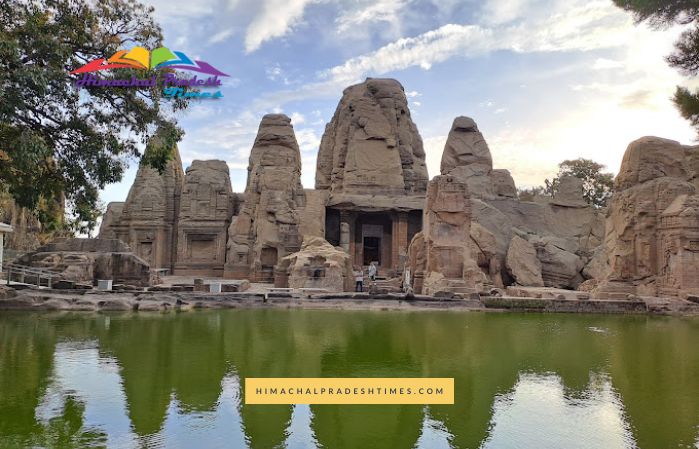
Masroor Rock Cut Temple is an archaeological site located 32 kilometres from Kangra in Dharamsala on the Nagrota-Surian Link Road. 15 rock-cut temples designed in the Indo-Aryan style here. People believe that this temple was built in the 8th century (based on relics). The complex, dedicated to the Hindu gods Shiva, Vishnu, Devi, and Saura, faces northeast, towards the Dhauladhar range. The majority of the complex was damaged in the 1905 earthquake.
The architects made this temple in Nagara style from a single monolithic rock with the use of a Shikara. The complex currently has three entrances. It has a fourth entrance too, but it was unfinished. Hindu texts inspired this architecture. The temple has a sacred pool of water and is symmetrically laid out in a square. The main temple has a square sanctum in the Centre. Tiny temples in a mandala pattern have covered it. The intricate carvings in the interiors depict Vedic teachings.
Both devotees and tourists visit the mesmerising Masroor Rock Cut Temple. People believe that bathing in the tank’s holy waters can cleanse your soul of sins.
Structure And Architecture of Masroor Temple:
The Masroor Rock Cut Temples, as the name suggests, are carved out of a single rock and feature a unique monolithic structure designed in Indo Aryan style. The temples are located on top of a hill, approximately 2500 feet above sea level. Intricate sculptural detailing on the lintels, doors, pillar jambs, and columns reflects the skills of the constructors and the architects who designed such an incredible piece of architecture during that era.
All of the temples have idols of Gods and Goddesses such as Parvati, Shiva, Saraswati and Lakshmi, as well as floral designs. The magnificent structure of the attraction bears striking similarities to Ellora’s Kailash Temple and Cambodia’s Angkor Wat Temple. Other rock-cut temples in India include the Rath of Mahabalipuram, the Dharmanatha Temple at Dharmnar, and the Kailash Temple at Ellora Caves. The Masroor Rock-Cut Temples, on the other hand, are the only ones built on top of the hill.
Historical Significance of the Masroor Rock-Cut Temple:
- Architectural Wonder: The temple complex is famous for its remarkable rock-cut architecture. This features intricate carvings carved directly into the sandstone rock face. This architectural style, which involves carving temples out of solid rock, is proof of the skill and craftsmanship of ancient artisans.
- Historical Discovery: The initial report on the temple complex by Henry Shuttleworth in 1913, followed by an independent survey by Harold Hargreaves in 1915, drew the attention of archaeologists and historians to this site. The site was relatively unknown prior to these surveys, highlighting its hidden historical value.
- Cultural Heritage: The temple’s carvings and sculptures depict various Hindu deities and mythological scenes. These carvings shed light on the religious and artistic traditions of the time when the temples were built. They also contribute to the region’s cultural heritage.
- Preservation and conservation: The Masroor Rock Cut Temple complex has drawn attention to the need for preservation and conservation. Various efforts have been made over the years to safeguard and restore the temples. This ensures that future generations can appreciate this unique piece of history.
Religious and Cultural Significance
Masroor rock-cut temple holds an important place in the religious and cultural heritage of Himachal Pradesh. The temple complex reflects the deep influence of Hindu tradition in the Kangra region with its rock-cut shrine and intricate carvings dedicated to different Hindu deities. The site is not only valued for its remarkable architecture but also for the spiritual atmosphere that attracts devotees and visitors.
Lord Shiva has a prominent place in the temple complex, although the shrine and sculpture are associated with several Hindu deities. For devotees, the temple is a place to worship and reflect, while for the visitors it offers an opportunity to experience an important part of the region’s religious heritage.
But it doesn’t just end here; the temple is surrounded by many legends and mysterious stories. Many legends have been passed from generation to generation and met with the twinkling eyes of the listener.
Legends associated with the Masroor Rock-Cut temple
There is an old story that adds a touch of mystery to the ancient stones of Masroor. According to local legend, the Pandavas, the five brothers from the Mahabharata, passed through this region during their years of exile.
As the story goes, the Pandavas decided to create a place of worship here and began carving a magnificent temple complex directly into the rocky hillside. It is said that they worked with remarkable speed and determination, shaping the hard rock into shrines, pillars and intricate architectural details.
But the legend takes an intriguing turn. The Pandavas are believed to have planned to complete the entire temple complex in a single night. Before they could finish their work, however, dawn arrived, forcing them to leave the site unfinished. Local tradition even points to the incomplete portions of the complex as a reminder of this ancient story.
Standing among the rock-cut temples today, it is easy to understand why such a legend has survived for generations. The scale of the carvings and the unusual way the temples were carved from the natural rock can certainly make the place feel almost mythical.
Read Also: 7 Most Amazing things to do in Himachal Pradesh as a traveller
Places To Visit In And Around The Famous Masroor Rock Cut Temple:
Here Is a List of The Major Attractions In And Around The Masroor Temple:
- Hotspring, Tatpani – 24 Km
- Gupt Ganga Temple is 5 kilometres from Kangra Fort.
- Wildlife Sanctuary – 14 Km
- Kangra Fort and Museum (Ancient Site) – 34 km
- Dharamshala – 40 Km
- State War Memorial – 39 Km
- John in the Wilderness – 49 kilometres
- The Tibet Museum -45 km
- Namgyal Monastery – 45 Km
- Dainkund Peak – 125 Km
How To Reach Masroor Rock Cut Temple:
- Road: The Masroor temple is located on the Nagrota-Surian Road, just a few miles from Kangra. This road is easily accessible by personal car or cab. Dharamsala and Pathankot are connected by highway, and regular buses run along the route.
- Train: There are no direct trains from Mumbai to Masroor Temple. You can travel by train for a portion of your journey; the nearest railway station is Pathankot (87 kilometres from Dharamsala).
A narrow-gauge train from Pathankot connects Kangra Railway Station to Joginder Nagar. After that, one must take a bus or a cab to this lovely location.
- Air: The nearest airport to Masroor Rock-cut Temple is Gaggal Airport, which is only 15 kilometres from Dharamshala and is well-connected to Delhi via frequent flights. To get to this ancient temple, you can either drive down or take a taxi.
Best Time To Visit Masroor Temple:
Masroor Rock Cut Temple can be visited throughout the year, but the experience changes with the seasons. Since the temple is an outdoor heritage site, pleasant weather makes it easier to explore the carvings, temple complex and surrounding Kangra landscape.
Spring
Spring is one of the most pleasant times to visit Masroor Temple. The weather is comfortable, and the surrounding hills become greener after winter. The mild temperatures also make it easier to spend time exploring the temple complex without dealing with extreme heat.
Summer
Summer can be a good time for sightseeing, particularly during the morning and late afternoon. Days can become warm, so it is better to avoid visiting during the hottest part of the day. Carry water, wear comfortable clothing and consider starting your visit early.
Monsoon
The monsoon brings fresh greenery to the Kangra Valley and gives the surrounding landscape a beautiful appearance. However, rain can make outdoor exploration less convenient, and roads may become slippery during heavy rainfall. If you plan to visit during this season, check the weather forecast before travelling.
Autumn
Autumn is another excellent season to explore Masroor Rock Cut Temple. The weather becomes cooler and more comfortable, making it ideal for sightseeing. Clearer skies can also offer beautiful views of the surrounding landscape and the distant hills.
Winter
Winter brings cool and often crisp weather to the region. The days can be pleasant for exploring the temple, although mornings and evenings may feel quite cold. If you enjoy quieter trips and cooler temperatures, winter can be a good choice for visiting Masroor.
Read Also: Dalhousie Brings You an Array of Best Places You Can Be in This
Conclusion
Masroor Rock Cut Temple is much more than an ancient temple carved into stone. Its remarkable architecture, centuries-old religious traditions and fascinating legends make it one of the most distinctive heritage sites in Himachal Pradesh. Walking through the temple complex gives visitors a chance to admire the skill of the people who shaped these massive rock structures while also experiencing the spiritual atmosphere that surrounds the site. Whether you are interested in history, architecture, mythology or simply looking for a peaceful place to explore in the Kangra Valley, Masroor is worth adding to your itinerary.
FAQs:
Q. What Is The Distance Between Dharamshala And Masroor?
The distance between Dharamshala and Masroor Rock Cut Temple is roughly around 51 km by road. If you are visiting Dharamshala, it is recommended to spend at least one day in the temple complex.
Q. What is another name for the Masroor Temple?
The temple complex, also known as the Himalayan Pyramid, is an important archaeological site dating back to the 8th and 9th centuries. It is a collection of 15 rocks carved from a single rock. This temple complex is well-known for its distinguished architecture and is located 32kilometres west of Kangra.
Q. What are the opening hours of Masroor Temple?
Masroor Temple is typically open from sunrise to sunset. However, it’s best to double-check the exact opening and closing times in your area, as they may vary seasonally.
Q. What are the legends associated with the temple?
According to the local legend, it is said that the temple was carved by the Pandavas over one night. But they couldn’t complete it before dawn, and it was left incomplete. But there is no archeological evidence supporting the story.
Read Also: Top 10 Snow Valley Resorts in Manali
We hope that you will find this article to be useful and quite informative to you. For more such informative and tourism blogs, please stay in touch with us. Also, you can share your valuable feedback with us below in the comment section.
Thank You.