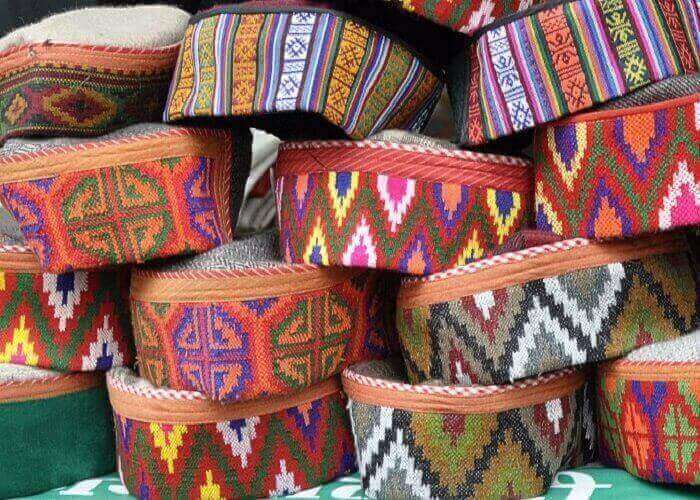
Himachali Caps, the word seems very different from all other types of dresses. Caps are used to cover the head, and there are many types of caps that are available in the market now. If he/she likes modern attire, he/she should go for modern ones. But besides these modern things in Himachal, these caps have a different market trend. Himachal Pradesh has traditional cap styles that are very famous across North India.
The Himachali Topi is more than just a traditional cap; it is a beautiful symbol of Himachal Pradesh’s culture, heritage and mountain identity. Traditionally made from wool, it comes in many distinctive styles that include different patterns, colours, and fabrics depending on the region it is from. From the colourful Kullu topi to the iconic green-banded Kinnauri Thepang, each style represents the tradition and craftsmanship of its homeland.
There are more than four types of caps found in Himachal, which represent Himachal culture as well as traditional features. The best thing about the caps is that they are usually a part of the dress that is worn in Himachal. Nowadays, people have started liking these dresses, and the trend for these things is increasing day by day.
History of Himachali cap:
The history of the Himachali Topi is closely connected to the mountain lifestyles and the traditional wool-weaving culture of Himachal Pradesh. In the cold and often harsh conditions of the Himalayan climate, woollen clothing was essential for warmth and protection. Over time, practical woollen headwear became an important part of traditional dress, with different valleys and communities developing their own colour, pattern and style.
It would be wrong to say that it originated thousands of years ago, because there is not just one type of topi, but every community describes its own beautiful weaving in their headwear. As communities across Himachal developed their own traditions, the idea of a single “uniform” Himachali cap gave way to several regional styles.
The Himachali caps have long standing connection with the traditional textile heritage of the Himalayas. Kinnaur and Kullu were situated along historic trading routes linking the Himalayan region with Tibet and other parts of Central Asia. Wool, weaving techniques, patterns, and craft traditions developed through these networks of trade and cultural exchange. Kinnaur was a part of the old “wool road” connecting India, Tibet, China and Central Asia, which contributed to the development of the exchange of textile traditions.
Importance of Cap:
It is like the Pagri, or the turban worn by people in the other states of India. The cap is called a symbol of respect and pride, like the turban. People used to offer this to the people whom they want to thank or want to show respect to. As you have also seen in the news, when PM Modi Ji came to Himachal, the CM of Himachal presented them with the cap. This thing reflects that what is the importance of caps in Himachal.
Before modern clothing became a part of the region, woollen caps have always played a part in protecting the people from the climatic conditions of Himalayan peaks. The cap that is made from wool plays an important part-not just in traditional attire, but in saving heads from the chilly air of Himachal Pradesh. The woollen construction of traditional caps provided warmth while remaining comfortable for everyday use.
Besides this, the Himachali cap culture is not only trending in India, but it has crossed international borders too. PM Modi visited Israel with the Himachali cap on their head, and this represents the Himachali cap in the international world too. The cap is made of bright woollen fabrics, which look very beautiful. This is about the cap and its importance in the Himachali world. Now talk about the types of caps found in Himachal Pradesh.
The Himachali topi is much more than just a winter accessory. It represents history, craftsmanship, regional diversity and cultural pride of Himachal Pradesh. From village celebrations to modern cultural events, the traditional cap continues to connect present-day Himachal with its rich mountain heritage.
Main types of Himachali Topi:
#Kullu Cap:
As is clear from the name, the cap is somewhat related to the Kullu region of Himachal Pradesh. Locally, the cap is known by the name of Kullu cap and is worn especially by the men around the district. The Kullu cap is one of the most famous caps of Himachal Pradesh. The caps consist of very bright colours, which look very stylish and quite cool to wear. This type of cap best suits the young generation who enjoy the new trends in the market.
We all know that the clothes belonging to a particular area represent the features of that area. So, the Kulluvi cap is doing the same thing.
The cap represents the culture and trends of the Kullu culture. The cap has a flat head with a round, cylinder-like structure on the side and has a bright-coloured front that covers nearly half the round of the cap. This thing gives the cap a different look and makes it more attractive. But with the passing of time, the trends changed, and now people also used to wear caps of lighter and vegetable colours too. But the trend is in the same motion.
Read Also: TRADITIONAL AND UNIQUE DRESSES OF HIMACHAL PRADESH
#Bushahri cap:
The very famous cap type in the photographer’s community, these caps are trending nowadays in this field. The Bushahri cap looks the same as the Kulluvi cap; the only difference is that the front semicircular part in the front of the cap is replaced by parrot-green velvet cloth. Beautiful is just one word to describe this; a colored velvet band-the front panel gives the cap its distinctive appearance alongside with its characteristically round, relatively flat shape. The cap symbolises the state colour of Bushahri state of Himachal Pradesh and also represents the importance of wildlife.
One more interesting fact about the cap is that it is the symbol of the Congress party. As the four-time chief minister of the Congress party, Virbhadra Singh wears this cap all the time.
The Bushahri cap is connected to Bushahr, the historic Himalayan princely state whose territory included what is now Kinnaur; Rampur eventually became the capital of the state. This represents that the Bushahri cap goes beyond just a traditional cap culture but also linked with the Bushahr royal state.
#Kinnauri Cap:
The cap belongs to the Kinnaur region of Himachal Pradesh, and the cap is quite similar to the Bushahri caps. The only difference between both of them is that the Kinnaur cap lappet, or, say, the front green part, is made of red velvet cloth. Besides all this, the caps look similar to each other because Kinnaur was a part of the Bushahr princely state until the reorganisation to create Kinnaur as a separate district in 1960. That’s the reason the Kinnauri cap and Bushahri cap were somewhat similar yet still different.
The interesting fact about this cap is that it is the party symbol of the BJP like Congress has the Bushahri cap as a symbol.
When Kinnaur was made a separate district rather than being assimilated into Bushahr state, the Kinnauri people changed the band from the iconic maroon band to a green velvet band. This diverse nature separates the Bushahri cap from the Kinnauri cap. The Kinnauri caps are traditionally known as Thepang and are worn by both men and women. The cap is commonly made in light grey wool and is distinguished by a coloured velvet band, especially the characteristic green band associated with Kinnauri style.
#Lahauli Cap:
As it is clear by the name, the cap is from the Lahaul district of Himachal. The cap is also a modified form of the Kulluvi Caps. But unlike the colourful Kulluvi cap, the Lahauli cap is generally plain and single-colored without elaborate woven patterns. Its simple design also reflects the practical character of clothing developed in a high-altitude Himalayan environment.
Some historical description also records Lahauli caps decorated with pressed flowers, particularly for special occasions. Such decorated caps are often used for festivals, marriages and religious functions.
The cap completes the traditional attire of both men and women in Lahaul. Men traditionally wear woollen trousers with a full-sleeved shirt known as Kurti along with the loose woollen gown called Kattar. Women traditionally wear fitted pyjamas with a long gown called Dugpo. The Lahauli caps complete these traditional outfits.
FAQs About Himachal caps.
#1. What is the traditional cap of Himachal Pradesh?
The Himachali Topi is the traditional headwear of Himachal Pradesh. Different regions have their own styles, including the Kulluvi, Kinnauri, Bushahri, Lahauli and other regional variations.
#2. What is a Kinnauri cap is known as?
The traditional Kinnauri cap is called Thepang or tepang. It’s a round woollen cap commonly recognised by its colored velvet band, particularly the green band associated with Kinnauri style.
#3. What is a Bushahri cap?
The Bushahri cap is a traditional cap associated with the historic Bushahr region, particularly around Rampur. It is closely related to the Kinnauri Thepang, and the names are sometimes used interchangeably outside Kinnaur.
#4. What is Kullu Topi famous for?
The Kullu Topi is known for its colourful woven patterns and decorative bands. It is traditionally associated with the Kullu region and is widely recognised as a symbol of Himachali culture.
#5. What is a Lahauli cap made of?
Traditional Lahauli caps are generally made from wool, making them suitable for the cold climate of Lahaul. They are usually simpler in appearance compared with the more colourful Kulluvi styles.
#6. Are Himachali caps worn by both men and women?
Yes. Several Himachali caps are including the Kinnauri Thepang, are worn by both men and women as part of traditional dress and during cultural occasions.
#7. Why are Himachali caps important?
They represent the culture, heritage, craftsmanship, and regional diversity of Himachal Pradesh. Their different designs and styles reflect the traditions of the communities across the state’s mountainous region.
A cultural legacy to remember.
Conventionally made from wool and designed to suit the cold Himalayan climate, these caps combine practicality with cultural expression. Their colours, patterns, velvet bands, and decorative details have developed through generations of local craftsmanship. They have also remained a part of cultural attire during festivals, weddings, religious ceremonies and other special occasions.
Today, Himachali Topi continues to hold an important place in the cultural identity of the state. Although everyday clothing has changed with modern lifestyles, these traditional caps are still worn with pride and increasingly appreciated by visitors, artisans, and cultural enthusiasts.