
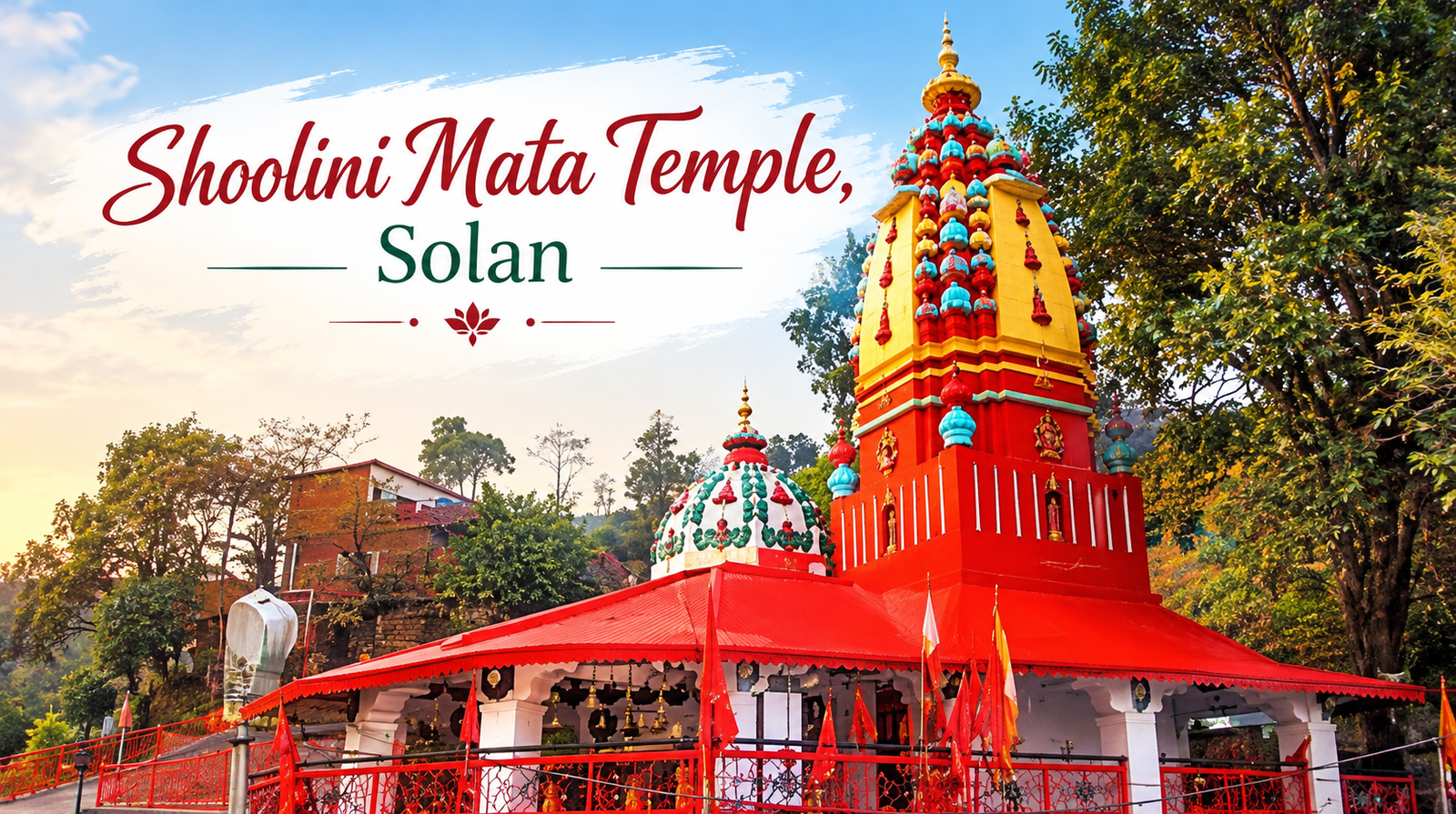
Shoolini Mata, the revered goddess of Solan, the presiding deity that is believed to protect the land from obstacles and giving light to the path of devotees. The name of the town itself is derived from the beloved mother of the land- Mata Shoolini. The Shoolini Mata Temple is dedicated to the goddess Shoolini, and many visitors come around all year to seek blessings.
Mata Shoolini is considered the form of Durga that is revered in the town for years. For devotees who flock here from around the world, visiting this temple is an opportunity to offer prayers and seek the goddess’s blessings. The temple becomes especially lively during the Shoolini fair that is held annually around June where the faith and religious ceremony bring communities together.
Where is Shoolini Mata temple located?
Shoolini Mata Temple is located in Solan town, Himachal Pradesh. It is a well-known shrine and can be visited throughout the year. Solan is accessible by road since it falls on the Chandigarh-Shimla route. Is also well connected with the historic Kalka-Shimla railway route. The temple is accessible from the main parts of the town, making it convenient for visitors travelling by bus, train, taxi or private vehicle.
Its location also makes it possible to combine a visit to the temple with a walk through Solan’s market area or a wider sightseeing trip around the district.
History of Shoolini Mata Temple
The history of the temple is closely connected to the history of the town itself. The town derives its name from the goddess Shoolini, who is also the Kuldevi of the town. This connection gives the shrine a significance that extends beyond its role as a place of worship.
Solan once acted as the capital of the Baghat princely state before the region came under the influence of the British. Over the years, it became an important town in the hills, but its religious traditions remained an important part of the town’s identity.
According to the legend, after Lord Vishnu’s 4th Avatar Narasimha killed the demon king Hiranyakashipu, Narasimha’s rage threatened the whole universe. To pacify him, Lord Shiva took the form of Sharabha, a part lion and part bird entity. And Maa Parvati, with the blessings of Lord Shiva, took the form of Mata Shoolini and positioned herself in the right wing of Sharabha to assist in taming Narasimha’s fury.
Who is Goddess Shoolini?
Goddess Shoolini is worshipped as a form of Durga, a manifestation of Ma Parvati, a divine feminine power. The name Shoolini is associated with the Shool, a trident-like weapon, symbolising strength and the power to overcome negative forces.
From one legend, we can derive that Ma Parvati took the form of Mata Shoolini to assist lord Shiva in his avatar of Sharabha. All to tame the fury of Narasimha that threatens to overthrow the cosmic balance of the universe. Devotees visit Shoolini Mata to offer prayers, express gratitude and seek blessings for their families and personal lives.
The goddess is not simply a form of mythology. She is a continuing presence in the life of Solan, remembered through worship, family traditions, and annual celebrations held in her honour.
Shoolini Fair: The Temple’s Most Important Celebration
The annual Shoolini fair, or Shoolini Mela, is one of the important cultural and religious events held in Solan town. It is held in June; the three-day celebration honours Goddess Shoolini and attracts devotees from every community.
The fair is more than just a religious gathering; the native sentiment is attached to the revered goddess of the town. It is a time when people gather for religious ceremonies and celebrate the fair in devotion. While visiting the fair, you will find yourself so connected with the goddess that it will feel like she herself is coming to you to give you her blessings.
The Goddess’s Traditional Procession
One of the highlights of the fair is the ceremonial procession in which the goddess’s idol is carried in a palanquin. Devotees accompany the procession through the town, creating an atmosphere of devotion and celebration.
According to the locals, Goddess Shoolini visits the abode of her sister deity during the fair before returning to her own shrine. The customary journey is really important to the celebration and is observed with great enthusiasm.
Why Visit During Shoolini Fair?
The town is in full swing with laughter, happiness and devotion around. If you want to understand Solan’s cultural identity, it is advised to visit during the Shoolini Fair. You will witness the local devotion surrounding the goddess and see how a religious celebration brings together people of different ages, groups and communities.
However, the town becomes considerably busier at this time of the year. If you prefer a quieter visit focused on prayer, consider travelling outside the fair time. The temple is open throughout the year and offers a glimpse of the goddess even with the crowd.
Best time to visit Shoolini Mata Temple
As we have discussed earlier, the Shoolini Mata temple could be visited throughout the year. The best time depends on whether you prefer a peaceful religious event or want to experience Solan’s biggest annual celebration.
March to June: The weather is suitable for exploring Solan and the temple. June is quite an interesting time to visit because of the annual celebration and the colours of festivals all around the town.
July to September: The monsoon brings greenery to the hills around Solan. Caution is advised as the road can become slippery and there is a risk of landslides.
October to November: This period can be a good choice for visitors who prefer cooler weather and want to explore the town at a slower pace.
December to February: Winter visits can be pleasant for those who enjoy the cooler weather on the mountain. Carry warm clothes with you, especially for morning and evening.
Shoolini Mata Temple Timing
The temple opens at 6 am every morning, and closes the door at 10pm. But during Navratri, the timing differs a little. The temple opens at 5 am at that time and closes at 11 pm, an hour difference to explore the temple without any hurry.
But timings can always vary; it is recommended to check the schedule first and arrive early in the morning. It’s a hack for the places that is inevitable to become crowded, reach early, or go in the evening. Less crowd, more time to explore.
Travel Tips for Visitors:
- Always respect the temple’s customs, follow the instructions displayed on the shrine board and remove your footwear outside.
- Although the Shoolini Fair is held in June, you should always check the dates as they can vary.
- During the procession and festival, allow yourself extra time, since the crowd can make movement slow
- Carrying cash with you would be a lifesaver; don’t always rely on online payment.
- Choose your clothing according to the occasion and always dress respectfully while in the temple.
- Do not litter around; it’s highly disrespectful to the deity and the temple authorities. Show some manners, please.
Conclusion:
Shoolini Mata Temple is not a place for a deity to reside, but a living monument of the town. The goddess is highly revered in the hearts of native and provides blessings to the people who come to her premises with no malice. The temple is associated with the cultural identity of the town alongside religious heritage.
The temple offers you a chance to experience a side of Himachal Pradesh that goes beyond mountain views and popular tourist spots. Whether you visit during the lively month of June or on a quieter day, it is a worthwhile place to understand faith and local heritage, which continue to shape the town even today.
FAQs:
#1. Where is Shoolini Mata located?
Shoolini Mata is located in the town of Solan, Himachal Pradesh. It is one of the area’s most important temples.
#2. Which goddess is worshipped at Shoolini Mata temple?
The temple is dedicated to Goddess Shoolini, who is a form of Maa Parvati, and is associated with strength and divine power.
#3. When is Shoolini Fair celebrated?
The fair is organised every year during June and lasts up to 3 days. But the dates can vary every year even if the month is the same.
#4. What are the temple timings?
The temple opens every day at 6 am and closes at 10 am. But during festivities and Navratri, the timing shifts an hour earlier in the morning and later in the evening.
#5. How much time is needed to explore the temple?
It usually takes an hour or so for darshan and a short look around, depending on the crowd and the occasion you visit the temple.