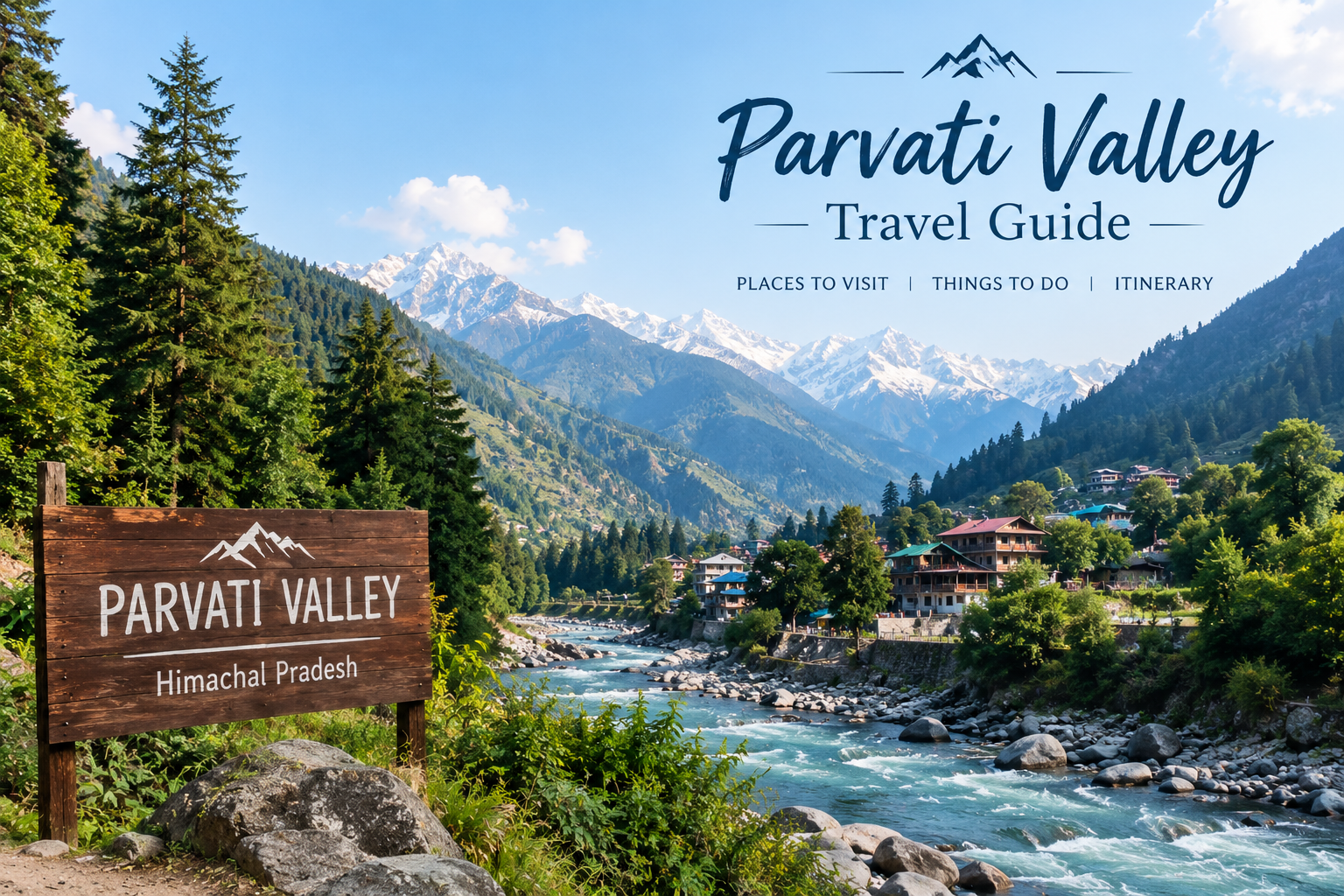
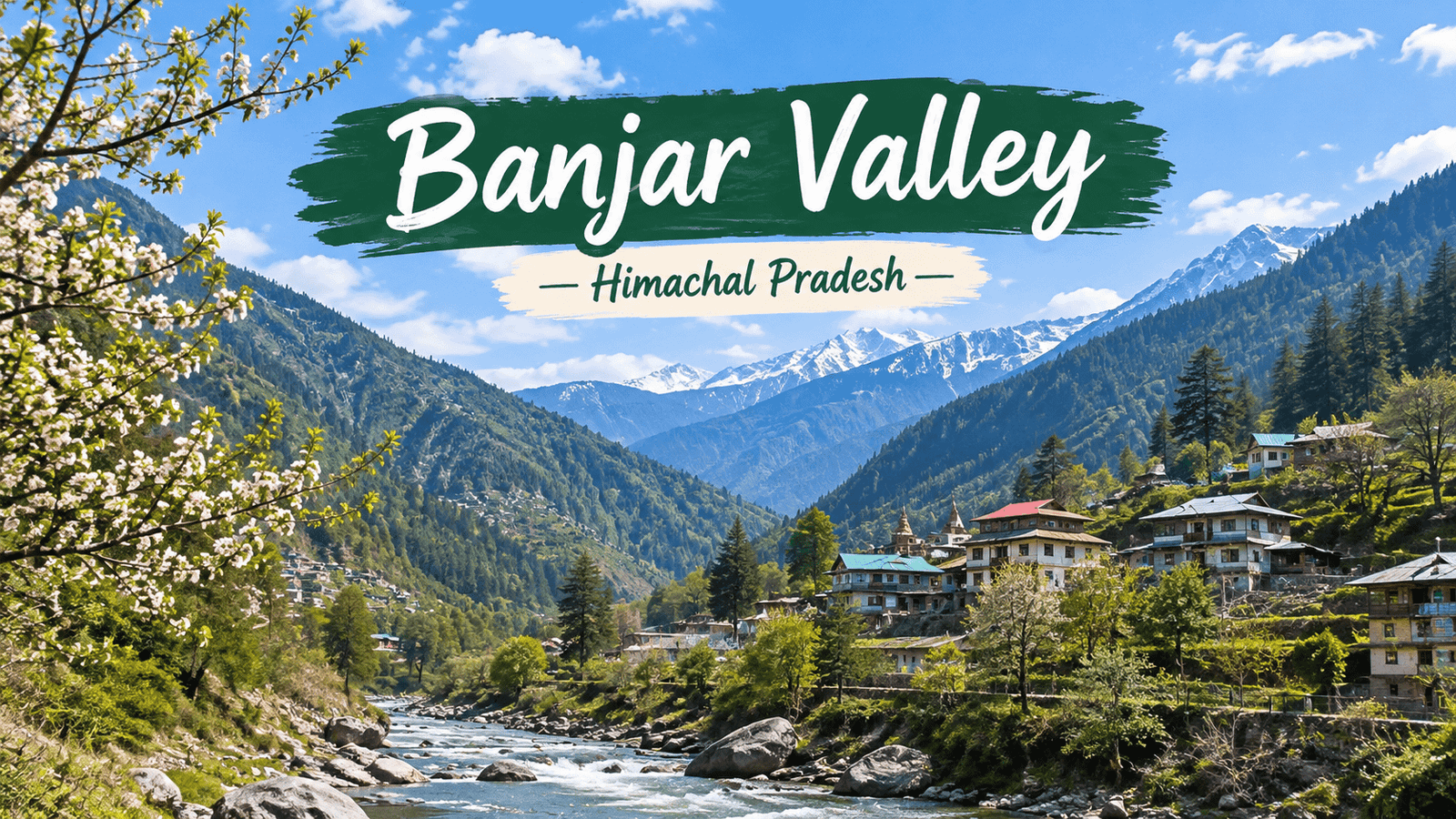
There are locations in Himachal that are beyond the main town destinations, and Banjar Valley is one of them. Its location in Kullu district gives this mountain region an identity of forest-covered slopes, traditional houses and peaceful riverside surroundings. The valley offers you a different experience from the more crowded hill stations. This makes it a destination where visitors can spend their day in peace, surrounded by forested mountains and chilly air.
Some travellers come here for a peaceful riverside stay, while others use this as the starting point for their hike and trekking to Jalori Pass. The nearby Great Himalayan National Park is also an interesting visit for those who are enthusiasts of wildlife and nature.
Where is Banjar Valley located?
Banjar Valley is situated in the Kullu district of Himachal Pradesh. Banjar town serves as an important local centre, connecting several villages and destinations in the surrounding mountains. The town itself has local markets, shops and transport connections.
The region is associated with the Tirthan River and its surrounding settlement. The Tirthan Valley in Kullu is a really famous and well-known trekking mountain that attracts many hikers all along the year. From Banjar, not only the Tirthan Valley but the travellers can explore places like Gushaini, Jibhi, Shoja, and Jalori Pass.
What makes Banjar Valley the starting point of the traveller, is that the Banjar town hosts markets, transport connection and accommodation, for the travellers who need access to everyday facilities.
Why visit Banjar Valley?
Banjar Valley is very underrated when it comes to tourist destinations. We all have heard about Kullu, maybe Tirthan Valley too, but Banjar Valley remains in the shadow. The valley makes a perfect destination for people who prefer a slower mountain holiday. This is not your typical crowded tourist spot, but it gives you a whiff of peace, ease of mind and trekking trails.
The landscape changes as you travel through the region. You will find river valleys, pine and deodar forests, terraced fields, and traditional Himachali houses. The region, however, is suitable for:
- Couples who want to choose a peaceful and less crowded spot to spend their days.
- Families who are looking for a peaceful holiday rather than picking the same places every time.
- Travellers who love short hikes and enjoy forest walks.
- Nature enthusiasts who feel they can only breathe when there is greenery around them.
- Visitors planning to explore Jibhi, Tirthan Valley, and Jalori Pass all in one trip.
Best places to visit in Banjar Valley:
1. Jibhi:
Jibhi is one of the most popular places to stay in the Banjar Valley. The village is known for its wooden houses, green surroundings, small cafes, and peaceful atmosphere. Jibhi Waterfall is an interesting spot to visit and is the most commonly visited place. The area overall is best for slow travel and getting a whiff of fresh air.
2. Gushaini:
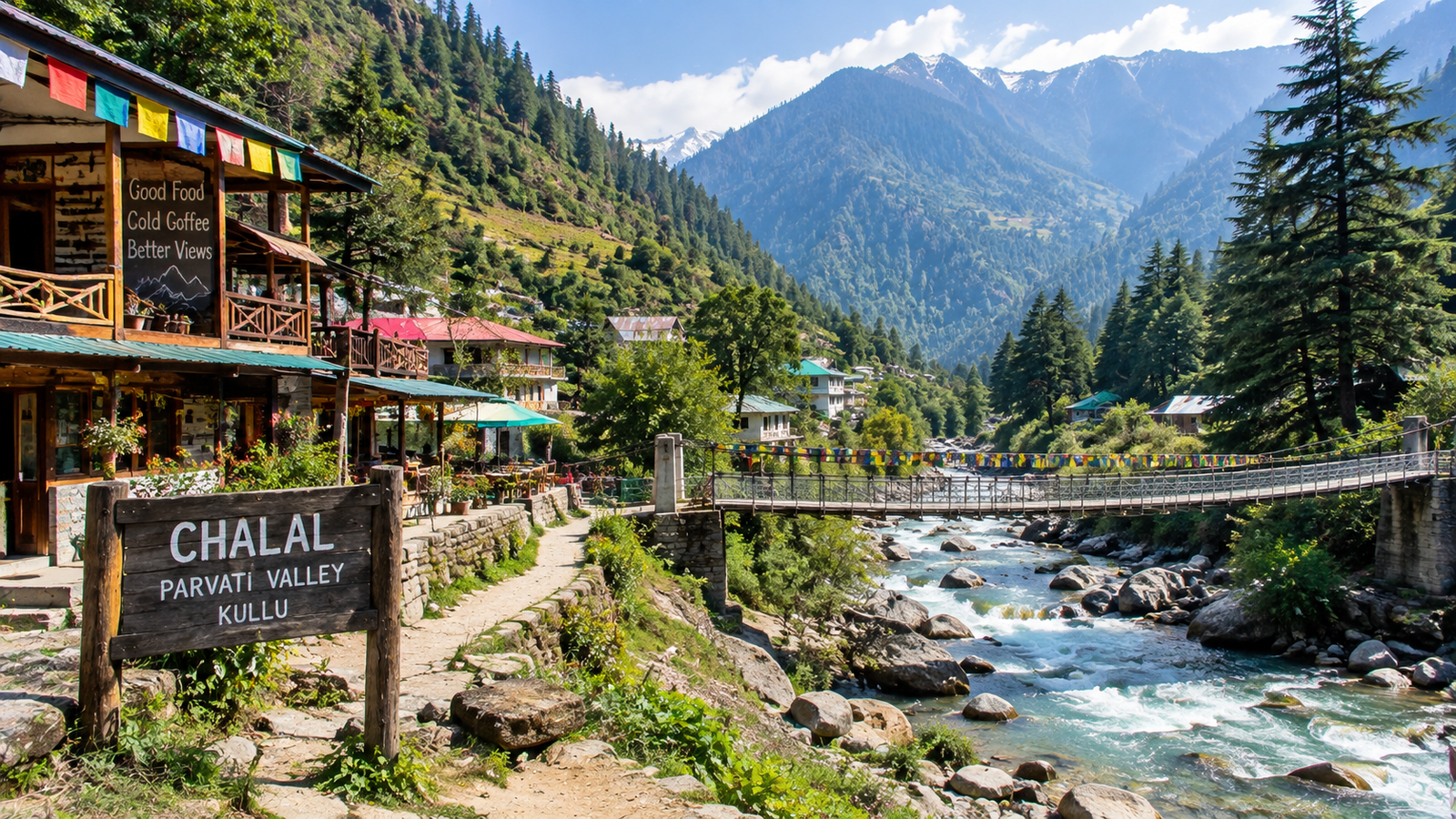
Known for its riverside surroundings, Gushaini is a village on the Tirthan River side of Banjar Valley. Many visitors choose Gushaini because they want to spend more time around the river rather than stay in a busier tourist area. If your idea of holiday involves sitting beside a river, taking nature walks and spending time away from crowded markets, this part of Banjar Valley deserves a place in your bucket list.
3. Shoja:
Shoja is a small mountain village located on the route towards Jalori Pass. It is known for its forest surroundings, mountain views and quiet atmosphere. Unlike a typical town, Shoja has a more secluded feel. The weather here is colder than the lower parts of the valley, making it a perfect getaway for the travellers who are escaping the heat of the plains.
4. Jalori Pass:
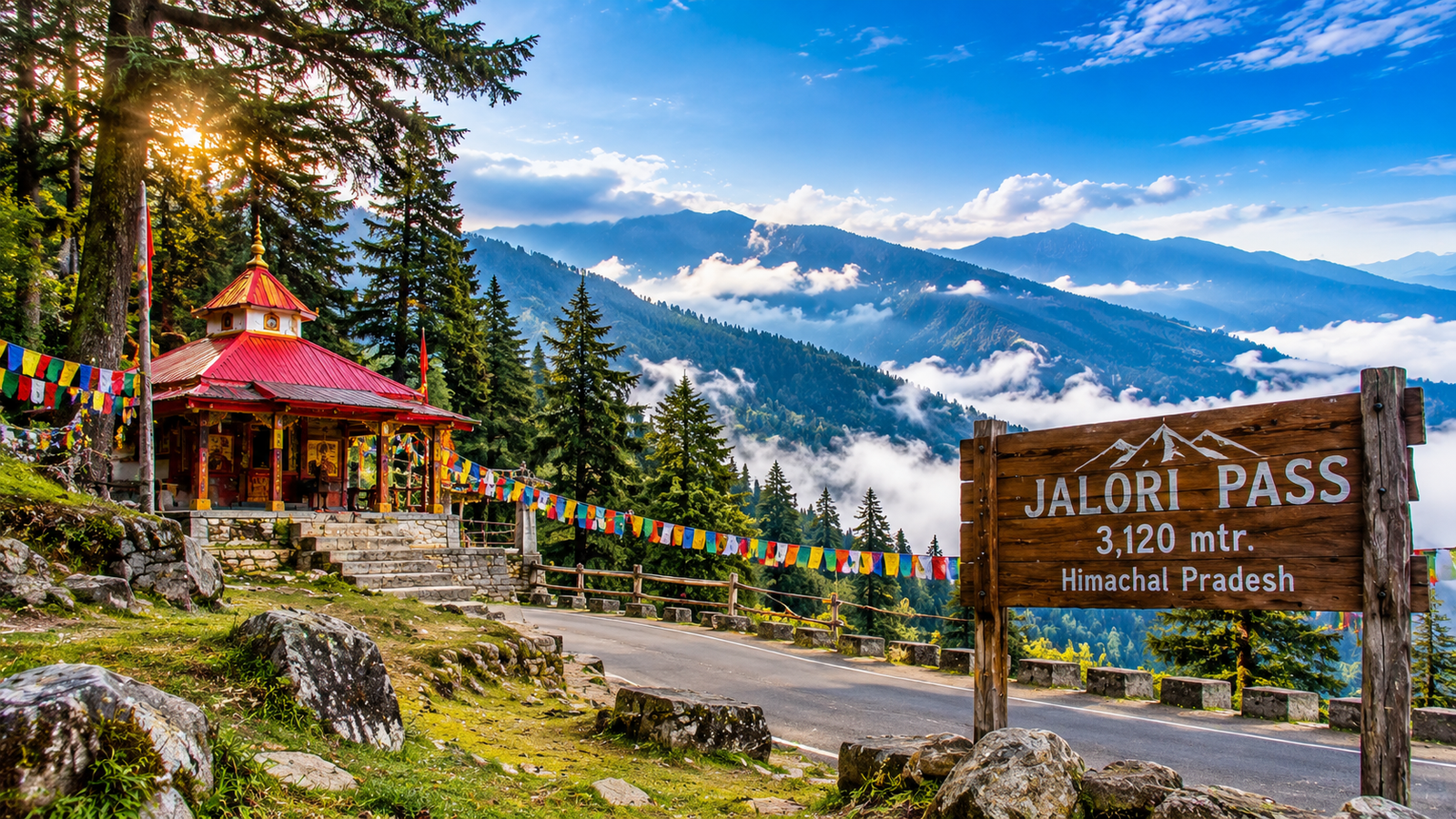
Jalori Pass is a very famous and popular trekking site in the Tirthan Valley, Kullu. It is located at approximately 3,120 metres; the pass connects the Banjar region with the areas towards the outer Seraj region. The drive towards this pass is an experience itself. For people who love the journey more than the destination, this could be your spot.
5. Serolsar Lake:
When you reach Jalori Pass, what would you expect? Serolsar Lake: It is a beautiful high-altitude lake reached by trekking through Jalori Pass. The walk to reach this lake requires some physical effort; this isn’t your typical drive-to-destination. This lake is associated with local religious beliefs, so it is advisable to respect the place and avoid loitering.
6. Chehni Kothi:
Chehni Kothi is known for its traditional Himachali architecture. The structure is an impressive example of the region’s Kath-Kuni building style, which uses layers of wood and stone. Reaching Chehni Kothi involves travelling towards the village and completing a walk. If you are interested in knowing the traditional architecture of Himachal and the local culture, this place is worth including in your itinerary.
7. Raghupur Fort:
If you enjoy walking in the hills, and expecting to arrive at a place where time feels to stand still, this place is worth it. journey towards Raghupur Fort is more about open mountain landscape than visiting a restored historical building. The walking trail will lead you to the remains of an old fort that God knows how many stories and time lapses it has seen.
8. Great Himalayan National Park:
It is a UNESCO World Heritage Site located in Kullu, known for its biodiversity and natural landscape. The park is home to a variety of Himalayan plants, birds and wildlife. This is an interesting site for nature enthusiasts and wildlife photographers. So if you are into exploring the flora and fauna of the state, this is your good-to-go destination.
Things to do in Banjar Valley:
Banjar Valley is not just about visiting viewpoints and taking photographs; there are several ways to explore the region, particularly if you have a few days left.
- Staying around Gushaini or other riverside locations allows you to enjoy the sound of flowing water and the surrounding mountain landscape.
- Explore traditional Himachali villages; the villages around Banjar Valley offer a glimpse of local life.
- Go for a short hike and nature walks. Since the region has walking routes, taking a small walk will give you a fresh mind.
- Visit local cafés and try Himachali food. Jibhi gives you good options to explore the cafes and eateries there.
- Spend time in nature, and why wouldn’t you? The place is covered in forested mountains that will give you a whole lot of experience and make you so attached to the place that you won’t want to leave.
A practical 3-day Banjar Valley itinerary
Three days are considered to be a comfortable time to spend in the Banjar Valley without rushing your trip. The following plan will keep your itinerary organised and won’t rush to cover all the places at once.
Day 1: Explore Jibhi and its surroundings
Keep your first day relaxed. Jibhi, as we discussed earlier, is the most popular place to stay, so check in at your accommodation first. You explore Jibhi village, Jibhi waterfall and if got more time in your hands, try local food in the cafes. Alongside, you can take a short walk around the surrounding area.
Day 2: Visit Shoja and Jalori Pass:
Prepare yourself to trek to Jalori Pass. The walk to reach here needs some preparation, and it is advisable to wear comfortable shoes. The trek to Jalori Pass is at least an hour long, so check the weather before leaving; do not force the hike. Upon reaching the pass, you might want to set out for Serolsar Lake, the most famous attraction of the region.
Day 3: Explore Gushaini and the Great Himalayan National Park:
On the third day, move to explore Gushaini and the surrounding riverside. Here, you can enjoy spending your time beside the river. You can also move toward the Great Himalayan National Park, the UNESCO World Heritage site of Kullu.
Planning note: This is a recommended route, not a promised fixed itinerary. The journey depends on your location, starting point, days in hand and the location you want to visit.
How many days are enough for Banjar Valley?
It is subjective how many days are enough. However, three to four days are a reasonable starting point for exploring the main parts of Banjar Valley. But your trip could be different from the itinerary presented here; maybe you just want to trek to Jalori Pass, or your destination is Gushaini only. In that case, one day is enough for travel, and the next day you can return.
But if you say you are going to cover every part of Banjar Valley, that will obviously take more time than one day. And you should allow yourself more time if your plan is to explore every place. If you are travelling mainly for relaxation, there is no need to cover every village. Choosing one base and exploring its surroundings can make the trip more enjoyable.
Some important travel tips:
- It is recommended to choose your base carefully, since Jibhi, Gushaini, Shoja and Banjar town are not interchangeable.
- Ask about the condition of the roads to Jalori Pass and other higher areas before travelling.
- The weather in the upper valley can be cooler in the evening and morning, so carry light warm clothing even in summer.
- Do not assume every café or homestay has digital payment available, so it is advisable to have cash in your pocket.
- Mountains are not your private property, so do not litter around and carry your waste back with you. Dump it when you see a dustbin; please don’t ruin the scenery of the mountains.
- Be considerate of local customs and respect the religious places.
- Avoid entering fast-flowing water, especially during the monsoons.
- Keep your itinerary flexible, since the weather can change at any time and ruin your already made plan.
Conclusion:
Banjar Valley isn’t just one destination to visit; it is best explored as a collection of mountain villages and landscapes. The cluster of villages in the Banjar Valley is something to admire, because all you will get here is peace. Where Jibhi and Shoja offer access to forest surroundings and Jalori Pass, Gushaini provides a different experience along the Tirthan River.
Give yourself three or four days; if possible, keep some room in your itinerary for unexpected changes and take time to enjoy the village along the way. That is when Banjar Valley becomes more than just another stop on a Himachal Pradesh trip.
FAQs:
Q1. Are Banjar Valley and Tirthan Valley the same?
No, they are not the same, but geographically connected. Tirthan Valley is part of the wider Banjar region, since the Jalori Pass is in the Tirthan Valley.
Q2. How many days should I spend in Banjar Valley?
3-4 days are suitable for a comfortable trip, but if your destination is only Jalori Pass, then one day is enough for the trekking and another day to come back.
Q3. Can I visit Serolsar Lake by car?
No. Serolsar Lake is only reachable through trekking. You first need to trek to Jalori Pass and then move to the trail towards Serolsar Lake.
Q4. Is Banjar Valley suitable for a family valley?
Yes, families can enjoy village stays, scenic drives and relaxed nature walks. However, choose accommodation with suitable road access and consider the walking requirements of any attractions you plan to visit.
Q5. Does it snow in Banjar Valley?
Snowfall can occur at the higher elevations of the valley, and at lower elevations too, if the conditions are suitable. If you want to experience snowfall, Jalori Pass can be your destination in winter.