Introduction
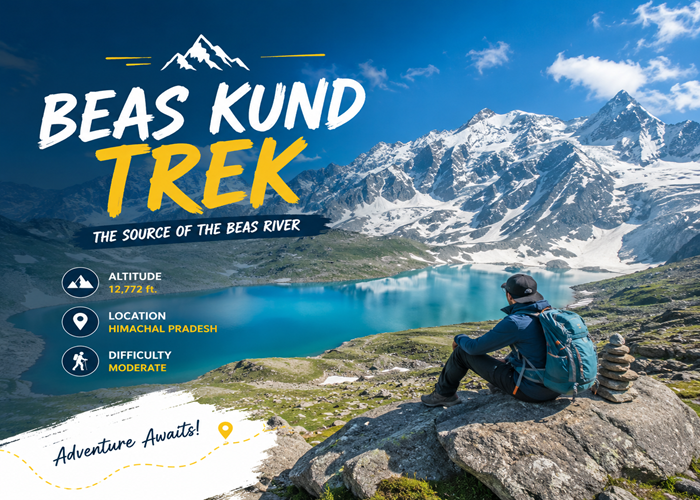
The Beas Kund Trek starts near Manali and ends at the exact spot where the Beas River is born. That’s the whole pitch, and it’s a good one.
You don’t need weeks off work or years of trekking experience for this one. Three or four days is enough to walk through pine forest, cross a few streams, sleep in a meadow, and stand next to a glacier. This guide covers everything you need for the Beas Kund Trek in 2026, from the route to the packing list.
What is Beas Kund Trek?
Beas Kund is a small glacial lake sitting high above Solang Valley, near Manali. Locals say Sage Vyas sat here to write the Mahabharata, and the lake still carries his name.
This is also where the Beas River actually begins. Every drop that later fills the Kullu Valley and flows into Punjab starts right here, at a quiet, half-frozen lake most people have never heard of.
The trek itself is short but far from boring. You walk through thick forest, open meadows, rocky moraine, and finally reach the lake itself, tired but grinning.
Why Visit Beas Kund in 2026?
Most short treks give you one good view and call it a day. This one keeps changing on you.
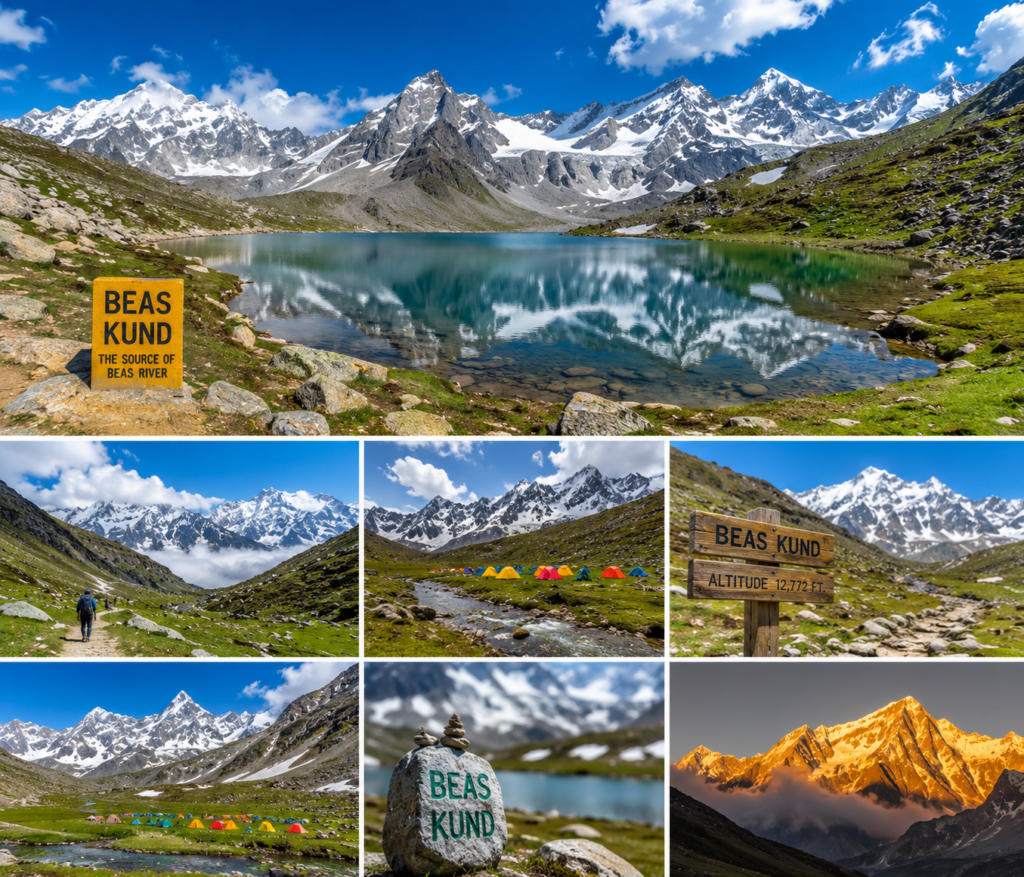
One hour you’re under pine trees, the next you’re staring at Friendship Peak. Then Hanuman Tibba shows up on the skyline, followed by the Seven Sisters peaks lined up across the Pir Panjal range.
Here is what you’ll actually see along the way:
-
The Beas Kund glacier up close, not from a viewpoint
-
Friendship Peak and Hanuman Tibba dominating the skyline
-
The Seven Sisters peaks across the Pir Panjal range
-
The literal starting point of the River Beas
-
Camping by the river at Dhundi and in the meadow at Lohali
-
A different kind of view almost every few hours
Beas Kund Trek Quick Facts:
| Detail | Information |
| Location | Solang Valley, near Manali |
| State | Himachal Pradesh |
| Region | Kullu District, Pir Panjal Range |
| Maximum Altitude | Approx. 12,770 ft (3,890 m) |
| Trek Distance | Approx. 13–16 km (varies by route) |
| Duration | 3 to 4 days |
| Difficulty | Easy to Moderate |
| Best Season | May to October |
| Starting Point | Dhundi (via Solang Valley) |
| Ending Point | Dhundi, then drive back to Manali |
Best Time to Visit Beas Kund
The month you pick changes the trek quite a bit. Same trail, completely different mood.
| Month | Conditions |
| May-June | Leftover snow near the top, cool but clear days |
| July–September | Monsoon, green meadows, muddy trail |
| October | Cold nights, sharp clear views, meadows turning brown |
May and June keep the lower trail pleasant and easy to walk. Near Beas Kund itself, you’ll still find snow patches, so bring microspikes if you’re going early.
July to September is technically the best time to visit Beas Kund, even though it means walking in the rain sometimes. The meadows turn green, wildflowers show up everywhere, and the trail gets slushy in patches.
October gives you the clearest mountain views of the year, hands down. It’s also the coldest month to camp, so pack accordingly.
Beas Kund Trek Route
Here is the route in one line: Manali → Solang Valley → Dhundi → Bakarthach/ Palchhani → Beas Kund
From Manali, it’s a short drive to Solang Valley, where paragliders and skiers usually hang around depending on the season. This is your trailhead.
A jeep road takes you further to Dhundi, your first camp. From here, the trail climbs through pine and birch forest toward Bakarthach or Palchhani Thatch.
Next comes Lohali, a meadow ringed by snow peaks that looks like it was made for a nap. The final stretch to Beas Kund is steep and rocky, and locals call this bit Lady Leg for good reason.
Add it all up and you’re walking around 10 to 12 hours across the whole trek. Most days are gentle climbs, with one proper steep push on summit day.
Detailed Beas Kund Trek Itinerary
#Day 1: Manali to Dhundi to Palchhani Thatch Drive about 14 km from Manali to Dhundi. Walk another 1.5 km to your first camp at Palchhani Thatch, gaining close to 1,000 feet.
#Day 2: Panchgani Thatch to Lohaliis around 4 km through forest and open meadow. You will climb roughly 1,000 feet again, ending the day camped at Lohali.
#Day 3: Lohali to Beas Kund and back Summit day. Walk about 5 km one way, push through the steep Lady Leg section, reach the lake, then head back to Lohali by evening.
#Day 4: Lohali to Dhundi, drive to Manali Descend about 4 km to Dhundi. From there, drive back to Manali, usually reaching town by early afternoon.
Beas Kund Trek Difficulty
How difficult is the trek, really? Moderate. Not scary, but you’ll feel it in your legs.
Day one and two stay gentle, with steady climbs that don’t punish you. Day three is where it gets real, with loose rocky ground and one genuinely steep stretch near the top.
You will also cross a few small streams and walk over moraine near the lake. None of it needs ropes or climbing gear, just decent shoes and legs that have done some walking before.
Preparation tips:
-
Start jogging or brisk walking about a month before
-
Climb stairs a few times a week to build leg strength
-
Break in your trekking shoes well before you fly out
-
Do one or two day hikes near home if you can manage it
Is the trek suitable for beginners? Yes. Show up reasonably fit, walk slowly on summit day, and you’ll be fine.
Beas Kund Trek Cost
The Beas Kund Trek cost depends mostly on how you choose to do it.
Here’s a rough breakdown for 2026:
| Trek Type | Approximate Cost (per person) |
| Budget group trek | ₹6,500 – ₹9,000 |
| Standard group trek (with agency) | ₹9,000 – ₹16,000 |
| Private trek | ₹18,000 and above |
| Equipment rental | ₹500 – ₹1,500 |
| Porter/mule charges | ₹500 per day per bag |
This usually covers transport from Manali, camping, meals, and a guide. Most agencies fold the permit fee into this price too, so you won’t need to arrange it separately.
How to Reach Beas Kund Trek
Nearest Airport: Kullu-Manali Airport (Bhuntar), about 50 km from Manali town. Nearest Railway Station: Joginder Nagar, followed by a road journey to Manali. By Road: Regular AC and non-AC buses run from Delhi and Chandigarh to Manali.
Once you are in Manali, your trek operator usually handles the drive to Solang Valley and Dhundi. This is included in almost every standard trek package.
Beas Kund Trek Packing List
-
Trekking shoes with good grip
-
2–3 layers of warm clothing
-
Waterproof rain jacket
-
Basic medicines and a blister kit
-
Reusable water bottle
-
Energy snacks and dry fruits
-
Headlamp or torch
-
Power bank
-
Sunscreen (high SPF)
-
Cap and sunglasses
-
Trekking poles
Permits and Safety Tips for Beas Kund Trek:
Most operators arrange the forest entry permit for you as part of the package. Just carry a valid ID at all times.
Is altitude sickness common on this trek? Mild headaches can happen since you gain height fast for a short trek. Walk slowly, drink more water than you think you need, and tell your guide right away if something feels off.
The weather here can flip fast, even in the best months. Pack rain gear regardless of the forecast, and consider travel insurance that covers high-altitude trekking.
Responsible Trekking Tips
Treat the meadows and campsites the way you’d want to find them. Carry every bit of your trash back down with you, wrappers included.
- Don’t leave litter on the trail or at camp
- Keep your distance from grazing animals and wildlife
- Carry a reusable bottle instead of buying plastic ones
- Stick to the marked trail so the meadow grass has a chance to recover
These are small habits, but they add up fast when thousands of people walk the same trail every year. Leave the place as good as you found it, or better.
If short Himalayan treks are your thing, the Mount Japfu Peak Trek in Nagaland is worth a look too, for a completely different kind of forest trail.
FAQs:
#Q1. What kind of accommodation is available on the Beas Kund Trek?
You stay in tents. Trek operators pitch camps at Dhundi, Palchhani Thatch, and Lohali, and set up your sleeping bag and mat before you arrive each evening. Near Solang Valley, at the very start, you’ll also find a few guesthouses if you want a bed for the night before the trek begins.
#Q2. Is mobile network available during the trek?
Yes, but only in parts. Airtel and Jio both work near Dhundi and the lower campsites, but the signal fades once you climb toward Lohali and Beas Kund. Tell your family in advance that you might be out of reach for a day or two.
#Q3. What food is served on the Beas Kund Trek?
The trek crew cooks fresh meals at every campsite. Breakfast is usually paratha, poha, or eggs, and dinner is dal, rice, sabzi, and chapatis. In the evenings, you also get hot tea and soup, which taste far better than usual once the cold sets in.
#Q4. Which peaks can you see from Beas Kund?
You can see Friendship Peak and Hanuman Tibba straight ahead, standing over the lake. Shitidhar and Ladakhi peak show up on either side, and on a clear day, the Seven Sisters peaks line up across the horizon too.
#Q5. Is camping allowed at Beas Kund?
No, you can’t camp right at the lake. Camping is only allowed at Dhundi, Palchhani Thatch, and Lohali, so trekkers visit Beas Kund during the day and return to Lohali to sleep. This rule keeps the area around the lake clean and undisturbed.
Conclusion:
The Beas Kund Trek gives you mythology, glaciers, and meadow camping without asking for weeks of your time. Whether this is your first trek or your fiftieth, the walk to that lake earns every step.
Pick your month, pack smart, and go slow on summit day. The Beas Kund Trek has been waiting a long time to show you where a river starts.