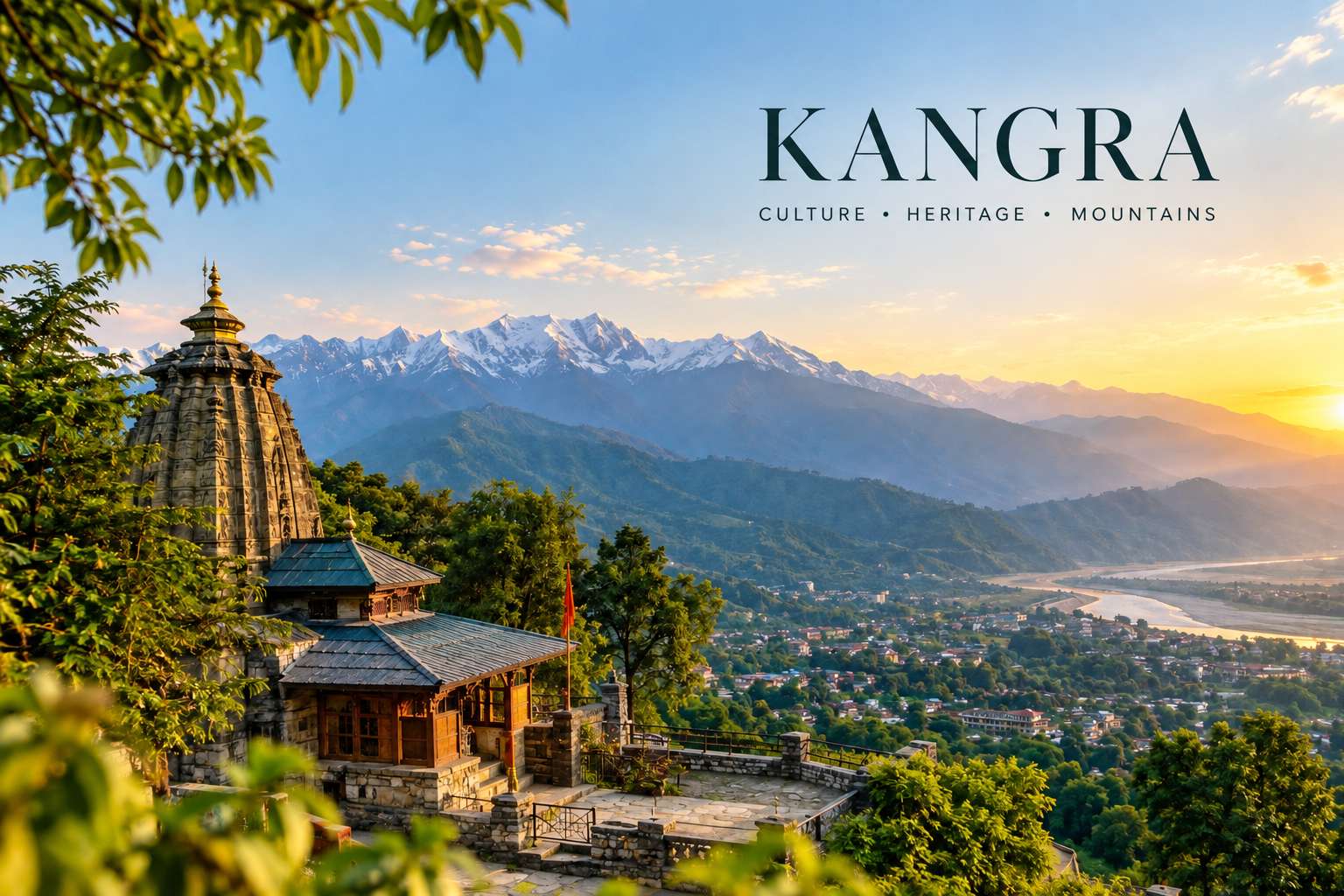
Here’s the thing about Kangra — everyone and their cousin has been to Manali. Half of Instagram has been to McLeod Ganj for the “cafes and mountains” aesthetic. But Kangra? People… drive past it. Which honestly makes no sense once you actually spend time there, because it’s got old forts, temples that are literally thousands of years old, lakes you have to walk to (no traffic jam to ruin the vibe), and this general feeling of “yeah, we’ve been here a really long time, and we’re not trying to impress anyone.”
Kangra’s Royal History
Kangra has a long-standing history, from its mention in the Mahabharata to seeing the rise and fall of many kingdoms. In medieval times, Kangra was known as Nagarkot and Trigarta in Mahabharata times. King Susharama Chandra is known as the founder of the dynasty; he was the king from the Mahabharata who sided with the Kauravas. The hill was basically ruled by the Rajput kings, and from them, the Katoch dynasty was the longest to rule.
Historically, the first mention of Trigarta was found in the writings of Sanskrit writer Panini, who called Trigarta as Ayudhajivi Sangha– a warrior community. The hill has seen many invasions and trials of bloodshed. At the time of Jagdish Chand, the Kangra Fort was captured by Mahmud of Ghazni in his 4th expedition to India, but was liberated by the Tomar Raj Mahipal of Delhi by defeating Modud, the grandson of Mahmud.
Even Akbar tried to get a hand on this fort, but only for the Kangra fort to be fallen into the hands of Jahangir-his son. Instead of defeating the Katoch rulers outright on the fields he brought them under Mughal’s suzerainty. If a ruler has to be remembered in Kangra’s Royal history it should Sansar chand singh Katoch who took the throne in late 18th century. His reign is remembered to be as the Golden age. But the Katoch family was pushed off the throne when Maharaja Ranjit Singh absorbed Kangra in the Sikh empire in 1810.
Kangra’s School of Miniature paintings.
If Kangra’s history tells you about the war and bloodshed, its paintings tell you what people was feeling during quitter days. At the time of Raja Sansar Chand, who was the biggest patron of art, Kangra’s style of painting was introduced. In the mid-18th century, the Kangra painting was produced in such mass and volume that the original Pahari school of painting came to known as Kangra school of miniature paintings.
Historically, the main centres of Kangra School of Miniature painting has been Guler, Basohli, Nurpur, Chamba, Bilaspur and Kangra. The roots can be stretched back when Gujrati artist families migrated to the hill state of Punjab in the late 16th century. The Kangra style of painting was originated at Guler state in the court of Raja Dilip Singh of Guler.
The paintings are famous of its natural art style with vibrant colors. The colors are not synthetic instead they were driven from minerals, vegetables and possessed enamel-like lustre. The focal theme of these paintings are Shringara Rasa, basically taking the inspiration from epics like Ramayan, Mahabharat and Purans. Rama-Sita, Radha-Krishna and many other romantic tales makes the major style for the paintings.
Kangra’s Architecture
While taking a walk in the local trails of Kangra you will find something in common- the styles of architecture around. Whether its home, or temple, or medieval building they have something unique in their characteristics but still very much common.
#1. Traditional wooden and stone houses
Commonly made out of stone, mud, and slates on the sloping roof of the house. Slate was commonly used in the old style of homes, since it was found in abundance in the hills. This style used to keep house warm in winters and cool in summers. Even today when Kangra is going towards the modernisation, you won’t miss those well-preserved old mud houses where people still reside today.
#2. Nagara Shikara temples
Typically originated in North India, you will find almost every temple in northern plains out of this style. It is quite prominent in Kangra too, with the fine examples of Masroor rock cut temple, Brajershwari temple and the Bajinath temple are some fine examples of this style. Temple architecture in Kangra is not only about decoration. The buildings were designed around courtyards, sanctums, gathering areas, and approaches that suited religious rituals and the surrounding landscape.
Kangra’s architecture reflects its history, landscapes and cultural significance. Although now the old art style of architecture is getting lost in the race of modernization, the old people still have preserved the older infrastructure. But as we say, time changes, things changes, and Himachal is seeing exactly that.
Temples of Kangra
Temples are deeply connected with the cultural life of Kangra. The district holds significant amount of temples that is revered by the devotees all around the country. Kangra is a home to two major Shakti Peeth out of 51 traditionally mentioned in Hindu scriptures- Brajershwari Devi Temple and Jwalamukhi temple.
We cannot forget about Chamunda Devi temple that may not come in major Shakti Peeth, but still is as significant as them. Devi Chamunda resides in the temple as her fiercest form that blesses her devotees with protection from unseen forces.
Masroor Rock Cut temple is just another fine example of the beauty, history and cultural significance combined together. Left incomplete, it holds too much mysteries in its remains after the devasting earthquake in 1905.
The temples are majorly built in Shikara style, which influences a large part of Northern Temples. The annual festivals and fairs attracts many devotees all around the clock. The places quite me crowded but its worth your trip.
Festivals of Kangra
Festivals are an important part of Kangra traditions. During major religious occasions, temples become centers of community activity, with devotees gathering for prayers, rituals, processions, and cultural celebrations.
Navratri is particularly significant at many temples dedicated to goddesses. During these celebrations, temples may be decorated and special prayers and ceremonies are organized. Local fairs associated with temples can also bring together residents, pilgrims, artisans, and visitors.
These occasions provide travelers with a chance to see local traditions as they are practiced by the community rather than simply visiting a historical monument.
Famous places in Kangra
- Kangra Fort
- Masroor Rock cut Temple
- Jwalamukhi Temple
- Brajeshwari Devi Temple
- Chamunda Devi Temple
- Kareri lake
- Chinmaya Tapovan
- Andretta
- Pragpur
- McLeod Ganj
And many more. Because Kangra is a town and a district, it depends on the visitor which part of Kangra they are visiting. The city itself hosts many travellers around the corner.
Kangra Tea
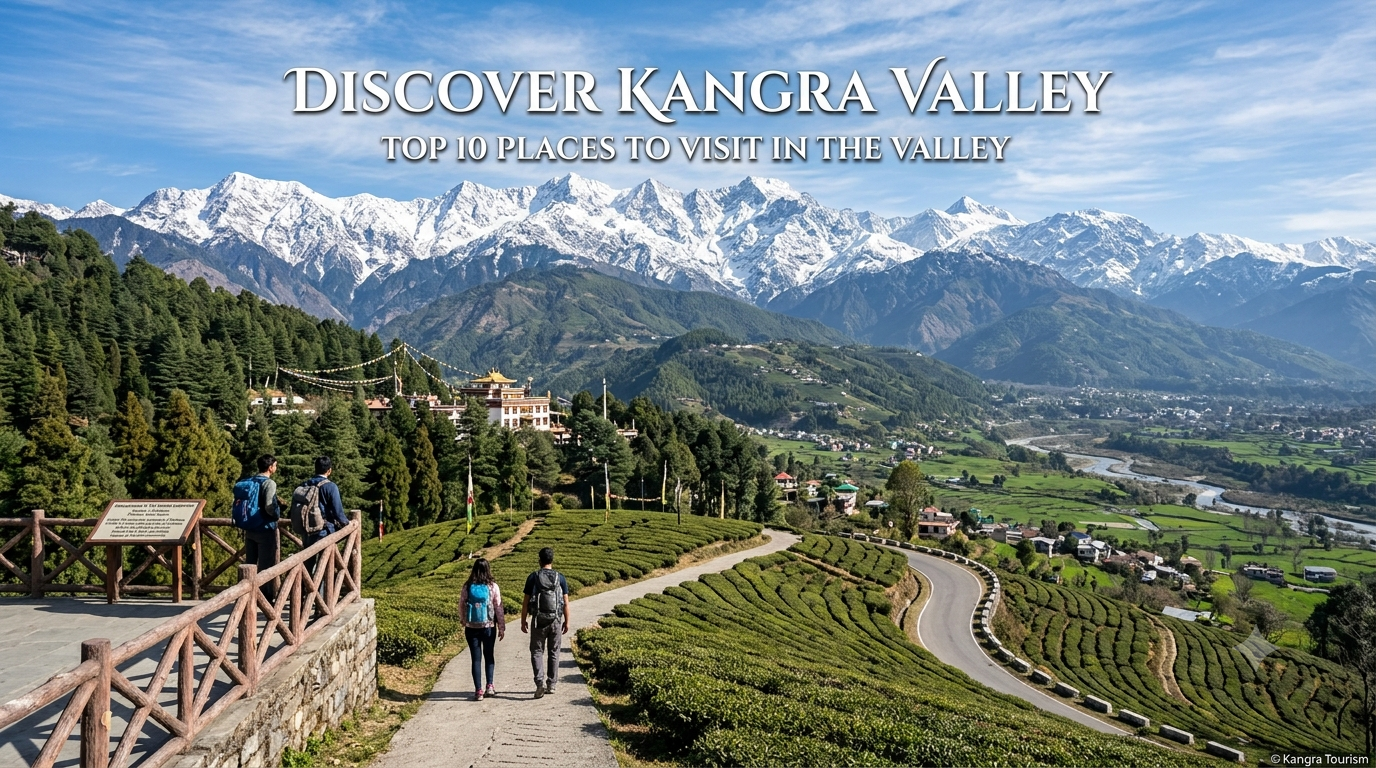
Kangra is famous of its tea gardens. While travelling to Kangra by road you will see the acres of land bustling with tea plantation, that gives the valley its clean and beautiful traits. The tea gardens of the Kangra Valley, particularly around Palampur, are among the region’s most scenic agricultural landscapes.
Taking a walk in the plantation can be peaceful and perfect your Instagram stories. But one thing every traveller should avoid is to trying to destroy the plantation. They are not planted for mere decoration, so please try not to ruin somebody’s hard work for your videos and pranks. It doesn’t just hurt planters but can disrupt the tea economy. Somethings are better suited on their rightful place and that goes with the tea gardens too.
The tea plantation in Kangra was introduced during the time of Britishers in the 19th century. Over time, tea became the part of Kangra agriculture economy. The region’s tea is also valued for its distinctive aroma and delicate flavor, which are influenced by the local growing conditions.
Foods to try in Kangra
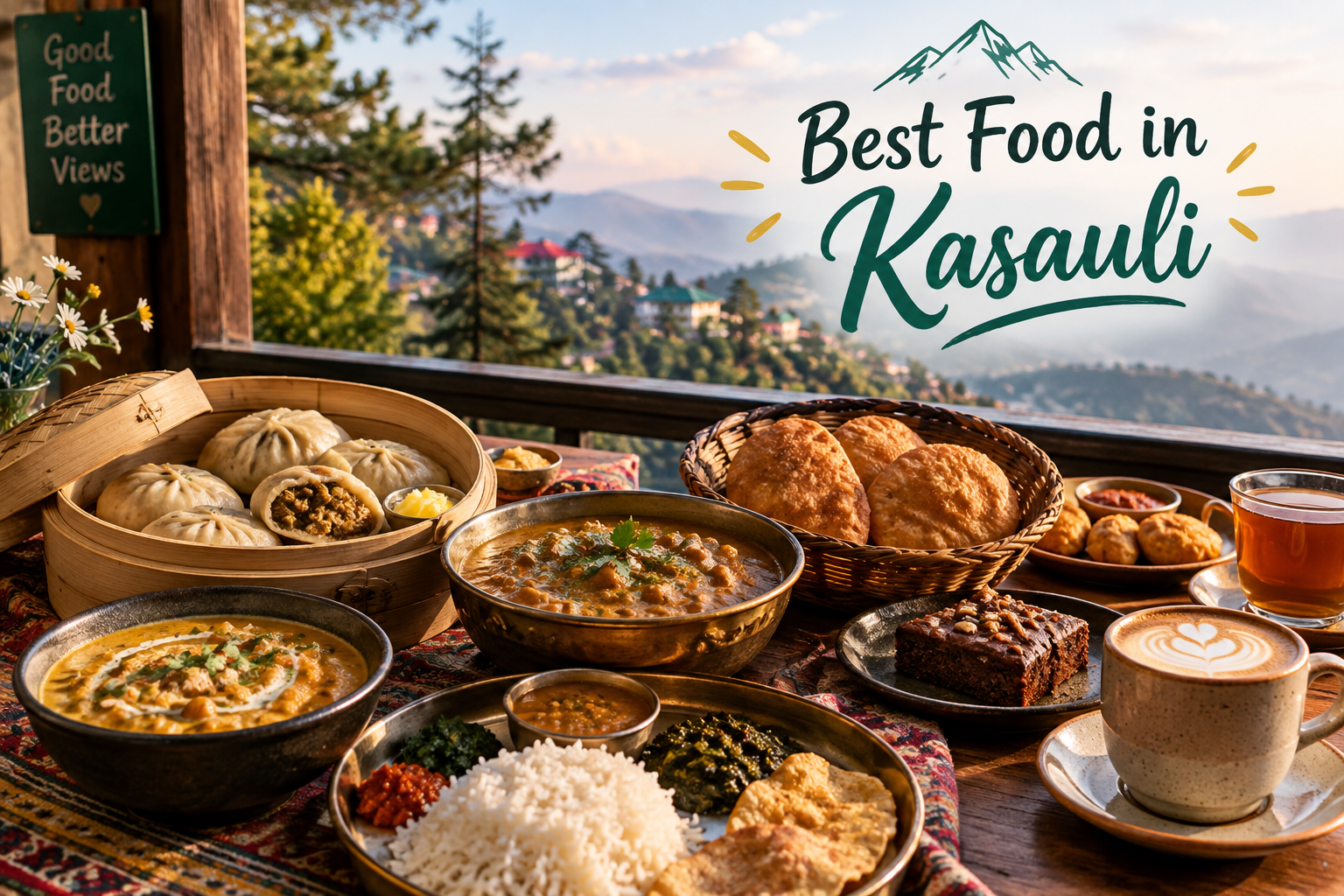
While staying in Kangra, you can try local authentic food to enhance your platter. Dham is the most popular category of food in Himachal that you can find in any restaurant and hotel. Kangri Dham is considered to be the best Dham with its rich, aromatic spicy flavour. Alongside with it, you will find stalls of Siddu around. It’s worth trying alongside the usual food you will eat there. You may have been familiar with the Pahari Maggi too, so while you are on your trip, make sure to include yourself in that experience. And don’t be too stingy about the price, since every price comes with a reason.
When to actually go
Don’t go in peak summer thinking it’ll be cooler than the plains and stop there, it will be, but March-June and then September-November are genuinely the best windows. Weather sits in that nice 15-20°C range where you’re not sweating through your shirt or shivering at 6pm. Winters (Dec-Feb) do get proper cold and sometimes roads shut down because of snow, which sounds annoying but if you’re the type who thinks snow on mountains is worth it, go for it. Just don’t be shocked if a plan gets rearranged last minute.
Getting there
There’s an airport (Gaggal/Kangra Airport) if you want the easy way. There’s also this old narrow-gauge train — the Kangra Valley Railway — that’s honestly more fun than practical, it winds through hills forever and takes ages, but if you’ve got time to kill it’s a nice way to actually see the landscape instead of just getting to the landscape. Or just drive/bus it, roads are decent.
Conclusion
Kangra is worth your every penny, and time. The city itself hosts so many things that you will fall in love with place and think- yes, this is heaven. Known as the Dev Bhumi, it holds cultural and religious values till date. Its temples are the major attraction but the majestic Dhaula Dhar will make you forget what exactly you were visiting.
From the tea gardens overlooked by the mountains ahead will let you immerse in peace and serenity of the nature. So if you are planning your trip to Dharamshala make sure to include Kangra in your list too, and I promise this place won’t disappoint.
FAQs
Q1. Is Kangra worth my trip?
Yes, it absolutely worth it. From historical Kangra fort, to Masroor Rock Cut temple, it won’t disappoint you.
Q2. How many days are needed to complete my trip in Kangra?
Normally it depends which places are you visiting, but 2-3 days are enough for your stay at Kangra comfortably.
Q3. What is the nearest Airport from Kangra?
Gaggal Airport is the nearest airport and roughly around 15-20 km away from the city.
Q4. Are the tea gardens restricted for entry?
No, typically it’s not restricted. But you should be careful of not destroying the planation while walking in the gardens.
Q5. What are some famous places I can visit in Kangra?
There are a lot of places you can visit including Kangra fort, Masroor Rock cut temple, Brajeshwari temple, Jwalamukhi temple, Chamunda Devi Temple and many more.
Q6. What is the one thing people regret skipping?
Masroor Rock Cut Temple; it is not that hyped on social media. But it can be a good place for you if you are looking for fewer crowds and more experience.