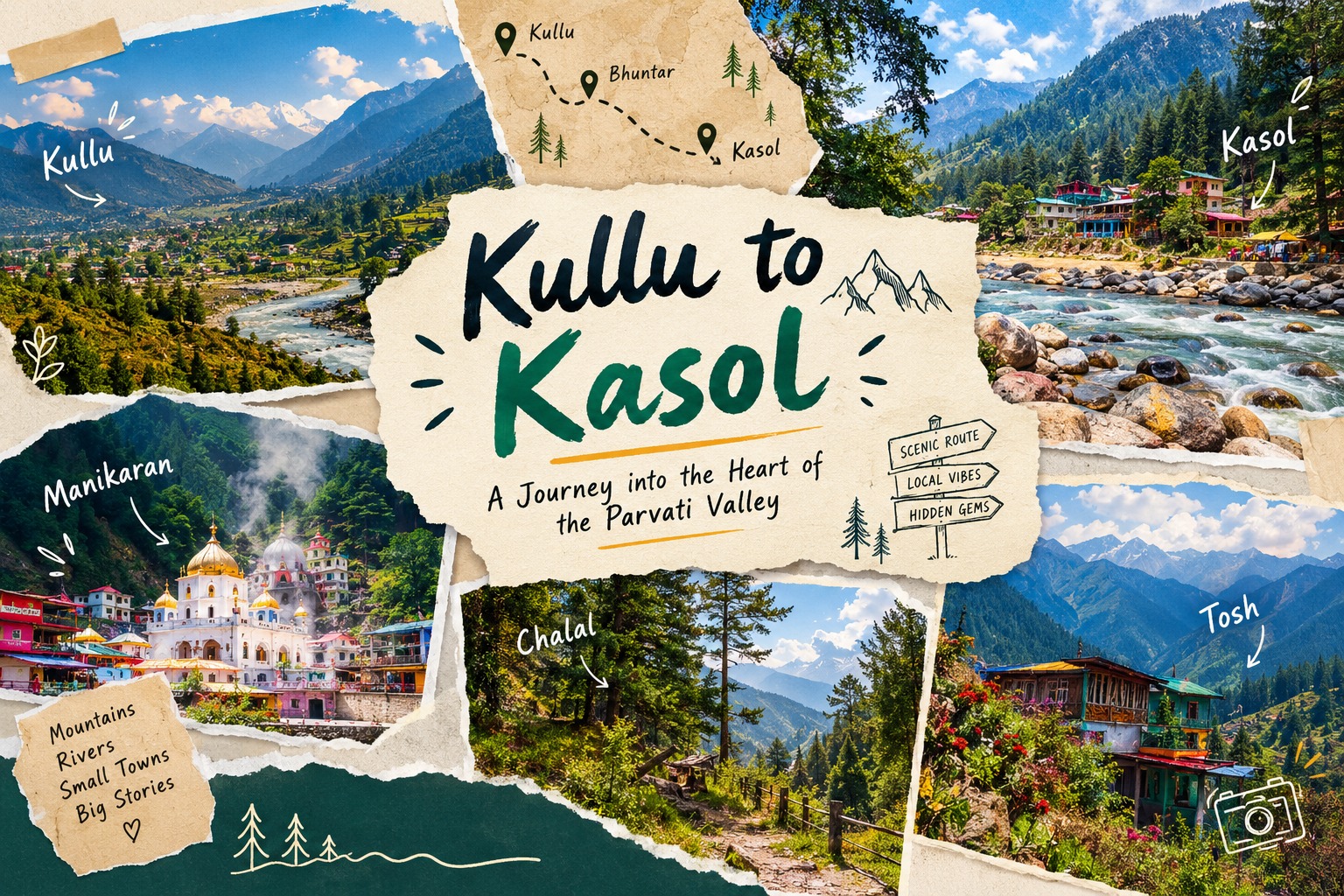
The journey from Kullu to Kasol takes travellers from the wider Beas Valley into the quieter bends and mountain scenery of the Parvati Valley. Although the two destinations are relatively close, the drive offers more than a simple connection between two popular places in Himachal Pradesh. It introduces travellers to different landscapes, riverside settlements, local traditions, and a side of the mountains best explored without rushing.
For college students planning a break, backpackers exploring Himachal Pradesh, or travellers looking to discover places beyond the usual hill-station circuit, this journey can be a rewarding addition to a trip through the Kullu region. The road passes through Bhuntar before following the Parvati River to Kasol, a village known for its mountain setting, cafes, markets, and access to nearby settlements.
Whether you are planning a short visit or using Kasol as a starting point for a longer exploration of the Parvati Valley, understanding the journey helps you make the most of your time.
From Kullu to Kasol: Understanding the route
Kullu lies in the Beas Valley, while Kasol is situated further into the Parvati Valley. The usual road journey connects the two through Bhuntar, an important junction where the routes towards the Parvati Valley branch away from the main road to Manali.
From Kullu, travellers head towards Bhuntar and then continue along the road beside the Parvati River. As the road enters the valley, steep mountain slopes, forested hillsides, riverside settlements, and winding stretches of road become increasingly prominent.
The route is relatively straightforward to understand, but travel time can vary with traffic, road conditions, and weather. It is worth checking the current route before departure, particularly during the monsoon and winter months.
Kullu to Kasol distance and travel time:
Kasol is approximately 39 Km from Kullu by road, although the precise distance depends on the starting point and destination within each place. The journey generally takes around one to two hours in normal conditions, but delays can extend the travel time.
Travellers can consider local buses, connecting bus services, or taxis. Those arriving by air should note that Bhuntar Airport is located near the Kullu-Bhuntar area, but flight availability and onward transport should be checked before planning the journey around it.
Bhuntar: where the journey turns towards the Parvati Valley
Bhuntar is more than a point on the route. It is a geographical junction that directs travellers towards a different part of the Kullu district. Here the Beas and Parvati Rivers meet, and the road towards Kasol follows the Parvati Valley rather than continuing along the main route towards Manali. This meeting of river valleys helps explain why Bhuntar is an important transport point for visitors travelling deeper into the region.
For someone exploring Himachal Pradesh, this is also a useful reminder that the district contains several distinctive landscapes. The wider Kullu Valley, Parvati Valley, and the smaller settlements beyond Kasol each offer different experiences. Instead of treating Bhuntar as a destination that requires a long sightseeing stop, consider it the point where the character of the journey begins to change.
Following the Parvati River: The most memorable part of the drive.
Once the road leaves Bhuntar, the Parvati River becomes a defining feature of the journey; it flows through a valley surrounded by steep slopes and forested mountains, with villages and buildings appearing on the road.
The river is not simply a scenic backdrop. It is central to the geography of the valley and has shaped the location of settlements and the route connecting them. The road follows the contours of the landscape, sometimes running close to the water and sometimes passing beneath the slopes. This stretch is best appreciated as part of the journey rather than a race to reach Kasol.
Arriving in Kasol: A village beside the river
Kasol sits along the Parvati River and has become a well-known stop for independent travellers, walkers, and visitors exploring the surrounding valley. Its appeal comes partly from its setting, but also from the mix of cafes, small shops, guesthouses, and walking routes that have developed around the village.
The atmosphere here is different from that of a large commercial hill station. Visitors can spend time walking through the market, exploring the village lanes, enjoying the views of the river where access is permitted, or finding a café from which to watch the changing light on the surrounding mountains.
It is worth remembering that Kasol is a living settlement, not simply a holiday backdrop. Respect the residents, avoid littering and follow restrictions around the riverside area and walking routes.
Beyond Kasol: Places worth exploring
Manikaran Sahib:
Manikaran is one of the most significant places to visit near Kasol. Situated further along the Parvati Valley, it is known for Gurudwara Manikaran Sahib, its hot springs and its importance to Sikh and Hindu visitors. The Gurudwara is associated with Guru Nanak Dev Ji and attracts pilgrims throughout the year.
Chalal:
Chalal is a nearby village that can be explored from Kasol on foot when the path is open, and conditions are suitable. The walk takes visitors away from the busiest part of Kasol and into a setting of trees, mountain slopes and village surroundings.
Tosh and Upper Parvati Valley:
Travellers with additional time can continue towards Barshaini and explore Tosh or other nearby villages. A point to be noted is that this is a separate extension from Kasol rather than part of the direct Kullu-to-Kasol drive.
Kullu to Kasol Itinerary: Choosing the right amount of time
The following plans provide a starting point; actual timings should be adjusted according to transport availability, weather, and the season.
Itinerary 1: Kullu to Kasol in one day
Morning: Travel from Kullu to Kasol
Start from Kullu and travel towards Bhuntar, continuing along the Parvati Valley Road. After arriving in Kasol, settle in and explore the village.
Afternoon: Explore Kasol
Walk through the local market, spend time around the village, and enjoy the mountain scenery. Choose a nearby walking route only if you have enough daylight and the trail is open.
Evening: Spend time in the Village
Have dinner, explore the local food scene, or simply enjoy a quiet evening. If you need to return to Kullu on the same day, confirm the last suitable transport service before beginning your trip.
Itinerary 2: A two-day Kullu to Kasol trip
Day 1: Kullu, Bhuntar and Kasol
Leave Kullu in the morning and travel via Bhuntar. Once you arrive, explore Kasol’s market and surrounding lanes. Spend the afternoon enjoying the river valley and, if conditions permit, take the walk towards Chalal. Return to Kasol in the evening and stay overnight.
Day 2: Manikaran and return journey
Begin the day with a visit to Manikaran Sahib. Allow time to explore the religious complex, hot springs, and surrounding market respectfully. After the visit, return towards Kasol and continue down the valley towards Bhuntar and Kullu. Check the return transport schedule in advance so you do not have to rush the visit.
Itinerary 3: A three-day exploration of Kasol and the Parvati Valley.
Day 1: Kullu to Kasol
Travel through Bhuntar and enter Parvati Valley. Explore Kasol at a relaxed pace, walk through the village, and spend time enjoying the surrounding scenery. Stay overnight in Kasol.
Day 2: Manikaran and the villages beyond
Visit Manikaran Sahib in the morning. If you have arranged suitable transport and have enough time, continue towards Barshaini and consider visiting Tosh. This is a longer day, so avoid adding too many stops.
Day 3: A slower morning and return
Use the morning for the walk, a relaxed breakfast, or a little more exploration of the area around your accommodation. Begin the journey with enough time to account for road delays.
Itinerary 4: Kullu to Kasol as part of a longer Himachal Journey
If Kasol is one stop on a larger trip, you can combine it with Kullu and other destinations in the district.
Day 1: Explore Kullu and travel towards Kasol.
Day 2: Visit Kasol and walk towards Chalal, subject to trail conditions.
Day 3: Explore Manikaran and continue towards Barshaini or Tosh if road access, time, and accommodation allow.
Day 4: Return towards Bhuntar and Kullu, or continue with your onward itinerary.
This plan is suitable for travellers who want to explore beyond the main village. If you plan to include a full-day trek, allow additional time instead of squeezing it into an already busy schedule.
Best time to travel from Kullu to Kasol
The journey is possible during different seasons, but each brings different experiences.
Spring: The valley gradually becomes greener, and the surrounding landscape changes as temperatures rise. Weather can still vary, especially at higher elevations.
Summer: This is a popular time for mountain travel. Expect more visitors and potentially busier roads, particularly around holidays.
Monsoon: Heavy rain can cause landslides, falling rocks, road closures, and delays. Check the weather before starting your trip and always be ready for a change in your itinerary.
Winter: The lower valley may remain accessible, but cold weather, snow at higher elevations and occasional road disruptions can affect onward travel.
Travel tips for the Kullu-to-Kasol Route:
- Check road conditions and transport schedules before leaving Kullu.
- Allow extra time for the journey during weekends, holidays, and periods of bad weather.
- Confirm your return transport before travelling to villages further up the valley.
- Carry warm clothing, even if the weather feels pleasant in the afternoon.
- Wear suitable footwear for village walks and uneven paths.
- Avoid approaching the Parvati River at unsafe points, particularly during heavy rainfall or monsoon season.
- Follow local guidance at religious sites and the restrictions at some places, especially in the village settlement.
- Carry a waste bag with you and respect the surrounding environment.
Conclusion:
The journey from Kullu to Kasol is an opportunity to explore a different side of the Kullu region. From the meeting of the rivers near Bhuntar to the winding road through Parvati Valley, the route connects varied landscapes with settlements, cultural sites, and opportunities for further exploration.
Kasol makes a natural stopping point, while Manikaran, Chalal and the villages beyond offer reasons to extend the journey. Whether you have one day or several, a little planning will help you experience more of the valley without rushing from one place to another.
FAQs:
Q1. How far is Kasol from Kullu?
Kasol is approximately 39 Km away from Kullu by road, depending on the exact starting and ending points. Check the current map for the route you intend to take.
Q2. How do I reach Kasol from Kullu?
The usual route is via Bhuntar and then along the Parvati Valley Road. Travellers can consider local buses, rental cars, or taxis, depending on availability.
Q3. Is one day enough for Kasol?
One day is enough for a brief introduction to the village. Two days provide more time to explore Kasol and visit Manikaran without rushing.
Q4. Can I include Tosh in a Kullu-to-Kasol trip?
Yes, but Tosh is an extension beyond Kasol and requires additional travel. It is better suited to a two- or three-day plan than a short-day trip.
Q5. Is the road from Kullu to Kasol suitable for a road trip?
The route is commonly travelled by road, but it includes mountain stretches and can be affected by traffic, landslides and other seasonal conditions.